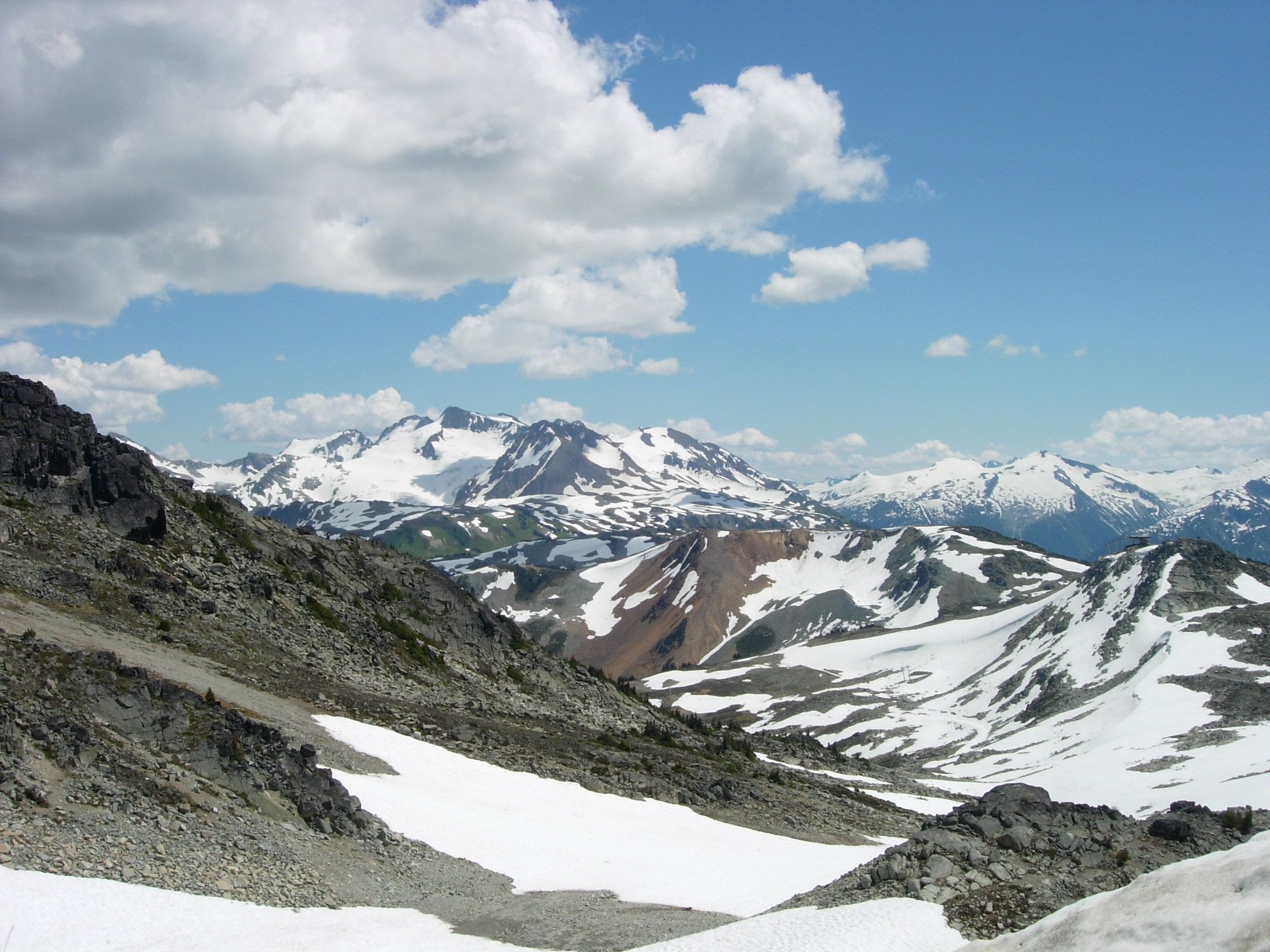
Mount Rainier and then onto Alaska

I’ve got an exciting announcement to share with you. Over the next few months I am going to do a series of posts on all things Mount Rainier. Later I will focus on Mount McKinley and then expand to the broader Alaska Range. I will continue to provide insight on alpine and hiking events, trends and news periodically as I always have.

I am going to start by covering Mount Rainier from its climbing history, the guides, the routes, the Wonderland Trail, Paradise, Camp Muir, and maybe even some of the speculations about what would happen if it ever blew its snow cone!

After that, I am going to discuss climbing Denali and later broaden out to the greater Alaska Range, including Mount Foraker, Mooses Tooth, Little Switzerland, the air services, guides and even romantic Talkeetna.

My idea for this comes from what I thought I would do once I completed college, started my career and had some income. I would have climbed Rainier on a long weekend, maybe moved to Seattle, then traveled every chance I could to climb in Alaska. Well, let’s say things did work out that way and it’s not heading that way. But I will share the knowledge I have and will be finding as I review some new information and pull on some old stuff.

If you’re interested in following these posts, please consider getting updates from me on the Suburban Mountaineer on Facebook or Twitter. There, you’ll also get news and other interesting mountain life and adventure news and information as I come across it.

Here we go!

The Great Adirondack High Peaks Linkup

Andrew Skurka’s superhikes got me thinking about making my own hike across my old territory in the Adirondacks Mountains in Upstate New York. And while I was at it, why not hit all 46 of the High Peaks in one long linkup route?

For a little background, if you hadn’t heard, I’m a repressed alpinist that would settle for a good hike now and then. I’ve been thinking about this hike for several weeks now. Part of it is probably because I just bought a new pair of trail runners. But I know the truth about them. On me, these sturdy track shoes will spend way more time beating pavement in my neighborhood here in Peaklessburg than blazing backcountry routes.

Then I learned that the great High Peaks linkup has been done. It was first done supported, then supported again and again. Finally, in the fall of 2002 it was done in proper style Jim Kobak of Peru, NY and the late Ed Bunk of Voorhesville, NY in 10 and a half days! Then in 2008, Jan Wellford of beautiful Keene Valley, NY and Cory DeLavalle of Albany, NY went in Kobak’s and Bunk’s footsteps and covered the same 196 miles of the improvised route on trail and by bushwhacking in seven and a half days.

No offense meant to those that have gone before them, particularly to Ed Palen, but the approach they took wasn’t about speed or records (though DeLavalle helped Wellford set a record in 2008) but hiking without support! In fact, when Wellford and DeLavalle hiked in 2008, they gallantly turned down a freshly-baked pie in the middle of the linkup, or so the legend goes.

So here is what you need to know in case you want to do this hike:

  • First, it’s been done. Unless you want to break Wellford’s speed record of three days 17 hours and 14 minutes, I suggest you set a more reasonable pace.
  • Practice your backcountry navigation skills with map and compass, GPS and perhaps at altimeter.
  • Do some shorter practice runs in the region. Also note that some of the peaks in the linkup quest are trailless, so be ready for some bushwhacking.
  • Pack appropriately (preferably light), but pack and carry a bear canister. Those bear proof containers are required in the High Peaks Wilderness.
  • Consider taking one lighter daypack to share to take up the peaks while leaving the heavier peaks stashed at the base.

Here is the general idea of the route if you are familiar with the High Peaks Region. This way you can linkup all 46 of the High Peaks in one weaving loop:

“The Wellford Way”

  1. Seward Range
  2. Santononis
  3. Heart of the Eastern High Peaks
  4. Great Range
  5. Dixes
  6. Giant, Porter and Cascade
  7. White Face and Esther

Well, thanks again for visiting.  If you enjoyed this post, you can following the Suburban Mountaineer on Facebook or on Twitter.

Free Wi-Fi Now at Mount Everest

Well, it’s not exactly free and it isn’t Wi-Fi. As you may have heard the Mount Everest area has been wired with the 3G network since last fall as part of an expensive undertaking. Earlier this week, Kenton Cool, a British climber, sent the first Tweet via Twitter from the Summit, according to PlanetMountain.com.

I’ve said this before on this and some other subjects: We cannot stop progress, but we can resent it, no?

There is clearly enough demand and commerce happening (in the form of client paid expeditions) along the Khumbu Valley and Everest base camp to justify the dedicated service. Maybe that is part of my problem. While I sincerely respect the challenge of climbing Everest, it continues to lose its cache among progressive alpinists. Not that I am a progressive alpinist, but I value their accomplishments more.

However, because of the accessibility to the mountain thanks to numerous international guiding services, the new wireless connection and constant media attention on the climbing season, it remains a reliable challenge to make headlines and bring attention to causes and promote brands and climbers. It’s also a solid challenge for part-time mountaineers that work 50 weeks a year just to climb the other two, thanks to the professional guide services! But I think even those guides can provide expeditions that are more unique and potentially more satisfying.

I won’t go on record to say that Everest is becoming just another slag heap and is the new Mount Rainier, like some have implied. No offense to Rainier, but I do understand where these concerned people are coming from.

That being said, now that the Everest Resort has upgraded some of it’s amenities including the Internet access, I am going to see if work will permit me a few weeks to work remotely from there.

Well, if you enjoyed this post, please consider following the Suburban Mountaineer on Facebook or Twitter.

The Eiger Solo Challenge

The infamous Eiger North Face (Jo in Riederalp 2007)

The Eiger (13,025 ft./3,970 m.) in the Bernese Alps is legendary in alpine mountaineering because of the impressive size of its largest wall, the North Face or Nordwand, which rises approximately 5,000 ft./1,524 m. from its base. It’s also legendary because of the area’s weather conditions, the stories of the struggles of climbing it and the list of climbers that have climbed and even attempted it is like a who’s who list of mountaineering. Interestingly, it is the solo accomplishments that are front and center lately.

Substantively, the Nordwand has been in the news again recently for Swiss alpnist Dani Arnold’s new speed record up the wall in two-and-a-half hours on April 20, 2011, which beat the previous time record by Ueli Steck, also from Switzerland, from February 13, 2008, by 19 minutes. People are also watching the videos — which are excellent quality — of Steck climbing the Eiger at his extraordinary clip and unroped: Check this one out by clicking here, then come back and continue reading.

It’s also worth noting that several sources are explaining that while Arnold bested Steck’s time, their accomplishments both stand on their own unique merits. This is because while Arnold clearly holds the best time, Steck climbed in the true winter and free climbed the Hinterstoisser Tower — a pillar on the lower third of the mountain that has fixed ropes and is deemed virtually unclimbable, and certainly only free climbable in winter. Some purists would argue that Arnold’s climb was of a lesser quality, or at most that the style was not worth the speed he attained.

Climbing this mountain is hard enough with a team than when going it alone. The Eiger was first summited in 1858 by Charles Barrington, Christian Almer and Peter Bohren by the West Flank — not the Nordwand. The northwest face wasn’t climbed until 1938 by Anderl Heckmair, Ludwig Vorg, Fritz Amatter and Heinrich Harrer (you’ll remember him as Brad Pitt in Seven Years in Tibet). Several attempts, including the 1935 climb that named the notorious “Death Bivouac,” demonstrated the near futility of getting up the Nordwand. The first direct route up the Eiger wasn’t established until 1966 by Dougal Haston, Sigi Hupfauer, Jorg Lehne and Roland Votteler.

The first successful solo attempt came in August 1963, up the 1938 route, by Swiss climber Michel Darbellay. Half those that tried to go alone died trying. Even the great English alpinist Walter Bonatti had turned around the day before Darbellay went up! This shows Darbellay for his strength and courage, as well as how climbing the Eiger can be so fickle. Darbellay climbed the peak within two days time — including only 18 hours of climbing (which seems a reasonable pace compared to the speed climbing going on, in my opinion.)

The mountain’s size and the hundreds of stories about its climbs have permeated all kinds of literature and media — even Readers Digest. But the trend of and interest in speed and style trump anyone’s own personal accomplishments lately. So the question is, will Arnold’s record to beat? Will Steck’s time and style record be improved upon? I’ll let you know when I find out…

Well, thanks again for visiting. If you enjoyed this post, please consider following the Suburban Mountaineer on Facebook or Twitter.

The Common Core of the Outdoor Experience

What we're seeking is out there. Can we be satisfied?

We often get asked — and sometimes we ask ourselves — why do we hike? Why do we climb? “Because it is there” is not deep enough any more.

The essence of it is the same for John Muir, Reinhold Messner and Andrew Skurka. I believe the common thread between them was what they were seeking. In fact, they all talked about it. The great thing is, it can be experienced in different levels. But you cannot know about it until you’ve been there and felt it. Figuring it out for myself took me years.

Mountaineer and author David Roberts worked for years trying to determine what drove him to the mountains. In his book, On the Ridge Between Life and Death, he references how notable climbers all talk about challenging themselves and learning things about themselves they would never have learned without their pursuit. However, as Roberts points out, the climbers have never said what it was they learned. I now know, and Roberts probably does too, that it was not something they could teach.

When I go into the backcountry, I go to get away from society’s structure and its related pressures, temporarily deprive myself of comforts, and emphasize my simplest needs, such as food, water, shelter and sleep. I also enjoy the self challenge of going to the outdoors, particularly when I set a trivial challenge like hike and climb to that peak. Nobody really cares if I’m successful but me, so long as I return unhurt and alive. High stakes are part of the sport, though.

I also go because it is on my terms — or at least the allusion of my terms. It’s an allusion because even when we go into the wild today it’s wilderness only because it is designated so by regulation. Of course, it’s also on my terms in regards to my tolerance for risk. What is tame and acceptable for me might be overwhelmingly frightening for someone else. I can choose my own fate that way.

In addition, according to alpinist Steve House in his book Beyond the Mountain, sharing our deprivation, basic needs and goals with a partner or a team can make the experience be nothing short of, well, magical. That is because it creates the rare opportunity for someone else to know exactly what you’re going through. However, chemistry between you and your partners is a necessary factor.

These can only be done and felt in the wilderness. Muir made a religion out of its value. Messner promotes the idea of connecting with our wild side. Skurka discovered it for himself on his long hikes, particularly on his 2010 Alaska-Yukon Expedition. Wilderness is an experience. It’s why we go and what we seek. But you have to go to know.

Thanks again for visiting.  If you enjoyed this post, you can following the Suburban Mountaineer on Facebook or on Twitter.

Mountain Rescues and the Amazing Race

If Zev and Justin were rescuing me from an avalanche I would have died. Let me explain…

On Sunday, May 1, 2011, on the Amazing Race, the American CBS television show where teams of two race around the world and compete in various tasks unique to their destinations, had the remaining contestants perform one of two tasks before they could advance: Search for an avalanche victim or rescue a fallen climber in a crevasse.

Two teams got to work on the crevasse rescue and three others, including Zev and Justin, searched and dug among avalanche debris. Or at least that’s the way it seemed. The tasks illustrated the general idea of what needs to be done, but in the real world… well… training is different from real life. Generally speaking, people entering areas with these real life dangers of crevasses and avalanches are well aware of the dangers and risks. Here’s the basics:

Crevasse Rescues 

Crevasses are fissures like deep cracks in glaciers created by their gradual movement. They move several feet a day and if the glacier were shown at fast speed over days or months would look like a roaring river.

Mountaineers and hikers don’t usually fall into open crevasses; it is the one’s they don’t see, covered by snow bridges that are really dangerous. It might appear the field or slope ahead is reasonably even and smooth, but underneath are the fissures you saw the contestants being lowered into to rescue a fallen climber. This is why rope teams are important. Some solo climbers have even employed using over-sized snowshoes or a long ladder strapped around their waist in hopes of preventing a fall into a crevasse where no one would find them.

Rescuing someone in real life is usually more complicated than what the show demonstrated. For example, the struts for the winch system typically are not in place unless a rescue team from down in the valley are equipped with one and the edges of the crevasse can support such an apparatus. This means the climbers must use the gear they have with them. While a pulley would be ideal, the rescuers may not have one and must use what is on hand, like slings or figure eights or other belay devices. Also, the rescue could take several hours to accomplish.

Not to be overly morbid, but when people die in crevasse falls they tend to do so from internal injuries from the fall or from starvation if they cannot escape by themselves; crevasses can be enormously dark caves with overhanging walls, and without the right equipment, cannot be ascended.

Searching Avalanches debris

First of all, to make the task on the show a challenge, the mannequin they searched for was buried about four feet deep in a gently sloping plain of snow in what appeared to be a col. Avalanches can happen on virtually any slope when a layer of the accumulated snow loses its grip on the layer below it. Snow has dozens of varying consistencies, which means some bond together better than others.

It helps if the avalanche victim is wearing an avalanche beacon and the rescuers have them too. Climbers involved in the search and rescue (SAR) effort can turn the device to receive in order to find the victim. If beacons were not used by the climbing party then rescuers have to resort to more traditional, low-tech avalanche probes — long, narrow poles to poke the snow in hopes of finding the missing climber. Today, these are often special dual-use trekking poles.

Under normal circumstances, the victim does not have a lot of time. The weight of the snow, and often the inability to determine which way is up, make it difficult or impossible to help oneself. Victims usually perish from asphyxiation. Some climbers and backcountry skiers have used the Ava Lung from Black Diamond Equipment, which helps buy an avalanche victim more time by helping the victim displace CO2 from fresh air.

Bottom line in avalanche recovery is to know how to search and work quickly. Best of all, both as rescuer and climber: Be prepared!

At the rate Zev and Justin worked I don’t think I would have made it, even with an Ava Lung.

Thanks again for visiting. If you enjoyed this post, please consider following the Suburban Mountaineer on Facebook or Twitter. There you will get additional updates and information on hiking climbing news as quickly as I can make it available.