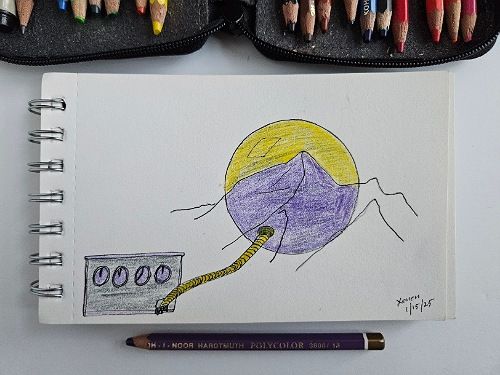
As you have no doubt heard, Furtenbach Adventures is experimenting with using xenon gas treatments to shorten the time necessary for Everest guided clients to reach the summit in under a week. (Here is story that was in Financial Times, now on their website.) It would be rapid ascent without per-aclimatising on another high-altitude peak immediately beforehand: A true Everest smash and grab.
I am fascinated by this as much as I am annoyed.
Xenon gas when inhaled produces more red blood cells to carry more oxygen throughout the body. The World Anti-Doping Agency (WADA) prohibits noble gases argon and xenon because they give athletes an unfair advantage over their competitors.
(No one, so far, that I could find, has explained why Furtenbach chose xenon over argon. I presume athletes have used the substance to enhance their performance and maybe the confidential information from Furtenbach’s consultant might know about a safety or performance advantage over argon. I guess we’ll have to wait and see.)
Of course, climbing Everest is not competitive. Well, at least there are no judges or points or climber rankings. Except we all judge, even a little, when our values differ. And the style one approaches the mountain matters, and that climbers scrutinize. Did you have support, use supplemental oxygen, pre-aclimatise on another peak, pre-stock the route with cache, and what was your relationship with your sponsor that was making you carry a product or flag to the top?
I suspect the value underlying the Everest clients using xenon is that the summit matters ranks at the top of the list of priorities. Furtenbach Adventures promises xenon gas to be a shortcut to reaching the destination, skipping or altering the traditional journey. It’s valid for the many clients on Everest that read Into Thin Air and weren’t deterred from the mountain but saw it as a brochure and said, “I want to go to a deadly mountain, too, because I know I will be a survivor.”
I am annoyed at the use of xenon, because like my view of a lot of things in commercial guiding on Everest, because it disrupts my value of mountain. For me, climbing is a test of physical and mental preparation, skills and strategies, and an adventurous journey where the outcome and how it will play out is a mystery. Much of mountaineering is about learning a craft and mastering it.
I am fascinated because I am wondering whether this could actually be innovation that’s adopted for safety at altitude. We’ve ditched the idea of taking a mobile device with us into the backcountry; it was once thought of as a place to rough-it without contact. We’ve ditched pitons for clean climbing. Gear makes great improvements every decade. Our knowledge of fitness, and how to better prepare for the mountains, has improved tremendously over the last 15 years.
Although I don’t share an appreciation for the style of the Furtenbach Adventures clients, who are pioneering xenon gas on Everest, I am going to watch with curiosity. Waiting and seeing is probably the wisest strategy.
Well, thanks for dropping by. If you enjoyed this post, please sign up for my newsletter, which is the best way to get updates. And please tell a friend too; I am a humble hobbyist and don’t pay for advertising so organic search engine traffic and word-of-mouth referrals are all I’ve got. I just believe that climbing matters and you do too.
 The Suburban Mountaineer