Winter Fun: Pack Well to Prevent Calamity

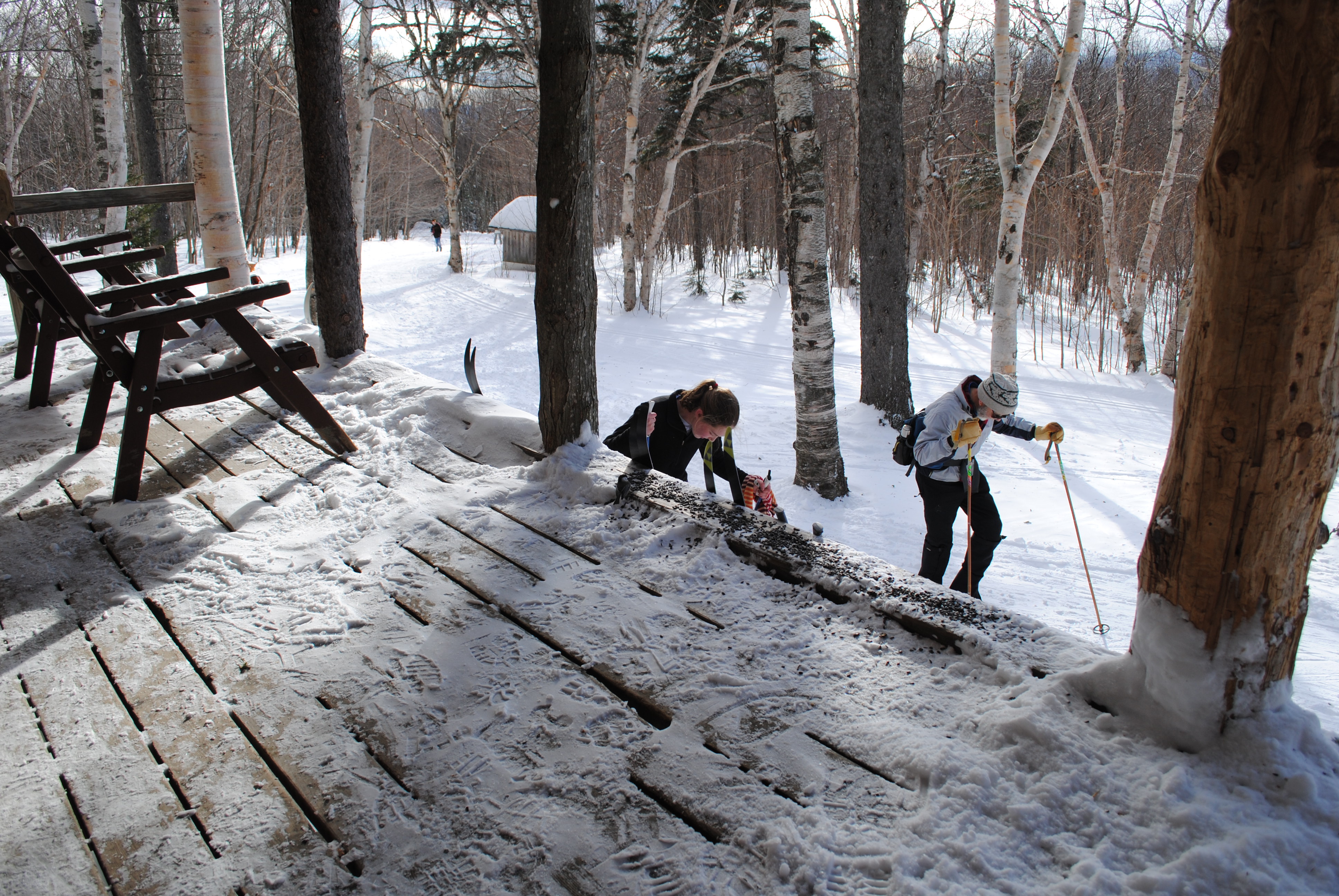
Xcountry skiers

Winter is coming -- do you have what you need?

 The World Series starts next week and the hockey season is already here.  You know what that means for our favorite mountains?  Snow and ice! 

Taking the Ten Essentials is a start, but in general, winter calls for some other necessities too.  In addition to layers, such as a long base layer, fleece and shells, be sure you’re ready to traverse the terrain ahead and that you have key spare items. 

Below is a list of the key items and items to consider packing for a day-long journey, broken down through a winter hike, say in the valley, or some light mountaineering (non-vertical alpine) up a winter trail in the Adirondacks or some parts of the Cascades, for example. 

Winter Hike:

  • Sturdy boots (a full-grain leather boot should be worn with extra socks at a minimum, but insulated winter boots are preferred, and rigid-soled boots, such as mountaineering boots, may also be practical)
  • Gaiters
  • Long Underwear
  • Extra pair of gloves/mittens (it’s a terrible situation when one or both of your original pair are lost)
  • Extra hat with ear coverings
  • Extra flashlight (and keep the batteries insulated and warm)
  • Thermos
  • Pocket/toe warmers
  • Snowshoes or skis

Alpine Ascent:

In addition to the items on the Winter Hike list, take…

  • Insulated jacket
  • Insulated pants
  • Crampons (a pair of 10-point tie-in/strap-on crampons should suffice for bald summits and sloped ice; clip-in crampons for rigid mountaineering boots are better for encountering vertical ice.) 
  • General Mountaineering Ice Axe (choose an axe by the traditional method where by holding the head at your side, the spike should reach your ankle, though some today disagree with me.  See my article on this here.)
  • Ski goggles
  • Sleeping bag (this is for an emergency and may be worth packing!)
  • Altimeter

And as a refresher, these are the Ten Essentials that the Mountaineers organization out of Seattle recommend everyone bring, at a minimum, when they venture into the backcountry:

  1. Compass
  2. Extra Food (take more than the trip calls for)
  3. Fire Starter (such as a candle or magnesium block)
  4. First Aid Kit (with any necessary medication)
  5. Flashlight (with extra batteries)
  6. Jacket (keep out wind and precipitation)
  7. Knife (pocket knife usually does well enough)
  8. Map
  9. Matches (store in water tight container)
  10. Whistle 

And lastly, tell someone where you are going and when you intend to be back and stick to it by setting a turnaround time for yourself.  Also be sure that your friend or family member knows who to call if you are late.  We want you to come back in one piece and frostbite free! 

Well, thanks again for visiting.  If you enjoyed this post, please consider following the Suburban Mountaineer on Facebook or on Twitter (@SuburbanMtnr).


Michelle Smith SAR Video

After Michelle Smith and her climbing partner Stephen Koch were waiting for rescue on Grand Teton after a fall, they decided to whip out their camera and film the embarrassing operation.  The video is worth watching. 

Best part, is Smith and Koch kept a very positive and optimistic attitude.  It makes all the difference for keeping their head straight.  Had the weather been different on the day of the accident, they would have had to wait longer and endure the conditions.

Thanks for visiting.  If you enjoyed this post, please consider following the Suburban Mountaineer on Facebook and joining in the discussions and obtaining other materials.

Seattle Times: Mountaineers Books Celebrates Golden Anniversary

Happy Friday and congratulations to the Mountaineers Books, the publishing arm of the Mountaineers in the Pacific Northwest.  It turns 50 this year!

This publisher is the best provider of english langauge print information on mountaineering knowledge and general outdoors skills.  This article in the Seattle Times reports on their celebration and that the organization is in good financial shape so it will continue to provide the information we need (and crave!) for some time to come.

Meru: One Persistent Mountaineering Problem

I’m about to make the monthly payments for the mortgage and the loan for my beloved 2010 Subaru Outback, and like every so often I ask some serious questions, if only half-heartedly.  So where might I go if these debts weren’t begging for steady income?  Well, this mountain daydream takes us the northern edge of India:

Alpinist Conrad Anker said to The Outsider that there are far fewer challenges today in mountaineering, but one such place that he has attempted and would like to return to is Meru (21,850 ft./6,660 m.) in the Gangontri Region of the Himalayas.  Specifically, he is interested in conquering the Shark’s Fin route.   

The Shark’s Fin route is the central prow of Meru’s middle peak.  It involves alpine rock, ice and snow.  The crux of the challenge has been beating the weather, supplies, and the bare Shark’s Fin above 19,029 ft./5,800 m.  Russian Valery Babanov soloed the route in 2001, but circumvented the fin proper to reach the summit – the Shangri La route.  Regardless, he rightfully won the Piolet d’Or for this route. 

  • Location: Gangotri National Park, Garhwal Indian Himalayas
  • Summit Elevation: 21,850 ft./6,660 m.
  • Climbing Routes: Meru is irregular shaped massif and includes several peaks and several routes, however the Shark’s Fin, also known as Meru Central, has turned numerous alpinists away at the fin itself; alternate routes have lead to the summit. 
  • Hiking Trails: Unmarked routes are throughout Gangotri National Park, some of which require general mountaineering skills.  See this link for someone’s take: http://www.bhramanti.com/badriga.html
  • Getting There: Flying from the states to Delhi (DEL) should run approximately $1,200 per passenger.  From there it is a two day journey to Gangotri National Park in the Indian state/province of Uttarakhand.  The nearest town is Uttarkashi. 
  • Outfitting: Outfitters and guides will be best acquired in Delhi as many Himalayan expeditions originate there. 
  • Recommended Viewing: Dispatch Videos by Renan Ozturk: http://vimeo.com/channels/34832

Well, if you go send me a note at SuburbanMountaineer@yahoo.com, leave a comment, and don’t forget that you can follow this site through Facebook and even Twitter (@SuburbanMtnr).  Happy exploring!

NEIce: “Let the Games Begin”

I could not say it any better than our friends at NEIce: The ice has arrived in Huntington Ravine on the eastern flank of Mount Washington in New Hampshire.  For northeasterner ice climbers, the season is beginning in earnest.  Check out the photos on their site and their reports throughout the season!

Remember, you can follow these posts through Facebook and Twitter (@SuburbanMtnr).

Fritz Wiessner and Dudley Wolfe on K2

26448632552_3e72d69b50

K2 on Fire. (All rights reserved)

I just finished reading The Last Man on the Mountain: The Death of an American Adventurer on K2 by Jennifer Jordan (2010).  Jordan will be at National Geographic tonight presenting on this book.  I was planning on going to see her, ask some questions and report to you tomorrow, but unfortunately, I have a conflict that is unavoidable.  In any case, here is my review of her take…

Jordan tells the story of Dudley Wolfe, the wealthy American on the 1939 K2 expedition lead by Fritz Wiessner.  However, the story of Wolfe on K2 is the story of that tragic expedition and its leader.

Wiessner was a German-immigrant and was the finest mountaineer in America at the time.  Until later in life, he always struggled with debt and having sufficient income.  He deferred the leadership of the 1938 K2 expedition to rival Charlie Houston because of his business obligations at the time.  The team in 1938 was experienced stars, but for a variety of reasons, personal and economic, Fritz could only put together a second-rate team – most of whom, except Wolfe, never went higher than Camp IV.

I have read a couple of different takes on the 1939 attempt and Jordan’s book follows the pattern of most others, but brings the available research together more thoroughly.  The questions Jordan tries to answer, or at least provide the best information about, was whether Dudley Wolfe belonged on the expedition, was he qualified to reach the high camps and remain there for an extended period of time even though his outlook on summiting was dim, and lastly, was he stranded out of negligence or the occupational hazard innate in mountaineering?

Wolfe reached Camp VIII only with Wiessner’s assistance.  Eventually, Wiessner had to descend for supplies – or possibly help to get Wolfe to the top.  There is a lot of speculation here on why this really happened.  Wolfe managed to descend to Camp VII and he never climbed any lower.  He would spend nearly two months in those high camps withering away and likely suffering from cerebral edema.

Wolfe was the first casualty of climbing K2, and for a variety of reasons (both justified and muddy) he was left stranded and helpless in Camp VII.  Jordan discovered his body at the base of the peak while visiting the K2 base camp in 2002 while writing her first book Savage Summit.

This book paints Dudley Wolfe in a more favorable portrait.  Ed Viesturs and David Roberts in K2: Life and Death on the World’s Most Dangerous Mountain make Wolfe seem more incompetent – but to say he was unqualified (which Viesturs and Roberts do not) to be high on the mountain is wrong too.  It is worth the read to see the relationship between Fritz and Dudley.  Wiessner wanted to the summit desperately for glory and notoriety.  Wolfe was an adventure junkie and needed Wiessner to get him as close to the top, if not the top itself, as reasonable.  This arrangement, and the affects of altitude, which were not fully understood, was their collective undoing.

As a mountain junkie, I don’t recommend this book unless you are either interested in the mysteries of the 1939 expedition or want to know everything about K2 specifically.  There are other more informative K2 books, like Viesturs’ and Roberts’ story, and better climbing stories in general.  On the other hand, Jordan’s story might also appeal to readers that enjoy the age of romance in mountain exploration as it tugs at that string.

Thanks again for stopping by. If you enjoyed this post, please consider following The Suburban Mountaineer on Twitter and Facebook.