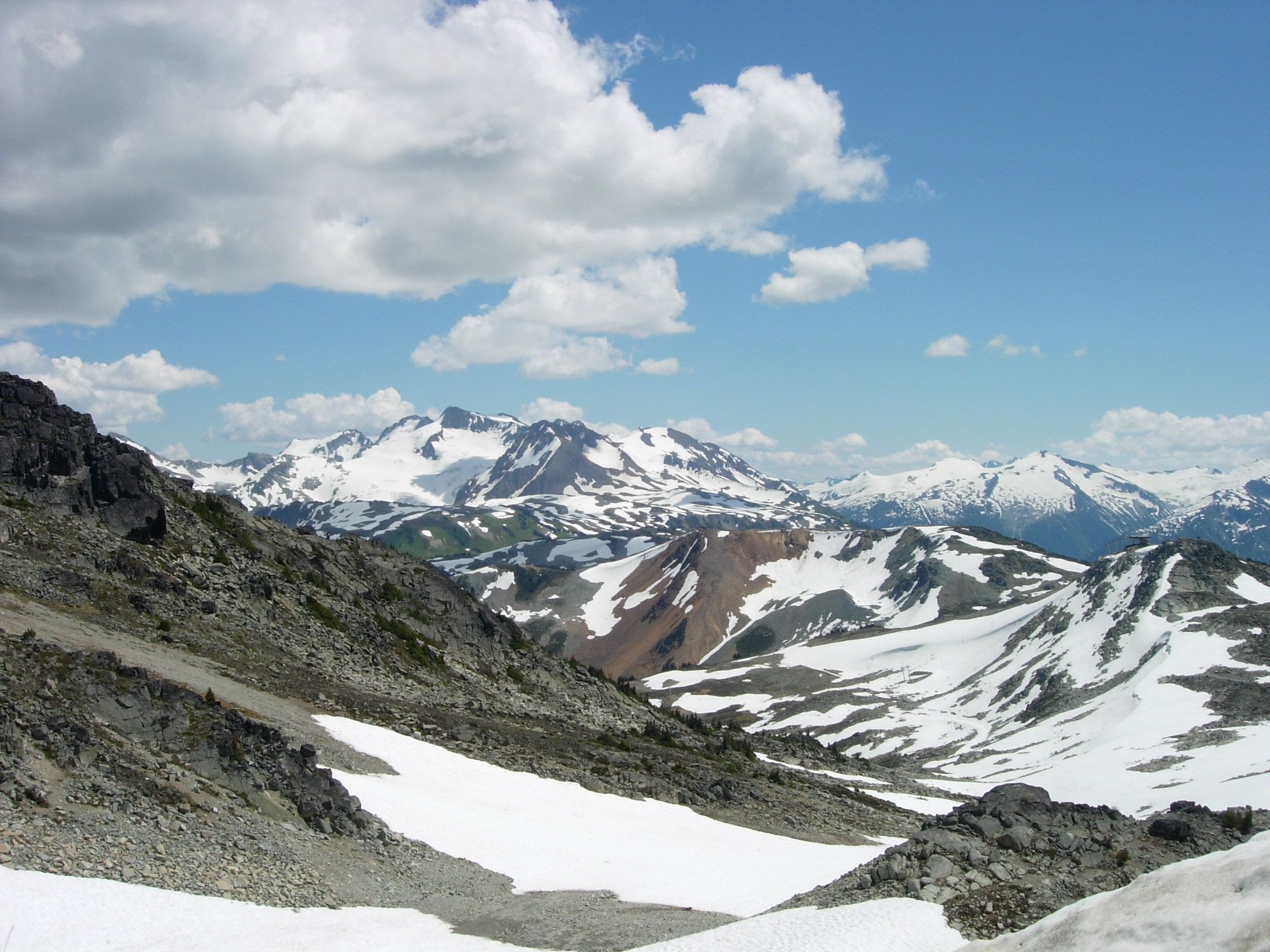
The Common Core of the Outdoor Experience

What we're seeking is out there. Can we be satisfied?

We often get asked — and sometimes we ask ourselves — why do we hike? Why do we climb? “Because it is there” is not deep enough any more.

The essence of it is the same for John Muir, Reinhold Messner and Andrew Skurka. I believe the common thread between them was what they were seeking. In fact, they all talked about it. The great thing is, it can be experienced in different levels. But you cannot know about it until you’ve been there and felt it. Figuring it out for myself took me years.

Mountaineer and author David Roberts worked for years trying to determine what drove him to the mountains. In his book, On the Ridge Between Life and Death, he references how notable climbers all talk about challenging themselves and learning things about themselves they would never have learned without their pursuit. However, as Roberts points out, the climbers have never said what it was they learned. I now know, and Roberts probably does too, that it was not something they could teach.

When I go into the backcountry, I go to get away from society’s structure and its related pressures, temporarily deprive myself of comforts, and emphasize my simplest needs, such as food, water, shelter and sleep. I also enjoy the self challenge of going to the outdoors, particularly when I set a trivial challenge like hike and climb to that peak. Nobody really cares if I’m successful but me, so long as I return unhurt and alive. High stakes are part of the sport, though.

I also go because it is on my terms — or at least the allusion of my terms. It’s an allusion because even when we go into the wild today it’s wilderness only because it is designated so by regulation. Of course, it’s also on my terms in regards to my tolerance for risk. What is tame and acceptable for me might be overwhelmingly frightening for someone else. I can choose my own fate that way.

In addition, according to alpinist Steve House in his book Beyond the Mountain, sharing our deprivation, basic needs and goals with a partner or a team can make the experience be nothing short of, well, magical. That is because it creates the rare opportunity for someone else to know exactly what you’re going through. However, chemistry between you and your partners is a necessary factor.

These can only be done and felt in the wilderness. Muir made a religion out of its value. Messner promotes the idea of connecting with our wild side. Skurka discovered it for himself on his long hikes, particularly on his 2010 Alaska-Yukon Expedition. Wilderness is an experience. It’s why we go and what we seek. But you have to go to know.

Thanks again for visiting.  If you enjoyed this post, you can following the Suburban Mountaineer on Facebook or on Twitter.

Dolly Sods: The Mid-Atlantic’s Tundra

Yesterday almost felt like summer around here. If my wife didn’t expect me to go to work every day, I might have called in and took a “golf” day. Only it wouldn’t be golf. But the experience made me think of possibilities and one geographically curious region.

While most of West Virginia’s Monongehela National Forest is tree covered, there is a region known as the Dolly Sods that are a left over from the ice age. It’s a region elevated away from most the region’s typical heat and humidity and has a landscape with more in common with northern Canada than Washington, DC, which is just 170 miles east.

The terrain is technically not exotic in the scope of earth, but its terrain combined with its unique qualities for the region make it interesting. It includes northern hardwoods and laurel thickets at the lower areas of the Dolly Sods Wilderness, while smaller red spruce and heath barrens are higher up, and stereotypical rocky-barren areas are throughout the preserve.

I visited several times around 2003 and 2004 and sometimes camped around the 80-foot cliffs that are typical in some portions. I can’t recall whether that was officially condoned or not, but it gave me a great position to watch the birds and contemplate a rock climb.

If you visit, keep in mind winter lasts a little longer there than the surrounding region and roads may remain closed, so access will be left to hoofing it. In addition, I should point out, that Dolly Sods is the more popular region, but the other tundra-like wilderness of the Monongahela is Flatrock and Roaring Plains just to the south of Dolly Sods Wilderness. In fact, the National Forest Service has said that its designation of Dolly Sods as Wilderness may actually detracted from it by attracting more visitors. That cannot be said about Flatrock and Roaring Plains, which is designated as Backcountry.

Both are great destinations for hikers — and some climbers — in the Mid-Atlantic region. Bring the Ten Essentials and some gaiters, and enjoy the great north closer to home.

Thanks again for visiting. If you enjoyed this post, please consider following the Suburban Mountaineer on Facebook or Twitter.

Cross Country Hiking and Wilderness

When Andrew Skurka visited Washington, DC and spoke at National Geographic’s Headquarters, he described the sense of being in Alaska and the Yukon in wilderness, “with a capital W,” as he said. He saw more bears than people and explained that he had more in common with the caribou, moose and other animals crossing the far north.

At one point Skurka said, “Food and sleep are just enablers.” They were what empowered the caribou, moose and bears to travel and stay alert. It was no different for Skurka.

In several of his presentations, Skurka has explained that he was so far away from civilization and immersed in wilderness that he had never been more vulnerable and exposed to the natural world — a world that weather, animal-survival instincts, food, water, shelter, sleep and terrain trumped all higher needs of life, such as companionship, education and advancement that people like me strive for on a typical day in Peaklessburg.

Skurka deprived himself of everything except the absolute essentials (part of his fast and light philosophy) on his long hikes and challenged himself a great deal to reach his sense of wonder about wilderness. I’ve experienced the same feelings, though no doubt on a smaller scale. If you have gone backpacking or climbing, particularly solo, when you start out, all that matters is your destination and your enjoyment. But the idea of enjoyment (and later, bragging rights, perhaps) shifts to fundamental desires for food, water and sleep.

These basic priorities open us up to new sense of connection with the land and wildlife around us; suddenly we want the same basic things they want. And wilderness really does deserve to be capitalized.

Well, thanks again for visiting. If you enjoyed this post, please consider following the Suburban Mountaineer on Facebook or Twitter (@SuburbanMtnr).

MHW Enterprise Daypack: Seamless from Desk to Summit

After searching seriously and casually for over a year, I think I found the next-to-perfect daypack for the office and a day in the backcountry. There are a number of daypacks that are capable of doing the double duty of the lifestyle of suburban mountaineers; remember, I made this site for people that work 50 weeks a year just to hike and climb the other two. The Mountian Hardwear Enterprise daypack does the job.

These days, work does not tend to require a briefcase like we did before the age of computers and smartphones. We tend to carry pad holders and folders in compact folios, but we still commute and get around with either a messenger bag (which is great for cycling but can be brutal on your spine from long walks) or a backpack. In the past, my trail daypack and bag for work have been two separate things, until now.

The North Face, Patagonia, L.L. Bean, Jansport and a lot of other companies manufacture daypacks with both pencil dividers and laptop sleeves (essential for the office, class and the coffee house) that can be taken on the trail. However, not all of them were built for extreme durability and include a convenient hole for a hydration-system and an ice axe loop. I got it all with the MHW Enterprise. It’s 1,850 cubic inches large and is stylishly designed to boot! In fact, it fits my large monitor laptop with ease, which I write these posts.

On the downside, people reviewing the daypack have observed that while it’s size could be considered by some to be big enough for a overnight, it’s straps (particular the waist strap) is not strong enough for a 40-plus pound load. However, I carried quite a load over the weekend and felt the waist strap (simple webbing) could be unformfortable with a greater weight. Generally, I try to keep my loads around 17 pounds and limit it to about 25 if possible, and it works wonderfully well. The only improvement I would make is to add and elastic draw string closure for the water bottle sleeves on either side. I’ve carelessly bent over twice already sending shooting my Klean Kanteen like a torpedo for the floor. (Good thing that bottle is so durable!)

Well, I’m almost ready for my commute to the office now. I’ll replace the map, first aid kit, and compass from the weekend’s excursion with my padfolio and binder for work. Happy Monday, everyone!

Thanks again for visiting.  If you enjoyed this post, you can following the Suburban Mountaineer on Facebook or on Twitter (@SuburbanMtnr). There you’ll get more hiking and alpine information and news as I come across it.

Day Hike Checklist

Green Mountains by Szalay 2009
Enjoying a day in the Green Mountains (Szalay 2009)

I know you’re a pro and don’t need a checklist for a day hike, but most of us know some people at work or in our family that need some basic information on what to pack for a day hike. In fact, I had a series of questions from a colleague at work. I hope they find this information useful for three-season hiking (the warmer months):

First off, less is more, so long as you take what you need and nothing you don’t. Start with the Ten Essentials:

  1. Compass
  2. Extra Food (take more than the trip calls for)
  3. Fire Starter (such as a candle or magnesium block)
  4. First Aid Kit (with any necessary medication)
  5. Flashlight (with extra batteries)
  6. Jacket (keep out wind and precipitation)
  7. Knife (pocket knife usually does well enough)
  8. Map
  9. Matches (store in water tight container)
  10. Whistle

The Ten Essentials were made by The Mountaineers organization in the Pacific Northwest and has been adopted as the main items that may save lives in the backcountry. The rest are a practical list of options for useful gear:

  • Boots/Trail shoes
  • Wool or synthetic socks
  • Gaitors
  • Day pack (around 1,200 cubic inches)
  • Water container
  • Water filtration/purification system
  • Spade and toilet paper
  • Plastic bag (to pack out trash)
  • Mug
  • Bandana
  • Fleece sweater
  • Bug spray
  • Sun protection
  • Hat
  • Sunglasses

Well, thanks again for visiting. If you enjoyed this and the many other posts, please consider following the Suburban Mountaineer on Facebook or Twitter (@SuburbanMtnr). There you will get more news and information as it is made available to me as well as notices about my latest articles.

Managing the Far North

Andrew Skurka taking questions at National Geographic.

Andrew Skurka visited Washington, DC and he presented at National Geographic’s headquarters last night. He talked about his 2010 Alaska-Yukon loop, that put him in the same category of great explorers as some of his heroes, like John Muir Ed Viesturs and numerous, reputable others.  

While Skurka has completed several long hikes in the past decade, including the Appalachian Trail, a sea-to-sea hike, and an enourmous western loop where he combined the Pacific Crest Trail and the Continental Divide Trail he had already hiked about 16,900 miles mostly on maintained trails. These were just the warm up for his latest self challenge.

On March 14, 2010 — a year ago yesterday — Skurka set out to cover 4,679 more miles in a self-created loop across Alaska and the Yukon Territory. This expedition was different than his other hikes mainly for two reasons: 1) Very, very little of it was on maintained trails or roads; and 2) Hiking cross country in the far north is a very different challenge from hiking in the lower 48 states and the lower part of Canada.

To do this hike, he applied himself to learn to ski, use a pack boat and navigate off trail in the backcountry — all of which were a necessity for success on this route. This was in addition to the hallmark of successful long hikes: Good, solid planning. As he put it, there are couple different kinds of people in the world, and he happens to be one that believes all of the world’s problems can be solved with Excel! Skurka shared examples of his spreadsheets representing terrain, distances and checkpoints. It allowed him make reasonable estimates for supplies and distances.

Skurka appears to be a rather fit and durable athlete. Part of his durability, or the appearance of it, may stem from the fact that he is risk adverse. A few people in the audience gawked at that comment. But I agreed with him. While he maintains a high level of fitness, he also avoids situations where the risk is not manageable. His problem solving skills and new knowledge of backcountry navigation proves this point: At one point he came to a raging river flowing into the Gulf of Alaska. Instead of taking his packboat into the Gulf or stringing a rope, he evaluated his map and determined the least risky path was to follow the source of the river to the head of the glacier that fed it, blow up the pack boat and paddle across. In this way, his expedition has the appearance of looking easy.

The other reason Skurka deserves historic company with Muir is because of his sense of wilderness. I’ll talk about this a little more later, but I will say that his isolation from civilization brought him closer to the land and the wildlife. Humbling is probably the best single word to describe it.

He completed the loop where he started, in Kotzbue, Alaska on September 5, 2010 around 10:00 p.m. without fanfare.

Well, thanks again for visiting.  If you enjoyed this post, you can following the Suburban Mountaineer on Facebook or on Twitter (@SuburbanMtnr). There you’ll get more information and news as I come across it.