John Muir and Hudson Stuck Feast Day

26456946471_1cb97591fa_n

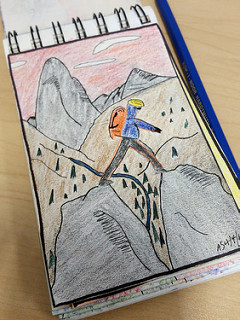
Rock hopping. (All rights reserved)

In 2009, two significant historical individuals close to climbers and outdoor enthusiasts were given a status near Sainthood: John Muir (1834-1914), the great explorer and photographer, and Hudson Stuck (1863-1920), the leader of the first successful ascent of Denali, were named Holy Men by the Episcopal Church.

Because of their status as great Episcopalians, Holy Men are assigned a feast day, a day of celebration, on the church’s calendar. April 22nd was named their combined feast day. Not coincidentally, April 22nd is also Earth Day.

If you’re Episcopalian, or even Catholic, you know that there was nothing resembling a Thanksgiving holiday on any saint’s or holy person’s feast day. Rather it is a day to contemplate, dwell, or meditate on the holy person’s life and work. However, there are particular mentions, prayers, or readings from scripture assigned or associated with the feast day’s honoree (or in this case, the honorees) on their feast day to help celebrate and speak something to one’s soul.

The official record by the Episcopal Church in naming these men as Holy characterized Muir as a “Naturalist and Writer” while identifying Stuck as a “Priest and Environmentalist.” (Stuck was an Archdeacon in the Diocese of Alaska.)

You may read the prayer and scripture readings by clicking to this page of the Episcopal Church’s website.

So on their upcoming feast day, ask yourself (and maybe even your friends), what does John Muir and Hudson Stuck mean to you and your community?

Thanks again for stopping by. If you enjoyed this post, please consider following The Suburban Mountaineer on Twitter and Facebook.
Sources: 1) EpiscopalChurch.org, 2) Sierra Club and 3) Episcopal Diocese of Alaska.

How to be in Two Places at Once

image

A couple of years ago Jason Stuckey shared with me his high-resolution photos from his first ascent with Clint Helander of Apocalypse Peak in Alaska’s Revelation Mountains. I recently stumbled upon them cleaning up some files. They’re dazzling. Dizzying.

I zoomed in on Clint. At first he appears as a mere stick figure on a steep snow field, but closer in I could see the contours of his helmet, and count the number of pickets and screws hanging on his harness. Then, I saw something I hadn’t noticed before: Clint was looking in the same direction Jason was, and I was, in taking in The Angel, another 9,000-foot tall mountain (9,260 to be precise) over the valley. He had made the second ascent a year earlier.

Looking at these photos from my laptop in my Washington, DC-area condo at 6:30 a.m., I feel a sharp, cold gust brushing my exposed skin, and a little where it isn’t. The clean, unfiltered sunlight is blindingly bright even though my lenses are dark, almost black. It’s a bluebird day, rays bouncing sharply off the snow. And I can imagine my calves stretching, getting oddly warm in an unwelcome way, as I’m standing on my front points.

Then I remember that I have to wake the kids in an hour, and I am supposed to cover a Congressional hearing on the Hill at 10:00. I must remember to wear a tie today. I need to be there to know what the tone of the meeting was and whether any promises were made so I can hold them accountable. If I don’t, no one else will. At least that’s what I strongly believe, even if it might not be entirely true, or necessary.

Damn it. I want to be here. Living with my family. Fighting for my cause. But I want to be in that photo too.

The Passionate Divide

Adam Campbell, an Arc’teryx ultra-marathoner, lawyer and reader, wrote an essay in the fall-winter issue of the brand’s Lithographica publication titled, “The Passionate Divide”.  Campbell loved three things: running, legal challenges, and reading. They are his passions and while he considers himself fortunate, as many people don’t have even one passion, he is simultaneously cursed by having more than one. His ambition made him want to do well at both. Except improving at one meant sacrificing time that could be used to improve on the other.

Campbell talks about the quest so many people talk about everywhere: elusive work-life balance. Natalie has learned, and sometimes reminds me that balance doesn’t mean 50-50; balance can be 70-30 if it makes sense and you accept it. She’s right. But I haven’t figured out what the right arrangement is either.

The conflicts Campbell faced broke up his marriage and ended his time at the law firm where he worked at the time. And he stopped racing. He worked to find his motivation again. Then he realized that the idea of balance is all wrong — which is more to Natalie’s point to me. Campbell wrote, “balance means that two things are in opposition with one another; they are counterweights with nothing in common.” But we both know that isn’t true. Campbell’s passions are part of his whole. My passions are part of me combined. As Campbell also wrote, “Integration was the path to less internal conflict… Be gone guilt.”

One Unresolved Matter

Is climbing still mainly an outdoor activity in the mountains? That’s the way I prefer it. But climbing is in just about every peakless metro area through gyms. Even when I go climbing these days, it’s mostly indoors. All that’s great except when it’s the outdoors that we crave. And this presents the issue that Campbell’s approach can’t resolve.

Campbell’s approach has shed a lot of light on my passions for being a stronger climber, better at my job, a better husband, a better father, a better fantasy baseball manager, and a better artist. I realized that I compartmentalize things too much. Which means I often played king of the mountain with my passions. Now I realize that it’s okay so long as I recognize that they are not competing against one another.

After contemplating this for a long time, I’ve realized that our self identity isn’t just made up of one thing, even if it’s one thing at a time. One word can’t describe most of us, whether it’s climber, friend, or guitarist. We’re the combination of many things. And though we may not be great at any of our roles, the sum total can be beautiful. In fact, for us flawed mortals, perhaps only through the whole can we be beautiful.

However, resolving the turmoil of the passions that I can enjoy in and around this city where I live is one thing. I even have to work at trying to be comfortable and embrace the urban lifestyle. (I think I am doing better than I was a few years ago.) It is the passion for a job in the city versus a more wild surrounding that I am still having trouble resolving. Resolving it for passions — which are, broadly speaking, hobbies — is a different matter than the environment.

Passion for Place

Looking again at Jason’s photographs, I sit quietly and feel the wind and absorb some of the sun’s rays. I imagine loosening the pic of an ice ax, being careful not to break it, and reaching higher to chip into a firm bite of ice.

But I’m not in Alaska. So maybe after the hearing, I’ll leave work early, get Natalie and the kids and go play by the river. That actually sounds pretty darn good too.

Thanks again for stopping by. If you enjoyed this post, please consider following The Suburban Mountaineer on Twitter and Facebook.
Voytek Kurtyka, The Great

2016-03-30_12-01-10.jpg

The question “why do you climb?” takes us all down a slippery slope; it never yields a satisfying answer for anyone. However, the question of what we seek in climbing may be more effective than asking why we climb at all, according to Kelly Cordes in correspondence in 2012 with Katie Ives of Alpinist.

I have often said that climbing, and to a higher degree alpinism, allows us to pull back the veil of fear and see through to a glimpse of enlightenment. Also, that that quest is a reason to climb or appreciate climbing and committed climbers. At least that’s the conclusion I’ve drawn over the last twenty years of being obsessed with various forms of climbing.

However, the Himalayan veteran Voytek Kurtyka of Poland has insight that’s deeper, fuller, and more complex. He’s a bit of a mystery to me. I’m fascinated by what he thinks and I’ve been examining it for some time.

And darn it! I don’t know why he didn’t make my short-short list of the Greatest Climbers of All Time. I must have missed something.

The Greatest Climber of All Time

In 2013, just before my Schnickelfritz was born, I started a series of posts to identify the greatest climbers of all time. With a lot of thought and input from readers like you, we narrowed the field to just five climbers and ranked them. I now think that the list is wrong.

I was often told that my quest was foolish and that not only that it couldn’t be done that I shouldn’t even try.

Yet, naming the greats wasn’t actually about putting these climbers on some sort of lifetime achievement award at the Piolet d’Or, but rather a journey to consider why we glean what we do from our heroes. It was as much about us as it was about the climbers we considered.

While I can’t dispute that the people we named, from Walter Bonatti to Jerzy Kukuczka were indeed great, but I think I made a mistake in setting the rubric. Did Kurtyka belong in the top five?

Lifetime Achievement Award

The Piolet d’Or award committee tried to hand its lifetime achievement honor to Voytek Kurtyka before. He declined; uninterested in attending and felt it was unnecessary. He’s an intensely private man and usually very forward focused. However, now almost 70 years old, an arrangement must have been struck for him to accept in April 2016, which many feel is long overdue.

In Freedom Climbers, Bernadette McDonald wrote about when Jerzy Kukuczka and Kurtyka completed the first traverse of Broad Peak’s three summits in 1984, that the world of climbers considered Kurtyka to be the top Polish alpinist, and then she added, “possibly the best in the world.”

Kurtyka was a member of various Polish national expeditions to make the first winter ascents of the 8,000-meter peaks. He put up daring new routes on Asia’s mountaineering landmarks, like Nameless Tower, Kohe Bandaka, Cho Oyu, and others. He made several notable attempts that earned their own admiration, included on K2, and Nanga Parbat’s high and long Mazeno Ridge. In concluding Freedom Climbers, McDonald summed up Kurtyka thusly:

The greatest export of the era was unquestionably Voytek: the thinking man’s climber, visionary and philosophical. He is remembered still for his uncompromising choice of lines. On some he succeeded; on others he failed. But his vision was always inspired. He didn’t enter the race for the 8,00p-metre peaks like Jurek and Wanda but instead made his name on the massive frozen faces, big technical walls and high-altitude traverses of the Himalaya. He was motivated by beautiful lines, difficult lines, futuristic lines. He eschewed fixed ropes and big expeditions, preferring the flexibility and independence of two- or three-person teams. And it was on the international stage that he shone brightest. (McDonald 318-319)

There is one ascent’s story that rivals, in my mind anyway, David Roberts’ The Mountain of My Fear, and that of the first ascent of the Shining Wall: In 1985, Kurtyka joined forces with Austrian alpinist Robert Schauer. Together they attempted one of Kurtyka’s obsessions: The West Face of Gasherbrum IV (pictured above), known as the Shining Wall for it’s reflective stone. They took only the clothes they wore, the minimal gear, a bivy sack, a little food, stove and fuel. McDonald characterized many of the anchors as merely “psychological” and having no tangible benefit. But as they went higher on the smooth wall, they were stopped by severe weather and cold nights. Kurtyka and Schauer experienced their bodies at the limit, including sensing a malicious presence of an invisible third man. They survived, completed the wall, but turned back on heading to the summit. This climb is a clear candidate for one of the greatest climbs of all time.

Insight from Voytek Kurtyka

Issue 43 of Alpinist is one of my favorite issues since I started subscribing a few year ago. It contains the crag profile for Squamish, British Colombia, and, perhaps more significantly, an interview of Kurtyka arranged by Bernadette McDonald, “The View from the Wall.” If we were to Canonize an Alpinists Bible, this could be the Book of Voytek.

What does Kurtyka say is the reason we climb? It’s about dignity; to find it, isolate it, and latch on to it longer. He acknowledges that we seek to climb something is mechanical but that there is a battle to do so, and it is inward. Can we respect ourselves? Can we pull ourselves together? Can we still see beauty? In fact, if we can maintain or hang on to our dignity, Kurtyka says we should see greater beauty and understood what is beautiful better. I am oversimplifying it, of course.

Kurtyka believes that climbing can open gateways to a realm that we are capable of connecting with. Call it spiritual or cosmic. He isn’t sure either. But all climbing does is open it for us to see it it. (Or perhaps it exposes ourselves? But that’s a different philosophical thought.)

I’ve read the interview half a dozen times in the last two years and every time I find his talk of whether there is a God unsettling. He says he cannot believe in a being that demands blind obedience. My understanding of such things says it requires a leap of faith. Of course, Kurtyka also said in the interview that he has always struggled with his ego, mainly tempering it. He made it sound like a nasty inward fight. Ego can be a major impediment to a quest for dignity and seeing beauty outside ourselves, including in the people around us. Ego, of course, is a barrier to any leaps of faith; so perhaps it’s not about whether he could believe in God but does he himself want to. I’m curious what his retort would be.

His perspective on God doesn’t have anything to do with the gateway to whatever that cosmic experience he has had in Gasherbrum IV or on so many other climbs. It seems he questions what God is more so than who it is, but it seems something of a higher being does exist for Kurtyka, even if it is not definable. Maybe it doesn’t have to be.

Why Voytek Kurtyka didn’t make my original list of the top five greatest climbers of all time is simple: He might be in a whole different category. Hopefully, I’ll have time to share that in more detail, in a presentable way. For now, cheers to Voytek Kurtyka, The Great, and congratulations at last on the Piolet d’Or Lifetime Achievement Award!

Thanks again for stopping by. If you enjoyed this post, please consider following The Suburban Mountaineer on Twitter and Facebook.
It is Down to K2, and Other News

26482605106_d2297ba3f7

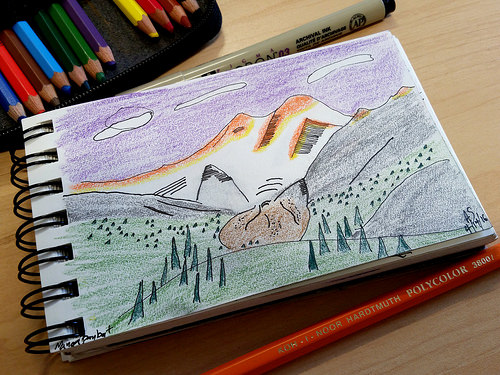
Nanga Parbat Light. (All rights reserved)

I woke a short while ago and turned on my phone to read the news about the U.S. presidential debate held last night. Instead I was thrilled to hear this news:

At around 3:37 p.m. in the Karakorum, Alex Txikon, Ali Sadpara and Simone Moro radioed that they have made the first winter ascent of Nanga Parbat. According to sources reported through Raheel Adnan, of Altitude Pakistan, the day was beautiful without even a cloud.

The descent is underway right now. So while the first ascent has been made, the climb is only half done. Good luck on the descent!

So that leaves K2 as the only 8,000-meter peak left unclimbed in winter.

(I guess we know where Simone Moro and everyone else will be applying for permits next year.)

In other news, the American Alpine Club is holding it’s Annual Benefit Dinner this weekend right here in town (Washington, DC). It’s like a mini-conference. Tonight is a members only (free to attend) Climbers Gathering at a local indoor climbing gym (not my local one, unfortunately), where well-known climbers will speak and several awards will be given, including honoring Katie Ives for excellence in climbing literature. Tomorrow there will be panel.discussions, a silent auction, and the main event featuring Conrad Anker and Damien Gildea to celebrate the 50th anniversary of the 1966 American mountaineering expedition to Antarctica.

I can’t attend this year, but I am thrilled to be meeting up with a few of the attendees, mostly known for their writing. (I’m keeping these meetings all off-the record; sorry.)

Also, if you haven’t heard, this year’s Piolet d’Or will award present the lifetime achievement award in April to Voytek Kurtyka. His climbing accomplishments, such as his work on Gasherbrum IV, and other ascents and attempts, were spectacular, and deserving of the award. But he resonates with me, and other climbers, also because he has an almost mystic side and connection with nature (i.e it’s wild unpredictable side) that leaves himself open to the mountain.

This time, leading up to the award ceremony might be a good time take a closer look at him and the little bit of writing he’s contributed to see what’s there for us. More on that later.

Thanks again for stopping by. If you enjoyed this post, please consider following The Suburban Mountaineer on Twitter and Facebook.

Why We May Climb on Public Land is You

26312680282_626aab163c

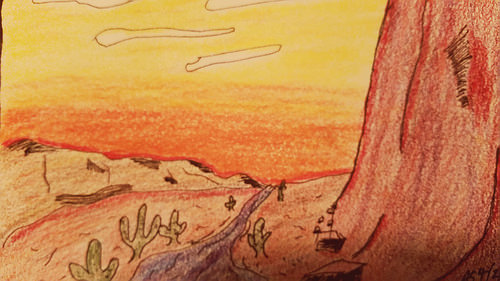
The Creek. (All rights reserved)

The Bundy standoff in Burns, Oregon has lasted more than 40 days and the latest news says it may be coming to coming to a conclusion. It’s raised a lot of chatter about who controls the use of public lands. In fact, it’s inspired at least one of us: Over Facebook, Andrew Bisharat suggested learning from the Bundy clan’s effort and leading a crusade to take over the fish hatchery (which is actually on private land) so that we can climb the lower half of Rifle, CO, where it is currently prohibited. He was a joking.

At least I think he was joking.

There’s a lot of anger about government’s role today. It’s fueling the Bundy family and many like-minded ranchers. The anger, though over various topics, prompts many Presidential primary candidates’ supporters. Generally, the current system and values expressed by our laws and put into practice doesn’t work in their favor and they are frustrated.

When it comes to public lands, climbers are on the winning side these days. We can easily take for granted that we are allowed to climb most everywhere. Official land management plans allow for climbing in the most desirable locations. Bolting is permitted in the backcountry in some areas, within some guidelines. And, among climbers, most of us self-enforce good neighbor-policies through following Leave No Trace principals.

But there some real threats to that system. The balance could shift. And it might not be in your favor any longer.

Freedom to Climb at Risk

The freedom of climbing — whether that freedom is about movement over rock and hills or overcoming the idea that something seems impossible to climb — is about a specific approach freedom.

That application of freedom comes from how society values that kind of freedom. Most of us don’t think about it much, but we can climb in the Adirondacks, Yosemite, Red Rocks and everywhere in between because we’re allowed to. Every park has a management plan and that covers permissible and impermissible activities, from where you can make fires to fishing access, are covered and revised periodically.

However, who is making those land management plans would change if the public lands they address were owned by someone else, like the state or local governments. Members of the U.S. House of Representatives have bills to relinquish millions of acres of federally managed and protected land to states and local interests.

These are ongoing issues. And there have been ongoing issues like these that come and go onto our radar in climbing magazines and on social media. But these are real discussions that could shift who gets to graze their cattle where, how the ore beds are extracted, and where you can and cannot climb.

Speak Up

There are excellent advocates at the American Alpine Club and the Access Fund working to influence the outcome of discussions about the future of climbing in America. But they are empowered by you. Think about some other strong advocacy organizations:

  • NRA — It has a large membership that speaks up whenever their rights and freedoms feel threatened. And they contribute great deals of money.
  • AARP — This may be the largest national organization in size, and they are vocal on only two issues (Social Security and Medicare) for the most part, but it ensures the issues are protected and even considered sacred.
  • AIPAC — This group represents a small population of Americans, but it has an impressive infrastructure to mobilize advocates in nearly every Congressional district in the country with a reasonable amount of discipline.

All three of these examples have two things in common: They have dedicated members and they write and call their Members of Congress and other policymakers when summoned to do so.

So here is what you need to do:

  1. Join the AAC and the Access Fund, if you haven’t already. They are our watch dogs and our radar screen for threats to our way of life. And,
  2. Sign this petition from Protect Our Public Land, supported by the Outdoors Alliance, to go on the record that you support the protection of our public lands.

I believe compromise is always possible. While the lower-half of Rifle might be out of bounds, I think we can secure climbing and better land management for everyone. Hopefully will will do it without sacrificing what we hold dear and how we want to use the land.

Thanks again for stopping by. If you enjoyed this post, please consider following The Suburban Mountaineer on Twitter and Facebook.

‘Alpine Warriors’ by Bernadette McDonald


Alpine_WarriorsBy 1979, the summit of Mount Everest had been reached by every major ridge, yet a large expedition from Yugoslavia arrived to top their last achievement of making the first ascent of Makalu South Face. The West Ridge of Everest was a long unconventional line to the top. It was first climbed by the Americans in 1963, and is still well celebrated in the United States today. Except the Americans climbed only the upper half. The Yugoslavians came to traverse it all starting at the base, low in the Lho La pass.

Like many national expeditions in those days, it was huge. It included 25 Yugoslavian mountaineers, 19 Sherpas, three cooks, three kitchen boys, two mail runners, 700 porters and 18 tons of gear. The ascent had to overcome a steep and severe gap, which required a winch to overcome so it was possible to haul the gear over the broken portion of the ridge. All efforts and ingenuity combined, the Yugoslavians positioned three Slovenian climbers at Camp V who were close to each other, Nejc Zaplotnik, Andrej Stremfelj, and Andrej’s brother, Marko Stremfelj.

Shortly after starting out from Camp V, however, Marko’s oxygen apparatus malfunctioned. After some jostling with the regulator, Marko was forced to turn around. Andrej was conflicted  and frustrated about ascending without his brother; it was so unjust. Andrej went on with Nejc, but they weren’t free of issues, however; both their equipment failed and only Nejc had enough tanked air to get him to the top. Andrej said he’d go on and as high as long as he could.

The summit was far, and the day was getting late. Nejc was determined to reach to top on this push, so he steeled himself mentally for a cold, dark high-altitude bivouac, which likely meant losing toes, fingers or limbs to frostbite and possibly death. Except when they radioed base camp, they realized that it wasn’t as late as they had thought; they still had plenty of daylight ahead. Buoyed, they plodded upward. But upon reaching the Chinese tripod on the summit, elated, the question was daunting: We can’t go down the way we came, so what the heck do we do now?

This was a mere moment of one of the dozen-and-a-half stories Bernadette McDonald retells with prose sometimes bordering on poetry and with the courage to cuss when the tension required it in her latest award winning book, Alpine Warriors (2015).

Writing from the Top

Bernadette McDonald has been in a unique position to uncover some of the hidden stories among European climbing communities. She oversaw mountain culture programs, including the Mountain Film and Book Festival, at the Banff Centre in Alberta, Canada, and she has published (or edited) over eight books. Perhaps most notably Tomaz Humar (2008) and Freedom Climbers (2011), both of which won the grand prize in the Banff Mountain Book Competition when they were written.

The best climbing and mountaineering literature doesn’t just list the characters, the route, and the accomplishments, but tells a non-climbing story through the challenge of the climb. McDonald has done this with biographies, and in Freedom Climbers and Alpine Warriors she talks about a national story of a people (the Poles and the Slovenes, respectively.)

Surge of Himalayan Ascents

I spoke briefly with McDonald after she won at Banff in November, but before I started to read it. So I knew premise of the book and that it was similar to Freedom Climbers, in that it was a national history of climbing. But she emphasized that it was about the Slovenian accomplishments in the 1970s and 1980s. I didn’t understand why that was so significant until halfway through the book. She sums it best at the start of Chapter 12:

Although Yugoslavian climbers entered the Himalayan arena late, the international climbing community was stunned by their accomplishments on Makalu and Everest and awed by their near successes on the South Faces of Dhuahlagiri and Lhotse. There were many more: Kangbachen, Trisol, Cho Oyu, Shishapangma, Gaurishankar South Summit, Annapurna, Gangapurna, Yalung Kang, Ama Dablam, Lhotse Shar — the list of ascents went on and on. As their triumphs accumulated, confidence grew. So did national pride.

Alpine Warriors tells a story about Yugoslavia after World War II and the dozen-and-a-half alpinists from Slovenia that changed Himalayan climbing. These climbers were from a war torn country, with religious, political, and ethnic fragmentation reduced to poverty. These conditions, arguably, and combined with the location near the Tatras, produced a hardened group and several leaders that brought these hardened men to the Himalayas, not in the heyday of the 1950s and 1960s when the 8,000-meter peaks were being climbed by their major ridges, but later, when the new challenges had to be spotted and seized before anybody else.

To name a few of the great alpinists McDonald writes about, Ales Kunaver was the leading visionary and teacher, Nejc Zaplotnik was their spokesperson and spiritual leader, and Francek Knez is the quiet outsider that climbed big walls with a grace and ferociousness the likeness no one has ever seen. These three alone are worth an English-language biography.

Lots of Competition in 2015

It was a difficult field for any mountaineering book competition, in 2015, whether it was Banff, the Boardman Tasker, or the American Alpine ClubBernadette_McDonald Award in Literature. Alpine Warriors was up against Kelly Cordes’ The Tower: A Chronicle of Climbing and Controversy on Cerro Torre, Barry Blanchard’s The Calling: A Life Rocked by Mountains, and John Porter’s One Day as a Tiger, just to name a few. Of course, it helps when you have a good story to tell, which all of them do, but these folks can all write.

I’m not privy to what the judges at Banff discussed (I wasn’t even one of the book category pre-readers), but I know from reading Cordes’ and Blanchard’s books, McDonald might have had her closest competition yet. They all had the ability to make their prose dance like poetry, but McDonald had the touch and a perspective. She didn’t just tell a story about a life. She didn’t just tell about the lives that came to a temple. She told the story of a people through the lens of climbing.

Reading Alpine Warriors I learned more about Yugoslovians and Slovenians than I was taught in 20th Century European Politics and Soviet History in college. I read about 20 or so mini-biographies about Slovenian alpinists in Alpine Warriors. I learned about Nejc Zaplotnik’s Slovenian classic book, Pot, which means “the path” or “the way”, and I read the first passages translated and widely distributed in English, thanks to McDonalds’ painstaking work over the phone with an interpreter. It opened my world to a people and an experience that is unique and was previously hidden from me.

Thanks again for stopping by. If you enjoyed this post, please consider following The Suburban Mountaineer on Twitter and Facebook.