Colin Haley Solos Cerro Standhardt

This past weekend, alpinist Colin Haley was in Patagonia where he sended the Exocet route on Cerro Standhardt solo, according to his blog.  Cerro Standhardt neighbors Cerro Torre and Cerro Egger.

The Exocet route has never been soloed, until now.  It involves some scrambling, water ice (WI5) and some mixed climbing.

The route had been attempted solo before in 1994 by Tommy Bonapace, an Austrian climber, but was forced down due to one of those legendary “broom of God” Patagonian storms.

Haley’s accomplishment is all the more interesting when all the peaks in Patagonia have been conquored and the most challenging routes have been mostly repeated.  It’s good to know there are still some records that can still be a “first.”

Well done, Colin!

If you enjoyed this post, consider joining the small but growing community of fans of the Suburban Mountaineer on Facebook and get access to additional information and discussions.

Why Do I Sink Even in My Snowshoes?

A hunting guide in Greenville, Maine explained to me his complaint about the modern snowshoes, like those from Tubbs, MSR or Atlas brands; even if they are rated properly for him based on his weight, he still sinks slightly in the snow.  Granted, he did not sink more than an inch and a half – he admittedly did not have to put in the effort of high stepping it through deep snow post-holing!

Regardless, he blamed the contemporary-style snowshoes and preferred his old wood-frame and rawhide snowshoes.  They were, after all, larger and provided more floatation.  So is there something fundamentally wrong with the modern aluminum snowshoe?

Modern aluminum-framed snowshoes are popular items listed in the holiday and winter outfitters’ catalogues.  These contemporary snowshoes are, for the most part (but not exclusively), the only snowshoes you can buy new today.  I own an older pair of Tubbs Ventures; they are easy to put on and take off and maintain (mostly worry free).  My uncle used a beaver tail-style wooden frame snowshoe he bought from an antique store.  Both work to my satisfaction in the northeast.

The issue has to do with the snow walker’s tolerance for sinkage and demand for floatation.  Floatation is the snowshoe’s ability to keep the walker atop the snow.  This is accomplished by the size and shape of the snowshoe.  Snowshoes are designed to spread the weight of the snowshoer out so that walking over deep piles of snowflakes can be done with less effort.

Gene Prater explains in Snowshoeing: From Novice to Master on page 38 of the fifth edition (yes, I buy and read these books), in different regions, different snowshoes are appropriate in different parts of the winter season.  For instance, in the Cascades or Coast Range on the western part of the continent where snow often turns to a firm solid swiftly, a person the size of my uncle – around two-hundred pounds with his daypack – should do fine with a smaller type snowshoe, like the Tubbs Venture.

However, in Maine, the snow can be interchangeable fluffy and dry depending whether the moisture is coming from the north or the east.  The fluffy stuff from the east may require the snow walker to want more float and therefore a bigger snowshoe.

In the end, snowshoeing today is mostly recreational and for day hikes.  When it becomes miserable or difficult we tend to turn around.  But if you plan to do more extensive work in the backcountry, including camping and heading to higher elevations, the larger aluminum snowshoes – rated above your weight – will serve you well and are still less maintenance than is required for the wooden-framed snowshoes.

Well, thanks again for visiting.  If you enjoyed this post, please consider following the Suburban Mountaineer on Facebook or on Twitter (@SuburbanMtnr).

Age, National Pride and Everest

Happy Veterans Day and Remembrance Day from the Suburban Mountaineer!  And also, to my friends and family from the U.S. Marines, I want to wish a belated Happy Birthday to the Marine Corps.  Without the service of our veterans and armed forces, the conditions that we as Americans and Canadians hike, climb, explore and travel in general could be very, very different.

You may have already heard that a nine-year old Sherpa, Tseten, may become the youngest person to reach the top of Mount Everest(29,035 ft./8,848 m.).  He would beat Justin Romero of California who sended the mountain earlier this year at age 16.

There is controversy and it is two-fold: 1) Shortly after Romero topped out, age limits were set on both sides of the border on Everest; and 2) Tseten’s attempt would be against the new limit and carry a fine (hence everyone’s use of the word illegal.)

I have written about this before and I still feel that such an adventure, at Tseten’s age — about third grade in the states, that he can climb but not without a great deal of support from the adults on the expedition.  I was a little older when I started backpacking and climbing and I could not have done any of it at that age on my own.

To Tseten’s credit, however, he reportedly did summit on  Mount Ramdung (19,440 ft./5,925 m.) in northern Nepal with his father Pemba Dorje Sherpa.  It is Pemba Dorje that is the instigator in all of this.  Pemba Dorje holds the record for the fastest ascent of Mount Everest and he is quite passionate that all records on this mountain must be held by the Nepalese people.

Pemba Dorje is also confident in the aims of this pursuit of the Nepalese record that the authorities would support an exception — which, we now know, is not the case.

Again, I think Tseten should be allowed to climb Everest, but only once he has put in his time, demonstrated competence and reliability in the mountains.  That may mean he is 12 years old or 16 when he is ready.

My last point is about the policies on climbing Mount Everest or any mountain.  The laws or morality should always govern among the peaks above all else– meaning, take care of yourself, do no harm to your fellow climber and help whenever it is needed.  But in general, while I accept (but not necessarily support) user fees, I am annoyed by restrictions and guides on the principle that the mountains are the last truly wild place on earth.  Perhaps young people and older people should not climb high, but aren’t there always outliars capable of breaking through what we think are limitations for everyone?

I would like to know your thoughts on this topic, so feel free to leave a comment below or shoot me an email at SuburbanMountaineer@yahoo.com.  And remember, you may follow the Suburban Mountaineer on Facebook.

Simplifying the Crampon Selection Process

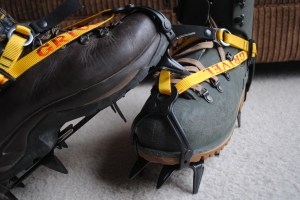
G-10 Crampons

Whatever crampons you choose, they should fit the boots you will wear on the mountain (Szalay 2010).

I took for granted how easy it was to go climbing with a guide in the Adirondacks that does all the outfitting for you.  I never had the complicated task of selecting the appropriate crampon for the trip.  Those guys just handed me everything! 

Then, before my trip to Alaska, I went to purchase my own pair — just in case.  Do you want rigid or flexible, straps or clips, horizontal or vertical teeth?  The options were overwhelming and the prices varied widely.  Because of the specialization, the choices can be overwhelming.  Let me try to get at some fundamentals of this gear to help you simplify your research. 

Purpose of Crampons

Crampons were the improvement upon the hobnail boot – which was literally nails placed in the boot’s sole for traction.  Oscar Eckenstein, a climber in the Scottish Highlands invented the 10-point crampon to give improved grip.  The French and the Germans embraced them in the Alps and adopted their own style of using them – the French flatfooted their way while the Germans tended to step in with their toes.  This was before front points, or “teeth,” so the proper technique needed to be practiced.  The whole point of crampons until the advent of front points and Yvon Chouinard was to improve a climbers grip on icy and snowy surfaces.  But when ice climbing was introduced, things got complex and the sport went in a new direction.  Waterfall ice and “mixed” routes became pursuits in their own right. 

While ice climbing crampons may be used for general mountaineering, and some of us have a tendency for overkill (for instance getting the all-wheel drive even when your car never leaves suburbia) they really are not necessary.  If you expect or want to be prepared for the sole 40-foot vertical ice cliff you encounter on an escape route from your intended route, your general mountaineering crampons can still do the job. 

Making Sense of the Choices

Figuring out which crampon suits you requires you to familiarize yourself with the gear and its functions.  REI’s website provides a helpful page on this by Nancy Prichard Bouchard.  Read it with an eye to what you will be doing in your crampons – not what you want to do.  There is way too much used and unused gear on Ebay for this reason!  Because of the specialization of crampons, you may need to buy the Grivel G-12s for your ascent up Algonquin Peak in January but then need something with more aggressive front points for the Ouray Ice Park in March. 

I used several pairs from Black Diamond from the Adirondack rental shop, and most of them were the step-in (with a clamp at the heel) type or a combination of using the step-in and straps.  Because I was mainly ice climbing, they all had front points and were made of steel, versus aluminum. 

Steel is preferred and stainless is the Cadillac of materials, however aluminum may be suitable for “light” mountaineering.  Aluminum, while less weight, it is not strong enough for unrelenting vertical routes when you’re standing on the teeth all the time. 

Practical Thought

The "tool box."

Whether you are considering strap or step-in models, bring your boots with you to make certain they work right together.  The crampon is an extension of the boot’s sole, and step-in crampons require the boot to have certain features to grip on and stay on.  If the crampon you prefer does not work with the boots you own, consider budgeting for new boots to go with your new spikes. 

Also, be sure to purchase a “tool box” or heavy-fabric cordura bag to fit just your crampons and maybe a few ice screws.  The bag will protect your luggage, favorite fleece and shell from being impaled by your new gear while on the airline to Alaska. 

Well, thanks again for visiting.  If you enjoyed this post, please consider following the Suburban Mountaineer on Facebook or on Twitter (@SuburbanMtnr).

Fee Increase for Denali: Back to Problem Solving

The National Park Service (NPS) has apparently agreed with the Suburban Mountaineer and others: The proposed rate increase from $200 to $500 for permits to climb Denali was too great.

The Suburban Mountaineer agreed that it is costly to run the NPS mountaineering operations in Denali National Park and Preserve, however such an enormous increase in one step was intolerable.  User fees, while popular and effective with the NPS, need to be implemented in a rational manner.  This is especially true for the climber just getting out of college; the more costly permit may cause him or her to compromise on the quality of gear he or she may use on the peak to save his or her life.

According to the Fairbanks News-Miner, NPS spokeswoman Kris Fister said “we’ve taken [the proposed increase] off the table.”  However, where this leaves Denali’s mountaineering operation and other user fees is uncertain.

The NPS is returning to the drawing table and will likely provide a revenue method from other visitors, or a gradual increase (over several years) to the mountaineering permit fee — which the Suburban Mountaineer recommends.  This way, at least the college climber will not be immediately priced out of climbing at the best time in his or her life.

However, the News-Miner article finally articulated the NPS position and rationale for the large increase so well (its communications team managed to explain this only after the push-back from the public was heard, it seems):

“’We spend an inordinate amount of money for a small number of visitors,’ Fister said of the mountaineering program.

“Next climbing season, the Park Service estimates it will spend approximately $1,200 per climber on Denali while the average cost for all other visitors in the park is expected to be about $37.”

Thank you for visiting.  Remember, you can follow the Suburban Mountaineer and join the discussions on Facebook.

Confidence of All-Wheel Drive All the Time: 2010-11 Subaru Outback

Subaru Outback

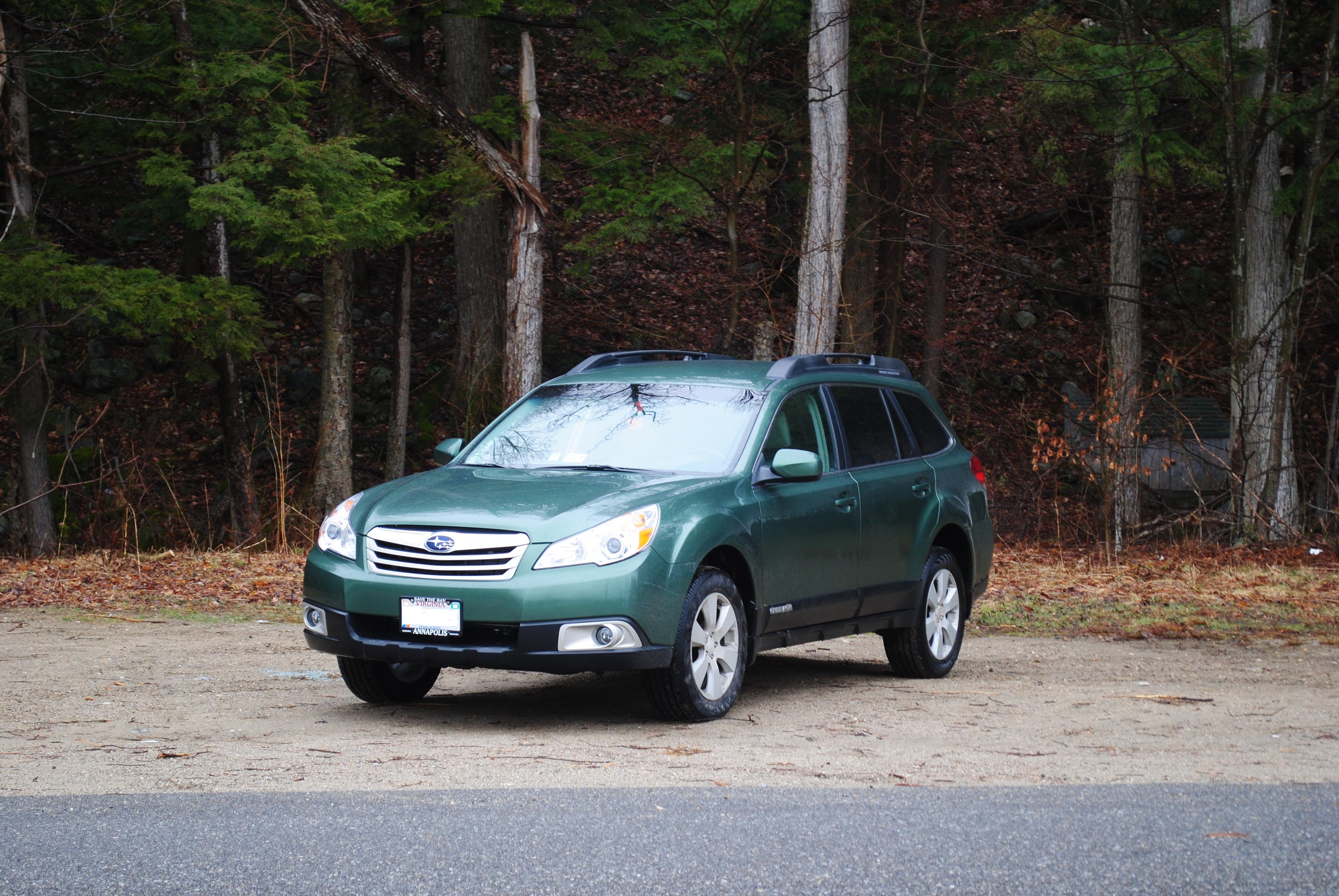
The 2010 Subaru Outback 2.5i Premium (Szalay 2010)

Subaru remodeled the Outback for the fourth time in 2010, making it a little bit more like a small SUV rather than a station wagon, though it is still listed as a sport utility wagon at registration.  Subaru loyalists have been debating about whether the change was good or bad for the brand; Subaru executives have made it no secret that they want to expand beyond their 1.8 percent market share and that by moving beyond the snowy regions where its practical design has reigned supreme. 

While I would have been happy with a third generation (or even a second) Outback, I have been satisfied and proud of the 2010 Outback my wife and I bought as our sole car.  We bought the Premium trim (middle of the road), with CVT (their version of automatic transmission, but with optional on-off paddles for shifting), and the 2.5i 4-cylinder engine – so it qualifies as a green “Partial Zero Emissions Vehicle.”  I look down on the late-model Outbacks that have a 3.5i 6-cylinder engine without a trailer hitch (just wrong).  I have had two 4-cylinder engine cars, a Mazda MX-6 and a Toyota Celica, and the Outback’s engine has much more roar in it. 

In the process of choosing the Outback, my wife and I tested a lot of cars, including the Toyota Venza and Highlander and the Honda CR-V.  A prime feature we looked for was how it handled in snow.  The Highlander performed well, though it was still a truck and has the suspension of pickup – which is tiring on long highway road trips with vibration and road noise.  The Venza is quieter and had the luxury we were looking for, but it is a car for mild climates… Don’t put skis and drive it to Aspen.  It cannot handle the snow. 

The CR-V could get out of a snow bank (I drove straight into one during the test drive to test the so-called all-wheel drive (AWD)) and it got out, but it had to slip before the four-wheel drive kicked in.  The CR-V does not have true all-wheel drive, and instead conserves power to the front wheels except for when the computer determines it is needed. 

Subarus have continuous all-wheel drive and is reasonably close to sharing power with the front and rear wheels equally because of their symmetrical all-wheel drive.  However, a perfect 50-50 split of power is nearly impossible to achieve.  This feature, common on all Subaru models, is dependable, according to scores of proud owners in the snowiest climates.

 The real result was shown during the test drive; my wife this time drove it straight into a snow bank neighboring an elementary school.  It barely even struggled and the wheels with traction helped the wheels that did not and we were out in moments!  Of course, all-wheel drive is no excuse not to still carry a shovel and some salt or sand.  If the snow had been slushy, even a Toyota Tacoma with chains may have been stuck. 

As you know, we bought the 2010 Outback and are proud Subaru owners now.  The 2011 Outback has changed very little, however our singular disappointment with the 2010 has been fixed (and even this is minor) : The side-view mirrors do not fold in on the 2010 models, but they do now for the 2011. 

To have four wheels on the floor and a comfortable drive, the 2010 and 2011 Subaru Outbacks offer that in spades! 

Well, thanks again for visiting.  If you enjoyed this post, please consider following the Suburban Mountaineer on Facebook or on Twitter (@SuburbanMtnr) or leave me a comment below.