A Quick Note on The Suburban Mountaineer

I just made a couple of updates to the Suggested Links page to this site.  I try to update my recommendations every few months depending on how current and useful I think they really are for hikers and climbers.

Also, I have a three other pages, including a page with a legal disclaimer and a an about page with my email, Facebook and Twitter links.  I also maintain a list of books that I recommend and usually let you know what I am reading now (though I am reading a baseball book during the playoffs so it didn’t seem right to list it.)

Anyway, I hope you continue to find it useful and let me know if you have any ideas or suggestions of your own at andrew.szalay@yahoo.com.

Via Ferrata in National Parks: Should We?

According to the Calgary Herald, via ferrata is expanding in North America by government support and the encouragement from the promise of recreational attractions and tourism.  In particular, it is possible that the park superintendents of Banff and Yoho National Parks may exercise their new regulatory flexibility and allow businesses to establish via ferrata routes within the park.

Via ferrata is Italian for iron way.  It is a system of bolted ladders and cables that allows non-technically skilled climbers to ascend alpine routes or rock faces.  They were established in the Dolomites of Northern Italy initially for the military purpose of troop movement during World War I.  Shortly afterwards it became a convenient way for non-mountaineers to see the world from granite walls.

The expansion of via ferrata has been controversial.  This is especially true now that the ethics of clean climbing, by using removable chocks and cams have become commonplace.  These tools have replaced the use of bolts and pitons, which scratch and accelerate the erosion of the face.  Via ferrata is permanently attached to the rock slab.  Therein is the problem.  Some would argue that via ferrata defaces the environment.  It certainly scars the mountains.

However, via ferrata allows people — typically hikers without mountaineering skills — to see the world from the climber’s perspective.  This should not be discouraged.  For that reason, established via ferrata routes are very special.  For instance, climber boyfriends can take their non-climbing girlfriends up to see the world from the wall without weeks and months of toproping and deciding who belays when.

A well maintained via ferrata route offers its climbers an amazing experience without having to find the route or extensive commitment to the art of sending.  But should we put more of these routes up and make them accessible to the public for $70.00?  Should everyone be able to climb a ladder be able to climb up El Capitan or The Chief?

Regardless whether the route goes up a major peak or the often unnoticed granite face outside of Lake Louise, should the peak be climbed by everyone or should it be untouched and pure.  As a hiker and a climber, I love via ferrata.  If via ferrata was not there, I don’t think our park and our experience in the mountains would be lacking.

Enjoy the via ferrata that are established.  But we don’t need any more.

If you agree or disagree, please leave a comment or join the discussion by being a fan of the Suburban Mountaineer on Facebook or Twitter (@SuburbanMtnr).
A Mountain Geek’s Treasure Chest: AAC Archives

As you know, I am much more of an armchair mountaineer these days with my career and family in Peaklessburg.  But even when I climbed and hiked with more regularity, I enjoyed coming across old maps in yard sales and climbing narratives from the 1930s in antique stores. 

I still do and I have to tip my Major League Baseball cap to the Henry S. Hall, Jr. American Alpine Club Library in Golden Colorado for maintaining and continuing to build upon the “collective memory” (their words) of the mountaineering community.  The library has a circulating collection available to American Alpine Club (AAC) members and Friends of the American Alpine Club Library, rare and non-circulating books in the AAC Archives, and photographs which can be considered documentary or art, depending on who is appreciating it. 

Mountaineers are also encouraged to donate their letters, diaries, photos and scrapbooks, expedition reports, films, and even gear to the library in the hopes of maintaining a continuous thread of history.  The library indicates that not everything may be accepted however based on its “appropriateness” — perhaps they mean historical value.  Their website, at least, does not elaborate on that point.  Regardless, this invitation helps ensure the collection will remain the current today as we look back tomorrow.

The libary’s archivists just began reviewing and catalogueing the Bradford Washburn archives with the climbing community’s financial support.  Washburn is one of the greatest Alaskan mountaineers in history, with multiple ascents of Denali, an epic first ascent of Mount Lucania and he was a talented mountain photographer.  He also lead the expedition to map the entire Wrangell-St. Elias Range when no one knew what was in that territory. 

The Washburn archives include 20 unopened file boxes, five flat unopened boxes and over 20 rolled maps.  Staff and resources are needed to properly go through these records of the great mountaineer and explorer.  Individuals may adopt the archives in $100 increments to help complete the work. 

If you enjoyed this post, you may follow future articles on Facebook or Twitter (@SuburbanMtnr).  Thank you.

Unclimbed Chekigo Peak Summited

On October 6 I reported on the unclimbed peaks in the Nepal Himalayas and that a Bangladeshi and Nepalese friendship team set out to summit the unclimbed peak of Chekigo Peak (20,528ft/6257m).  Sure enough, they recently topped out and another “giant” is off the tick list.  Click here for the English language Bangladeshi news report.

Remember, you can follow these posts on Facebook or Twitter (@SuburbanMtnr).

Winter Fun: Pack Well to Prevent Calamity

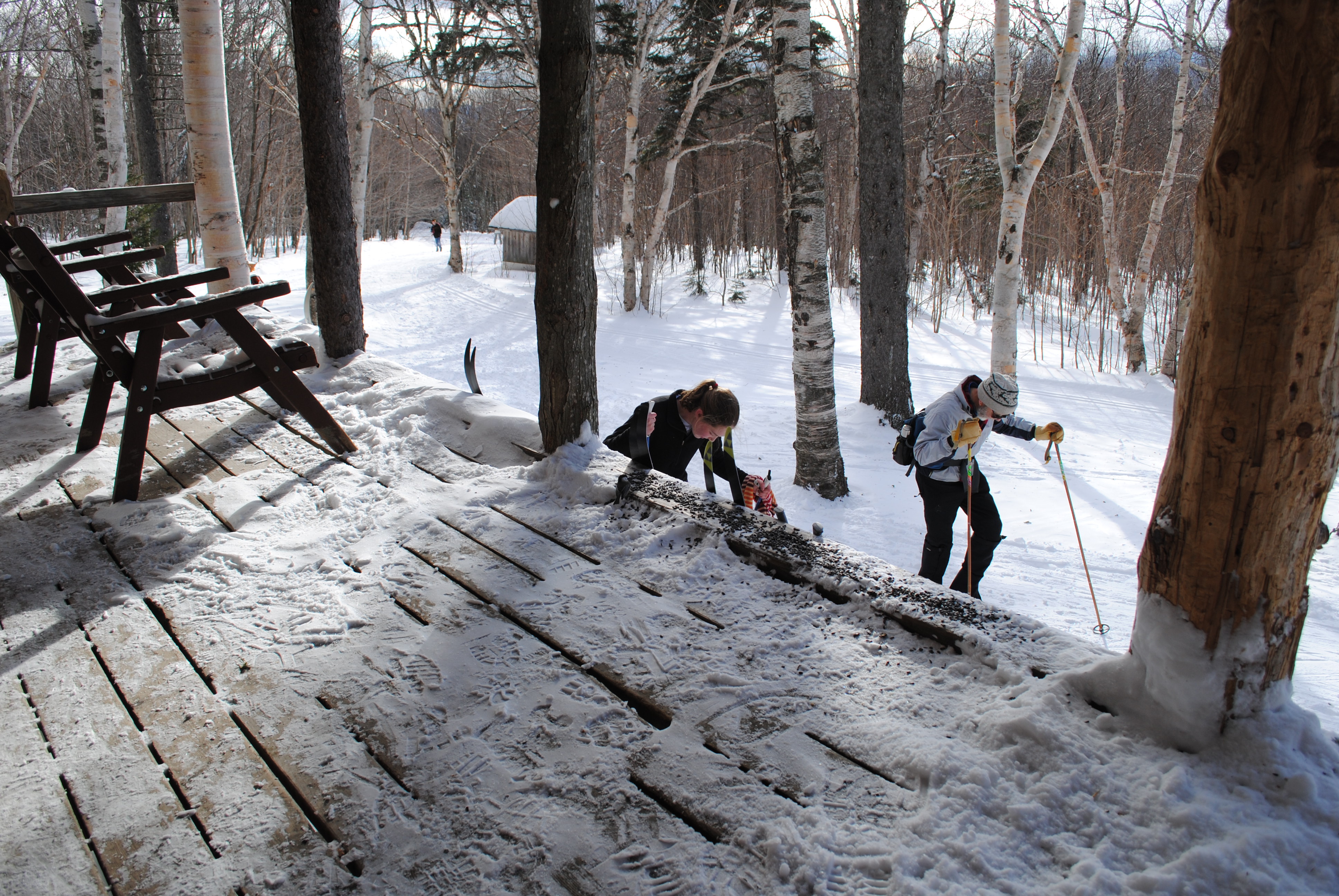
Xcountry skiers

Winter is coming -- do you have what you need?

 The World Series starts next week and the hockey season is already here.  You know what that means for our favorite mountains?  Snow and ice! 

Taking the Ten Essentials is a start, but in general, winter calls for some other necessities too.  In addition to layers, such as a long base layer, fleece and shells, be sure you’re ready to traverse the terrain ahead and that you have key spare items. 

Below is a list of the key items and items to consider packing for a day-long journey, broken down through a winter hike, say in the valley, or some light mountaineering (non-vertical alpine) up a winter trail in the Adirondacks or some parts of the Cascades, for example. 

Winter Hike:

  • Sturdy boots (a full-grain leather boot should be worn with extra socks at a minimum, but insulated winter boots are preferred, and rigid-soled boots, such as mountaineering boots, may also be practical)
  • Gaiters
  • Long Underwear
  • Extra pair of gloves/mittens (it’s a terrible situation when one or both of your original pair are lost)
  • Extra hat with ear coverings
  • Extra flashlight (and keep the batteries insulated and warm)
  • Thermos
  • Pocket/toe warmers
  • Snowshoes or skis

Alpine Ascent:

In addition to the items on the Winter Hike list, take…

  • Insulated jacket
  • Insulated pants
  • Crampons (a pair of 10-point tie-in/strap-on crampons should suffice for bald summits and sloped ice; clip-in crampons for rigid mountaineering boots are better for encountering vertical ice.) 
  • General Mountaineering Ice Axe (choose an axe by the traditional method where by holding the head at your side, the spike should reach your ankle, though some today disagree with me.  See my article on this here.)
  • Ski goggles
  • Sleeping bag (this is for an emergency and may be worth packing!)
  • Altimeter

And as a refresher, these are the Ten Essentials that the Mountaineers organization out of Seattle recommend everyone bring, at a minimum, when they venture into the backcountry:

  1. Compass
  2. Extra Food (take more than the trip calls for)
  3. Fire Starter (such as a candle or magnesium block)
  4. First Aid Kit (with any necessary medication)
  5. Flashlight (with extra batteries)
  6. Jacket (keep out wind and precipitation)
  7. Knife (pocket knife usually does well enough)
  8. Map
  9. Matches (store in water tight container)
  10. Whistle 

And lastly, tell someone where you are going and when you intend to be back and stick to it by setting a turnaround time for yourself.  Also be sure that your friend or family member knows who to call if you are late.  We want you to come back in one piece and frostbite free! 

Well, thanks again for visiting.  If you enjoyed this post, please consider following the Suburban Mountaineer on Facebook or on Twitter (@SuburbanMtnr).

Michelle Smith SAR Video

After Michelle Smith and her climbing partner Stephen Koch were waiting for rescue on Grand Teton after a fall, they decided to whip out their camera and film the embarrassing operation.  The video is worth watching. 

Best part, is Smith and Koch kept a very positive and optimistic attitude.  It makes all the difference for keeping their head straight.  Had the weather been different on the day of the accident, they would have had to wait longer and endure the conditions.

Thanks for visiting.  If you enjoyed this post, please consider following the Suburban Mountaineer on Facebook and joining in the discussions and obtaining other materials.