Too Far from Our Beloved Mountains? Try Hiking the Coast

Esowista Peninsula

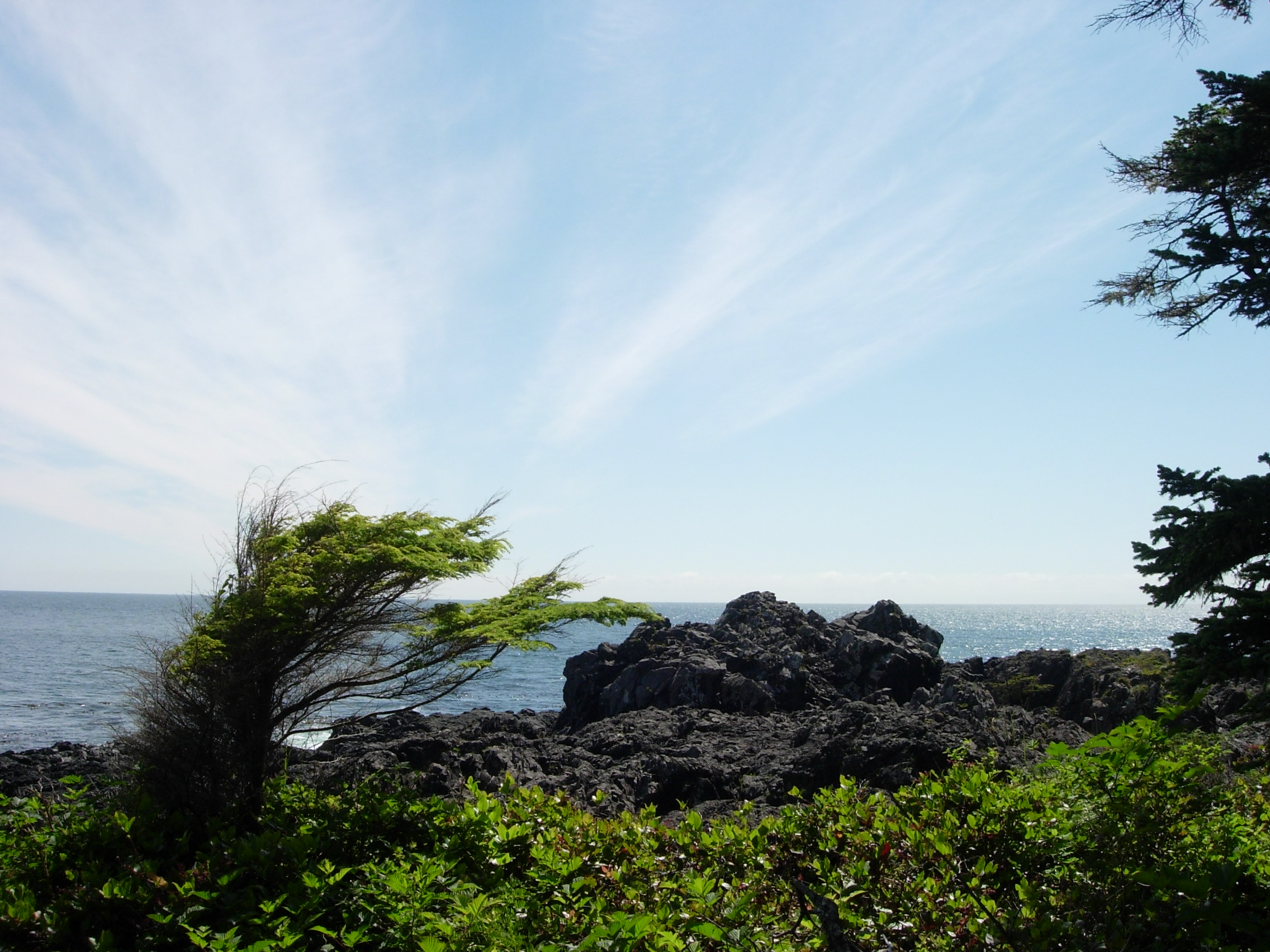
A view from the shore along the northern Pacific coast of North America. 2008.

My wife and I got away recently… No, not to Stowe, Vermont yet; we are still collecting and counting votes at Trazzler.com, as explained in the May 26th post.  We left the city for the day to visit Assateague National Seashore in Maryland, and it was far from a walk on the beach.  It was a hike.

As hikers, we are mainly seeking nature and solitude when we venture outdoors.  If we can get to our favorite mountain range then great, but that is not always the case.  National Seashores and state parks along the coast may be nearer to us for when we need to hop a pack.

Before you go, determine whether your coastal destination is a sun tanning beach or whether it is natural seashore.  It probably goes without saying, we are not looking for California’s Long Beach or the Carolinas’ Myrtle Beach.  If we are going to cover the shore as a hike, we need to find publically accessible coastline such as Assateague National Seashore.  Consider also visiting in the early spring, late fall or winter when crowds are down.

For a coastal hike, we should come prepared for a hike as normal (see the tab “About Backpacking and Traditional Mountaineering”), but wear quick drying clothes and carry a rain jacket/windbreaker but make our own determinations about footwear, especially if the majority of our route crosses sand.  While it is nice to walk barefoot in the sand, hopping a backpack of any weight for a distance will start to apply pressure to the arches of your feet.  Teva-like sandals may be preferred for light daypacks or full hiking boots if we are carrying anything larger than a day-and-a-half pack.  If our coastal hike will cover mostly rocky outcroppings and some forest, such as those found in the northern coasts or along the great lakes, full hiking boots may be best.

As for traveling and settling, first, expect to cover less ground than we normally do on level ground.  Rocky outcroppings or sand can make for slower going.  Second, if we plan to camping, check with the land management agency on whether camping is permitted and what their rules are for campfires and treatment of human waste.

While traveling a coastal route may usually be fairly direct, navigation charts are still necessary.  A basic map of the area and a compass may be useful especially if we have to significantly alter our path away from the shore.  Also be sure to obtain the current tide charts for your area, if for nothing else, to ensure that our campsite won’t be submerged by evening.  The National Oceanic and Atmospheric Administration (NOAA) provides charts for the United States and Fisheries and Oceans Canada also provides tables.

Lastly, carrying a wildlife guide of birds and sea life of the region is a great way to take in the environment.  There tends to be several distinct habitats along the shore from the sea itself, beach, dunes, grasses and woodlands all with its own residents.  Use the tide chart to know when it is safest to know when it is best to explore the sea bottom at low tide.

Stuck in Peaklessburg: Send Me to Vermont

Nebraska Notch

A view of Nebraska Notch from the cabin up Luce Hill, Trapp Family Lodge, Stowe, Vermont

As people gravitate to metropolitan areas to live and work, building up the population density and putting more of us into parking lots with names like “Interstate 95,” we all need to find an exit to releave the pressure.  Fortunately, my wife recently got to problem-solving by using her freelance writing skills to enter a writing contest on a great new travel website that could send us to our favorite little town in Vermont — Stowe.  She wrote a great, short piece entitled “Observing Saint Patrick’s Day on Snowshoes at Trapp Family Cabin,” on Trazzler.com.  If we get the top pick of votes, we’ll win a three night stay in Stowe! 

I know we all need to get away, but I promise if you help us win, I’ll share photos and have some great outdoor lifestyle stories and materials to share right here.  Go the Trazzler.com and register (very easy for anyone, especially if you are already on FaceBook.)

Voting ends Memorial Day, May 31, 2010.  Thanks in advance for your help!

Denali: Exploring Alaskan Backcountry

Savage River, Denali National Park and Preserve

The Savage River at 11:30 p.m. in Denali NPP (Szalay)

For those of us lucky enough to visit Denali National Park and Preserve, the pure backcountry experience can be found away from the parking lots and picnic benches (which are available too, for those that travel with friends and family in need of a tether to civilization) that sometimes breakup our hikes through state parks, or (ahem) Shenandoah.  To make the most of the opportunity in Denali NPP, we have to know some things unique to navigating it and the far north in general.

We’ll assume that we all read the last post, “Denali: Planning for a Summer Visit,” so that we’ve already determined that hiking into the backcountry of Denali National Park and Preserve will suit us and our companions.  If our companions are not on the same page, the backpacking trip by misery through association with irritating hiking buddies with annoying habits that only come out on the trail, or buddies that say, “what do you mean we have to camp outside?”  It’s best to find out these things well ahead of time.

Guide References. We should familiarize ourselves with the park’s layout and major features before we go.   Start by getting oriented through the park’s website, in particular its page on the backcountry.  These days, it is the best resource.  For guide books on the backcountry, the two books that were readily available until relatively recently were Denali: The Complete Guide by Bill Sherwonit or Denali: A Backcountry Companion by Jon Niernberg.  Both are not currently in print but used copies may be obtained through Barnes & Noble’s website.  I suspect that they are out of print due to technology trends and because the Denali’s backcountry is difficult to quantify in writing.  By contrast, covering the Adirondacks, which has an elaborate network of maintained trails, is a subject ready for a guide book since it covers fixed trails rather than areas of tract that is subject to change.

Maps. Maps are always king, especially in trail-less Denali.  For general park orientation, my favorite is map 222 from National Geographic, which covers Denali National Park and Preserve.  It provides a general lay out of the entire park and wilderness backcountry units (into which the park is divided for management purposes) as well.  But when actually traversing cross country, nothing beats the square maps from the United States Geologic Survey (USGS).

Permits. The first thing we need to know is that the National Park Rangers manage the backcountry of Denali through a permit and a quota system for each backcountry unit on the park map.  Day hikers do not need backcountry permits.  All trips start, essentially, at the Park Headquarters, where we file what amounts to our “flight plan.”  Permits are issued by the Rangers for specific backcountry units on a first-come-first-served basis.  Because each backcountry unit has a maximum number of hikers permitted each day (around eight, depending on the unit), the unit we may have preferred to go through may be closed to us on our arrival.  So it is good to have plan Bravo and even Charlie ready.

Bears. Before the Rangers allow us to go in-country, we are given BRFCs, for Bear Resistant Food Container, also known as a food canister.  These are necessary, especially if we plan to camp on the open tundra where a place to hang our food bag out of reach from bears is impossible.  The canister closes flush without a handle, with the help of a little screw head-like notch, so the bear cannot get in no matter how much he or she hits it, squeezes or punts it.  It is great that the National Park Service issues them to backcountry hikers, but if we plan to backpack elsewhere in the far north, we should invest in one to take with us.  They run about $70.  In addition, we should make noise when we travel – human conversation is a unique sound and simply saying “Stay away, bear” repeatedly should do the trick.  Bear spray is also popular and might be good to keep accessible on the hip belt of our packs.

Cross Country Travel. If we have backpacked in the lower forty-eight, we probably have the basic skills necessary for hiking Denali.  But in addition to the basics – such as camping, protecting food from animals, packing, basic map and compass skills, and general physical fitness – we need to acquire additional skills for the Alaskan backcountry.  For example our expectation for our anticipated rate of travel needs to be tweaked.  This is because in the far north, sometimes the ground feels spongy.  Still, other terrain may feel like it is falling out from under us, particularly on a scree field or sometimes on a gravel bar.  While wildernesses like this make for slow going, it is just part of the challenge of negotiating routes in the far north, where there are no established trails or maintained trails.

River Crossings. There are numerous rivers throughout the park and finding the safest and proper place to cross them can take a great deal of time.  Preferably, cross at the widest braids where the river runs shallow.  We should get advice on the rivers we expect to cross from the Rangers before setting out.  Also, while some hikers are comfortable crossing in their boots, I remove mine despite the temperature of the water and wear old sneakers or Teva sandals – whichever I brought to wear in camp.

Campfires. Unfortunately, for backcountry travelers in Denali NPP, campfires are prohibited.   So plan to cook on a camp stove and stay warm in our fleece jackets or sleeping bags.  Most of us respect (as we should) the rule and know that an absurd portion of forest and brush fires are cause by people, but the satisfaction of light and warmth of a fire is the chill on the beer.  It may not be a bad idea to spend a night at a car camping site along the park access road before leaving just to use one of the permanent fire rings.

In a later post I will talk about some recommended day hikes and overnighters in Denali NPP. As well as what gear to bring.

Denali: Planning for a Summer Visit

Mount McKinley, Alaska

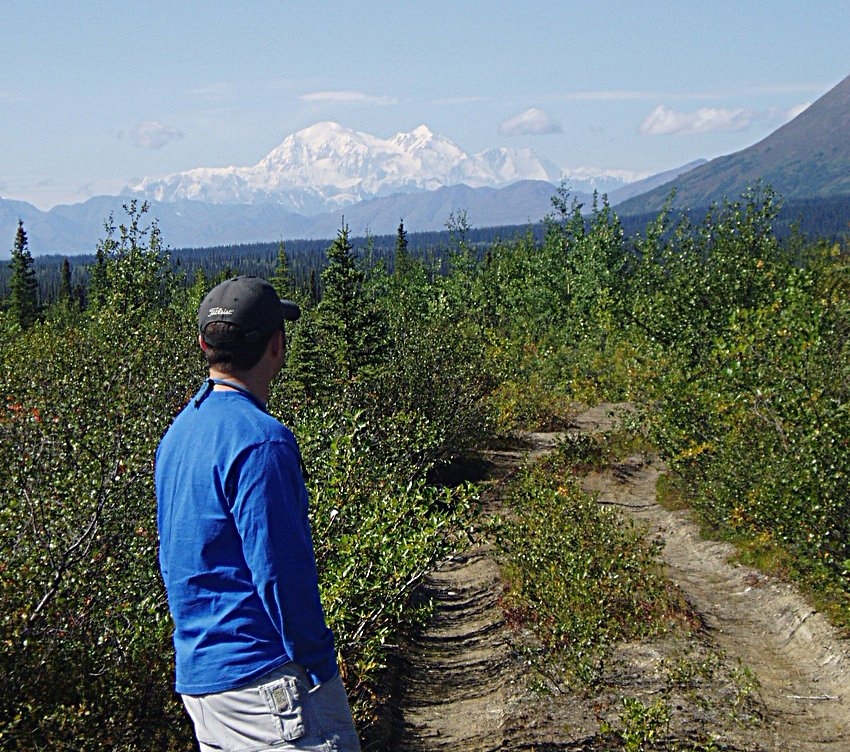
A view of Big Mac from the East (Szalay)

A visit to Denali National Park and Preserve is to cross a big item off all of our life lists.  Hiking or backpacking in the shadow of Denali – officially known as Mount McKinley for a forgotten president – is special even for people that don’t live in Peaklessburg, deprived of mountains and the real outdoors most of the year.  Perhaps it is extra special for us.  We work up to 50 weeks a year and may not even be able to use the full vacation time allotted us to take-in whatever our definition of a full Alaskan adventure may be.  We should know what our options for enjoying the park are and have realistic expectations about our visit, based on our limited vacation time or the companions we will be travelling with that may have less of an interest in the backcountry than ourselves.

Why Denali?  Denali National Park may be one of the best wilderness destinations for those of us with such constraints.   Even while about 75 percent of Alaska is publically accessible and there are plenty of other mountains, valleys, forests and tundra to seek wilderness and solitude throughout the far north, primarily Denali gives you the opportunity to hike in the shadow of Big Mac.  It is also not as remote as other great ranges such as the Wrangell Mountains or the Brooks Range.  However, the largest benefits of choosing to hike in Denali is for the chance to have a clear day to take in the full breadth of the Alaska Range (I did in 2004) and utilize the park’s infrastructure, from the shuttles to help put a controlled number of hikers and backpackers deep in-country, to information about animal activity (mainly concerns about Grizzlies) from the National Park Service staff.  This will help visitors from different comfort-zones for the outdoors enjoy Alaska’s wilderness at various levels without sacrificing the sense of the place.

Expectations.  There seems to be a hundred ways to experience Denali National Park based on location, terrain, length of stay, type of stay and so forth, so the options may seem overwhelming.  Much of the type of trip we take depends on our traveling partners.  Some people want an outdoor adventure and others want to just sit-back and roast marshmallows.  We should identify these expectations before we go so when one wants to hump a pack and go through McGonagall Pass, we won’t be disappointed or dragging a miserable companion through scree.  If we plan on backpacking, it is best to go with a buddy we have gone with several times before, especially if either our buddy or we have experience with traversing the landscape obstacles of the far north, where river crossing skills and navigation skills without trails are essential.  There are next-to-no trails in Denali National Park and Preserve.  If our team is less experienced, taking the time to travel in places like Alaska’s Kenai Peninsula, where there are established trails but the terrain can present similar challenges, would serve as a good warm-up for other trips farther north.

Traveling with Family.  Of course, if our families are joining us, and their collective outdoor skills and interests are not as strong as ours (the frequent plight of the Suburban Mountaineer), and there is demand for creature comforts (and I don’t mean the comfort of a quality camp mattress), then making reservations far in advance at one of the lodges located at the park entrance on Route 3 between Anchorage and Fairbanks is wise, especially if we plan to visit in June, July or August.  The park’s few established trails are around the park entrance and still offer spectacular views of the whole range on a clear day.  Of course, car camping in one of several camps along the early portion of the Denali Park Access Road may also be an option.  Car camping in such conditions may make the difference in keeping we Suburban Mountaineers satisfied with the opportunity to use our new tent and sleeping bag, as our family takes advantage of the power from the car for their electric shaver.

The Access Road.  Whether you plan on going deep into the backcountry wilderness or not, any of us visiting should take the time to board one of the numerous shuttles and ride the park’s sole access road all to way to Kantishna, 92 miles away.  Whether we take a bus with a nature interpreter or ride the camp site shuttles, it is well worth the journey to take in the park’s various landscapes and habitats before setting out in-country.

Bush Planes.  Another way to get up to the see the park is to hire a bush pilot out of Talkeetna, which is south of the park entrance.  Some services can start in Anchorage and fly you to the park as well.  They can take passengers around Denali and the Alaska Range and even land on a glacier for an additional fee.

Take the Red Eye.  If the trip we planned is brief and we are coming from the east coast, we should travel on the earliest flight of the day available so that the rest of the long Alaskan summer days can be used to its fullest.  On the return, take the red eye home.  This will maximize our limited time.

Being realistic about our time limitations and our expectations as well as having a good understanding of the expectations of our companions will go a long way into getting to the point of the trip: Seeing the highest point in North America and immersing ourselves in the beauty of the Alaskan wilderness.

In my next post I will cover what we need to know about hiking in the backcountry of Denali National Park and Preserve.  I will talk about permits, river crossings and campfires.

Rethink Your Training to Maximize Your Short Mountain Vacation

Most of us prepare for our hikes and expeditions by only doing the sport.  When I learned to ice climb I was told the best way to train for ice climbing is by climbing ice.  Other people suggest the same goes for hiking; only with a pair of boots laced on, a loaded pack strapped on and genuine trail conditions will properly strengthen a hiker for more hiking.  But living in Peaklessburg has convinced me that’s wrong. 

Because we spend less time on the trail, as working professionals, training smartly off the trail is even more crucial to get the full benefit of our rare visits to the mountains.  None of us wants to bonk half way up the hill on a crystal clear day, only to suck wind and head back to the trailhead.  We need to work out differently to ensure we will have mental toughness on the trail as well as still breath deep and sustain carrying weight up a slope (or wall, for those vertical ice and rock stars) for a prolonged period.  Otherwise, the trail and/or summit we dream of all year about will be wasted. 

While some hikers do not, many of us may run, walk or cycle to keep in shape for our hikes and climbs, mainly to keep our legs strong and our cardio system ready.  That fitness, through cross training, is indeed better than just relying on hiking or climbing alone to get us where we need to be to perform.  Although that kind of training can keep you ready, it won’t help you lift yourself over difficult ledges, pull a roof, or help you indicate how much farther you can really push yourself carrying your pack.  The key is building a solid core – much of it through traditional strength training routines in a weight gym. 

Weight gyms have been long been the reason a lot of hikers and climbers prefer training through dedicating their efforts solely to their sport.  After all, gyms are basically enlarged cubicles with machines that can serve as excuses for gym-goers to run on treadmills so they can watch their television shows (reformed couch potato, really), rather than jog down the sidewalk or through the park in the real world.  As hikers and climbers, we all believe that.  However, if used discretely and effectively, strength training can unleash our potential for physical power and enhance our durability, thus improving our performance on the trail. Not to mention improved mental toughness. 

Take America’s most likeable mountaineer, Ed Viesturs, for instance.  Viesturs swears by tough strength training to build a solid core.  He trained for years without a structured weight routine and was successful but he took it to another level when Ubbe Liljeblad voluntarily took him on as a special case and he rebuilt his routine.  See “Climb like Ed” on Backpacker.com for more. 

Similarly, the guides in the Grand Tetons are also on board.  They subscribe to the program by Rob Shaul and his staff at Mountain Athlete.  It still has the flavor of being a meathead locker, but the testimonials have been strong in Alpinist and by the fact that they have expanded with associated gyms, and even certified gyms, tells us that if nothing else, the idea of combining strength training with our preparation for the hills is not so ridiculous. 

Results will be seen in the quality of our climbs.  I don’t meet Shaul’s high standards for strength, but I can definitely carry more, and carry more weight farther after applying similar routines than the next guy or gal that only runs and spends the professional day in the office.  Bring on the pain!  We’ll be ready for Mounts Washington, Hood, and Foraker!

We Are Not Mountain Bums, Unfortunately

As hikers, backpackers and climbers, we are by nature gutsy.  We voluntarily use our weekends and infrequent vacation breaks to venture into the wilderness where the woods can be creepy and lonely, water-based parasites can infect our bowels and ruin our lives, let alone our trip, where alpine trails are always treacherous at best, and where the possibility of crossing into a bear cub (where is its mama?) or wildlife mad from rabies is a viable risk worth purchasing a good insurance policy over. 

Come to think of it, the case could be made that we are not gutsy, but rather mentally imbalanced.  We choose, after all, the dangers of the world without coffee shops, 24-hour technical support, drive-ins, and HD premium channels.  In fact, we could be diagnosed with something if the fact that we highly value the reward a trip to the outdoors brings through the deprivation from modern conveniences and the enjoyment of time being based on the sun and the seasons rather than a clock and a calendar, not to mention the constant reminder notes on our Blackberries is not weighed. 

Then again, maybe we are just not gutsy enough.  We do not exercise the courage to quit our jobs that benevolently bestow us with two-to-four weeks of vacation in which to play in the hills in exchange for 48 to 50 weeks of hard labor per year.  If you are like me, our families rely on us to earn a living, mow the lawn, and, let’s face it, we like the brand new Subaru Outback we just bought on credit.  As professionals and loyal members of our families, we all deserve gold stars.  As backcountry aficionados, well… most of us have earned the little orange spade award. 

Let’s imagine if we could enjoy our adventures in the backcountry without the chore of going to work nine to five (which seems to be a grossly inaccurate description for people’s work schedules these days), would we be satisfied?  Would we miss the generous salary?  Would our families miss the income?  Would our mortgage companies excuse our frivolous departure from making regular installments, and – dare I even wonder – could we be allowed to keep our new cars?  In the end, unless we obtained some income by serving coffee in the corner shop, or at least sweeping up at an outfitter, our trips to the outdoors would be reduced to a type of vagabond-homelessness. I believe our significant others would never forgive us for that, so I will not be reporting on such an experiment in future posts.  Sorry. 

So instead of casting off the burdens of employment, we accept working in office spaces with or without a view of any kind, and that we will not be mountain bums.  We will go on knowing we will not be mountain guides, leading clients daily into the wilderness and up and down perilous routes.  We will go on working at our computer terminals wishing we were ascending a ridge above tree line instead.  We will go on spending more time thinking about and planning our hikes and climbs than we actually hike and climb.  We will go on acquiring gear for trips we may or may not take and that may or may not be overkill for what the trip truly requires. 

For us, life is far better hiking, backpacking and climbing a little, than not joining in the gutsy, crazy sports at all.