Being First is One Thing, Getting There Another

As of today, Lonnie Dupre has 25 days remaining to attain his goal.  If he succeeds, he would be the first solo climber to reach Denali’s summit in January.  So far, only Russians Artur Testov and Vladimir Ananich have been there then, having topped out on January 16, 1998.

Last I heard, Lonnie Dupre just got the approval from his pilot in Talkeetna to fly to and land on the Kahiltna Glacier, where he will start his ascent up the West Buttress.

I think missions like this are always ripe for disaster.  When a climber sets a goal with a schedule like his there are various ways to be disappointed: the date might be missed, the summit might not be reached, and injury or fatality may occur.

A goal like this can motivate the climber to push him or herself too far or too hard to be successful.  Goals and objectives are good.  They are key to motivating and often drive us toward accomplishment and self-improvement.  But setting the right goals and expectations might moderate some of the self-imposed challenges climbers face.

A good alternative might be to set the simpler goal of reaching Denali’s summit in winter and see how the weather and circumstances come.  If the climber becomes the first to reach the top in January, great, but if not at least the climb was epic!

I don’t mean to disparage Dupre’s objectives.  They are fantastic and I am partially envious!  Like any mountaineer with a goal he or she has declared publicly, he is in a precarious position. Pressure from ego, satisfying sponsors, and the risk of failure can factor negatively climbing wisely sometimes.  Anyone that has set out for a bona fide first ascent — like Edmund Hillary on Everest or Hudson Stuck on Mount McKinley — probably realizes that the glory of success is great but that accomplishing the goal to get it was daunting and might not have happened.

Let’s hope Dupre can compartmentalized and separate the pressures of his mission from his logical analysis.  A key to being a great alpinist, it seems to me, is luck, nerve, perseverance and analytical skill.  Such a balancing act of such factors could result in a Zen-like moment.  Let’s also hope the weather cooperates!

Well, thanks again for visiting.  If you enjoyed this post, please consider becoming a fan on Facebook or following me through Twitter (@SuburbanMtnr).

Fee Increase for Denali: Back to Problem Solving

The National Park Service (NPS) has apparently agreed with the Suburban Mountaineer and others: The proposed rate increase from $200 to $500 for permits to climb Denali was too great.

The Suburban Mountaineer agreed that it is costly to run the NPS mountaineering operations in Denali National Park and Preserve, however such an enormous increase in one step was intolerable.  User fees, while popular and effective with the NPS, need to be implemented in a rational manner.  This is especially true for the climber just getting out of college; the more costly permit may cause him or her to compromise on the quality of gear he or she may use on the peak to save his or her life.

According to the Fairbanks News-Miner, NPS spokeswoman Kris Fister said “we’ve taken [the proposed increase] off the table.”  However, where this leaves Denali’s mountaineering operation and other user fees is uncertain.

The NPS is returning to the drawing table and will likely provide a revenue method from other visitors, or a gradual increase (over several years) to the mountaineering permit fee — which the Suburban Mountaineer recommends.  This way, at least the college climber will not be immediately priced out of climbing at the best time in his or her life.

However, the News-Miner article finally articulated the NPS position and rationale for the large increase so well (its communications team managed to explain this only after the push-back from the public was heard, it seems):

“’We spend an inordinate amount of money for a small number of visitors,’ Fister said of the mountaineering program.

“Next climbing season, the Park Service estimates it will spend approximately $1,200 per climber on Denali while the average cost for all other visitors in the park is expected to be about $37.”

Thank you for visiting.  Remember, you can follow the Suburban Mountaineer and join the discussions on Facebook.

A Fee Increase for Rainier and Denali

Word has it that the fees charged by the National Park Service (NPS) for climbing Mount Rainier and Denali are going to increase significantly.  I go back and forth on whether it is ethical to charge anyone anywhere for hiking and climbing.  I am beginning to think there may be some reasons to do so.

The NPS has enjoyed implementing user fees to supplement their budget shortfall over recent years.  Their budget is allocated by Congress through appropriations.  With the down economy, U.S. spending deficit, and other political factors, federal public land maintenance is not a top priority.  It never has been for that matter.  And that is a good thing; too much money for the NPS may mean too many grandiose interpretive centers and not enough wilderness.  So extra cash from the visitors that use the park seems reasonable.

It is probably acceptable to charge fees for any mountain anywhere where the trails are so popular the routes are trampled with refuse, not to mention higher management costs of searches and rescues (SARs).  Rainier passes that test.  Mount McKinley?  Probably.  Ben Nevis?  Not sure.  But doubling the price to play?  That seems tough.

Shouldn’t an increase that big be implemented over a long period of time?  I guess when the park service is funded less, the still popular parks have to fund their services somehow.  I’m sorry that the park service feels it has to come so suddenly.

I’m really sorry for the cash strapped climber that just spent his savings on his new rack and crampons.  Well, there is always next season, boss…

Thanks for visiting!  Remember that you can follow these posts on Facebook or Twitter.

Denali: Planning for a Summer Visit

Mount McKinley, Alaska

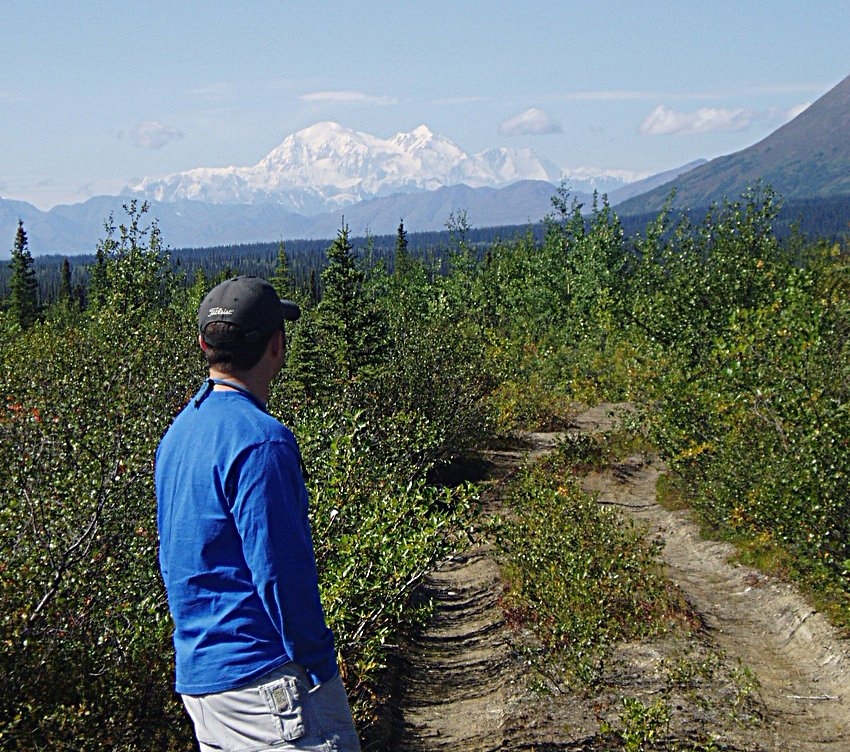
A view of Big Mac from the East (Szalay)

A visit to Denali National Park and Preserve is to cross a big item off all of our life lists.  Hiking or backpacking in the shadow of Denali – officially known as Mount McKinley for a forgotten president – is special even for people that don’t live in Peaklessburg, deprived of mountains and the real outdoors most of the year.  Perhaps it is extra special for us.  We work up to 50 weeks a year and may not even be able to use the full vacation time allotted us to take-in whatever our definition of a full Alaskan adventure may be.  We should know what our options for enjoying the park are and have realistic expectations about our visit, based on our limited vacation time or the companions we will be travelling with that may have less of an interest in the backcountry than ourselves.

Why Denali?  Denali National Park may be one of the best wilderness destinations for those of us with such constraints.   Even while about 75 percent of Alaska is publically accessible and there are plenty of other mountains, valleys, forests and tundra to seek wilderness and solitude throughout the far north, primarily Denali gives you the opportunity to hike in the shadow of Big Mac.  It is also not as remote as other great ranges such as the Wrangell Mountains or the Brooks Range.  However, the largest benefits of choosing to hike in Denali is for the chance to have a clear day to take in the full breadth of the Alaska Range (I did in 2004) and utilize the park’s infrastructure, from the shuttles to help put a controlled number of hikers and backpackers deep in-country, to information about animal activity (mainly concerns about Grizzlies) from the National Park Service staff.  This will help visitors from different comfort-zones for the outdoors enjoy Alaska’s wilderness at various levels without sacrificing the sense of the place.

Expectations.  There seems to be a hundred ways to experience Denali National Park based on location, terrain, length of stay, type of stay and so forth, so the options may seem overwhelming.  Much of the type of trip we take depends on our traveling partners.  Some people want an outdoor adventure and others want to just sit-back and roast marshmallows.  We should identify these expectations before we go so when one wants to hump a pack and go through McGonagall Pass, we won’t be disappointed or dragging a miserable companion through scree.  If we plan on backpacking, it is best to go with a buddy we have gone with several times before, especially if either our buddy or we have experience with traversing the landscape obstacles of the far north, where river crossing skills and navigation skills without trails are essential.  There are next-to-no trails in Denali National Park and Preserve.  If our team is less experienced, taking the time to travel in places like Alaska’s Kenai Peninsula, where there are established trails but the terrain can present similar challenges, would serve as a good warm-up for other trips farther north.

Traveling with Family.  Of course, if our families are joining us, and their collective outdoor skills and interests are not as strong as ours (the frequent plight of the Suburban Mountaineer), and there is demand for creature comforts (and I don’t mean the comfort of a quality camp mattress), then making reservations far in advance at one of the lodges located at the park entrance on Route 3 between Anchorage and Fairbanks is wise, especially if we plan to visit in June, July or August.  The park’s few established trails are around the park entrance and still offer spectacular views of the whole range on a clear day.  Of course, car camping in one of several camps along the early portion of the Denali Park Access Road may also be an option.  Car camping in such conditions may make the difference in keeping we Suburban Mountaineers satisfied with the opportunity to use our new tent and sleeping bag, as our family takes advantage of the power from the car for their electric shaver.

The Access Road.  Whether you plan on going deep into the backcountry wilderness or not, any of us visiting should take the time to board one of the numerous shuttles and ride the park’s sole access road all to way to Kantishna, 92 miles away.  Whether we take a bus with a nature interpreter or ride the camp site shuttles, it is well worth the journey to take in the park’s various landscapes and habitats before setting out in-country.

Bush Planes.  Another way to get up to the see the park is to hire a bush pilot out of Talkeetna, which is south of the park entrance.  Some services can start in Anchorage and fly you to the park as well.  They can take passengers around Denali and the Alaska Range and even land on a glacier for an additional fee.

Take the Red Eye.  If the trip we planned is brief and we are coming from the east coast, we should travel on the earliest flight of the day available so that the rest of the long Alaskan summer days can be used to its fullest.  On the return, take the red eye home.  This will maximize our limited time.

Being realistic about our time limitations and our expectations as well as having a good understanding of the expectations of our companions will go a long way into getting to the point of the trip: Seeing the highest point in North America and immersing ourselves in the beauty of the Alaskan wilderness.

In my next post I will cover what we need to know about hiking in the backcountry of Denali National Park and Preserve.  I will talk about permits, river crossings and campfires.