The Longest Climb by Paul Pritchard Reviewed

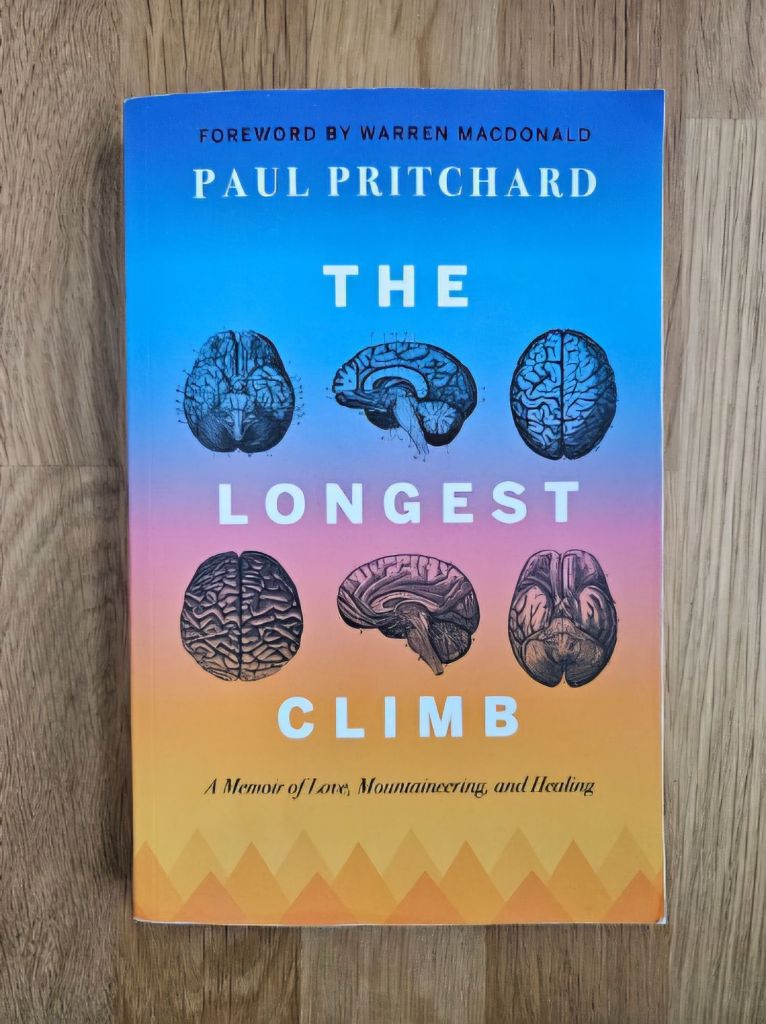
The Longest Climb by Paul Pritchard (2024, RMB)

Paul Pritchard is a climber, a diversity and inclusion educator, and an accomplished author. His first book, Deep Play, won the Boardman Tasker Prize for Mountain Literature in 1997 and his second, The Totem Pole, won the Boardman Tasker and the grand prize at the Banff Mountain Book Competition, held in conjunction with the famous film festival, in 1999. When his 2005 book, The Longest Climb, was republished here in North America this year, I immediately said I wanted to review it when asked.

The 2005 edition was published by Robinson with the subtitle Back from the Abyss. The 2024 edition from Rocky Mountain Books is A Memoir of Love, Mountaineering, and Healing. After reading it, and having gotten to know Pritchard through social media and direct messages, the newer subtitle is a more appropriate one for readers. The former subtitle is overly dramatic and less soft than the book actually comes across, though when he wrote it and when Robinson published it, the title had a shelf life of relevancy. Rocky Mountain Books’ change was smart and I am pleased with the Oxford comma (which, if my colleagues at work read this, will roll their eyes at me pointing that out. So there’s that.)

The Longest Climb: A Memoir of Love, Mountaineering, and Healing was Pritchard’s first book after his life-altering climbing accident on the Totem Pole in Tasmania in 1998. He incurred a traumatic head injury that left him paralyzed on his right side. He retells the story of coming home from rehab, discovering cycling, trying golf, diving, and pushing his limits on hiking up Jebel Toubkal and Kilimanjaro. During this journey, I am told that I am a TAB, which is a Temporarily Able Body, or said another way, a non-disabled human. I am given a new perspective on what prejudice toward disabilities means, and the urge inside many of us that keeps us going even when someone says it’s pointless because it is supposed to be impossible.

Before his injury, Pritchard was a well known climber embedded in the niche community. Despite earning his way in, like many climbers that aren’t pursuing the next route or summit, he didn’t feel like he was part of the community. Even when he want to the American Alpine Club dinner he was recognized more for his injury than his exploits. Later, as Pritchard grew in new skills and started plodding up Wales hills, he experienced resentment to the others around him going up too, also taking easier paths, including babies and the elderly. Hadn’t he earned more privilege. But a new sense was revealed to him that everyone belonged, and his heart grew for humanity.

Pritchard, as I learned in Deep Play, came from a tough upbringing and was quite rough himself. However, as he grew through climbing his heart increasingly opened up. After rehab, he learned that asking for help, often after he got himself into trouble from attempting to be independent, became a way to let go of his control freely and embrace the world through others. For Pritchard, not asking for help had kept him from community and left him unknowingly aloof. When he started asking for help, he didn’t feel alone and could express greater and greater amounts of gratitude and appreciation.

Making good decisions has always been a challenge for Pritchard. In Deep Play he took an unroped leap off his school stairs. In this book, he injured his elbow and it was at risk of infection, right before completing a life goal and swimming in the Great Barrier Reef. The doctor said do not swim, and he did anyway. The consequences took days to recover from, partly because he refused to pause life and address it. He gets extremely graphic, and my wife and kids would have ran out of the house as if their hair was on fire, had they read it too. I took pity on him through the ordeal and sympathized in some but not others. I love Paul, but he’s stubbornly foolish at times.

The Longest Climb culminates in two mountain climbs (significant journeys trekking and hiking) in Africa, and Pritchard does an excellent job of showing how he felt and his decisions along the way. On Jebel Toubkal, Pritchard falls ill and his partners continue up. Here was a longueur about the climb and his life since being injured and meeting his wife and caretaker, Jane, who was back home. He knows, like everything else in his life, his strength and patience are going to have to come from within.

Overall, I feel I grew from reading Pritchard’s story of recovery. I knew it previously, but not the immersive detail from this book. Through it all, I feel stronger. He quoted Helen Keller: “Life is either daring adventure or nothing.” He was emphatic through his actions and this book that the worst thing he could do was waste the rest of his life. His sense of insecurity generated a response that constantly pushed him to be more, and it taught him new lessons and perspectives, such as community from asking for help.

The Longest Climb was easier to read and follow than Deep Play. If you read my review of the latter, I said that the language was disjointed but surprisingly descriptive. This new book may have been edited more or differently to overcome that as a criticism.

The book made me feel uncomfortable many times, and even grossed out over his elbow injury before his dive. It was incredibly heartwarming and the new subtitle is true. I give the book a high score for the author and his story, but it’s not a climbing story. It’s a story of a climber’s recovery and life with a growing heart and overcoming uncertainty and insecurity. Reading it will change you, so be prepared.

For me, I now look at disabled acquaintances as people and am more cautious in how I can help them with dignity and respect. I also look at my time for myself, my wife, and my kids with a new sense of respect and willingness to say yes, let’s do that. I don’t know how complicated it will be should I not be physically able ever again.

Rating: 4/5

Is it a climbing classic? No. Primarily because it is not about climbing and climbing is not the central activity. Climbing made this book, like many great climbing stories, but it is foremost about recovery and resiliency of human spirit. These are important themes, but the story is not what I would seek for a climbing classic.

Well, thanks for dropping by. If you enjoyed this post, please sign up for my newsletter, which is the best way to get updates. And please tell a friend too; I am a humble hobbyist and don’t pay for advertising so organic search engine traffic and word-of-mouth referrals are all I’ve got. I just believe that climbing matters and you do too.
Why We May Climb on Public Land is You

26312680282_626aab163c

The Creek. (All rights reserved)

The Bundy standoff in Burns, Oregon has lasted more than 40 days and the latest news says it may be coming to coming to a conclusion. It’s raised a lot of chatter about who controls the use of public lands. In fact, it’s inspired at least one of us: Over Facebook, Andrew Bisharat suggested learning from the Bundy clan’s effort and leading a crusade to take over the fish hatchery (which is actually on private land) so that we can climb the lower half of Rifle, CO, where it is currently prohibited. He was a joking.

At least I think he was joking.

There’s a lot of anger about government’s role today. It’s fueling the Bundy family and many like-minded ranchers. The anger, though over various topics, prompts many Presidential primary candidates’ supporters. Generally, the current system and values expressed by our laws and put into practice doesn’t work in their favor and they are frustrated.

When it comes to public lands, climbers are on the winning side these days. We can easily take for granted that we are allowed to climb most everywhere. Official land management plans allow for climbing in the most desirable locations. Bolting is permitted in the backcountry in some areas, within some guidelines. And, among climbers, most of us self-enforce good neighbor-policies through following Leave No Trace principals.

But there some real threats to that system. The balance could shift. And it might not be in your favor any longer.

Freedom to Climb at Risk

The freedom of climbing — whether that freedom is about movement over rock and hills or overcoming the idea that something seems impossible to climb — is about a specific approach freedom.

That application of freedom comes from how society values that kind of freedom. Most of us don’t think about it much, but we can climb in the Adirondacks, Yosemite, Red Rocks and everywhere in between because we’re allowed to. Every park has a management plan and that covers permissible and impermissible activities, from where you can make fires to fishing access, are covered and revised periodically.

However, who is making those land management plans would change if the public lands they address were owned by someone else, like the state or local governments. Members of the U.S. House of Representatives have bills to relinquish millions of acres of federally managed and protected land to states and local interests.

These are ongoing issues. And there have been ongoing issues like these that come and go onto our radar in climbing magazines and on social media. But these are real discussions that could shift who gets to graze their cattle where, how the ore beds are extracted, and where you can and cannot climb.

Speak Up

There are excellent advocates at the American Alpine Club and the Access Fund working to influence the outcome of discussions about the future of climbing in America. But they are empowered by you. Think about some other strong advocacy organizations:

  • NRA — It has a large membership that speaks up whenever their rights and freedoms feel threatened. And they contribute great deals of money.
  • AARP — This may be the largest national organization in size, and they are vocal on only two issues (Social Security and Medicare) for the most part, but it ensures the issues are protected and even considered sacred.
  • AIPAC — This group represents a small population of Americans, but it has an impressive infrastructure to mobilize advocates in nearly every Congressional district in the country with a reasonable amount of discipline.

All three of these examples have two things in common: They have dedicated members and they write and call their Members of Congress and other policymakers when summoned to do so.

So here is what you need to do:

  1. Join the AAC and the Access Fund, if you haven’t already. They are our watch dogs and our radar screen for threats to our way of life. And,
  2. Sign this petition from Protect Our Public Land, supported by the Outdoors Alliance, to go on the record that you support the protection of our public lands.

I believe compromise is always possible. While the lower-half of Rifle might be out of bounds, I think we can secure climbing and better land management for everyone. Hopefully will will do it without sacrificing what we hold dear and how we want to use the land.

Thanks again for stopping by. If you enjoyed this post, please consider following The Suburban Mountaineer on Twitter and Facebook.

Why Do We Climb Indoors?

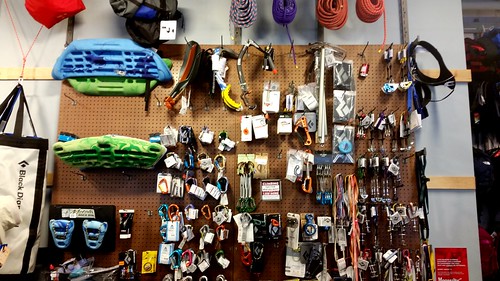
That’s a lot of climbing (and ice) gear for Kansas City!

I was waiting for the dentist and a headline on the cover of the October issue of Outside magazine caught my eye: “The Most Hated Men in Climbing.”

I don’t read Outside, mainly on principle. It’s headlines are made to make you pick it up and turn the pages, and I rarely feel edified for the content. When I finally found the article, which was under a completely different headline (damn it!), the most hated men turned out to be route setters at indoor gyms.

To a greater surprise, I kept reading. I’ve always climbed in gyms, but only recently embraced indoor climbing as a way for me to climb more regularly. Wait, no, accept it is a better word than embrace. I love mountains, not plastic. I get excited about snow and ice, sometimes big walls, but not warehouses separated from valleys and vistas. Still, I was getting into the article. What’s wrong with me?

Climbing Mystery

I just got back from a business trip to the greater Kansas City area in the American Midwest, which is one of those destinations that’s known for being flat. I met with a Kansas public official who has spent a lot of time in my home in the Washington, DC area and he said the biggest difference between there and Kansas was how we measure time: In Kansas they talk about miles driven, but in DC it’s about minutes spent in traffic jams. After covering 200-plus miles driving at mostly 70 mph in three days, I got it.

As with every trip, I try to squeeze in a little hiking or climbing, and these days all of the climbing is indoors. Still, I have found some interesting gyms. I liked the Great Western Power Company in Oakland, California. I was surprised that the greater Miami, Florida area had one well-kept gym let alone its two gyms. Kansas City has three. The greater Washington, DC area where I live has five. My hometown in Upstate New York only had one (albeit the Adirondacks and Gunks weren’t too far away either, so they probably weren’t needed).

I spent time in both the Kansas and Missouri side of Kansas City, but the Climbing Business Journal had an interesting story recently about how Kansas, which is one of America’s flattest states, has opened several indoor climbing gyms. This was a surprise to me; usually gyms open nearby traditional outdoor climbing destinations, so climbers can train regardless of the season or the weather. But the Midwest — America’s heartland — it seemed like a bit that there was something drawing people in that I didn’t understand.

Gritty and Underground

I stumbled upon a MooseJaw outfitter by happenstance after a meeting with the local Habitat for Humanity leaders, and saw a peg wall stocked high and wide with ‘biners, cams, slings and even a modest selection of ice tools. It turned out that the previous store manager was a native of Kansas City and he climbed ice. He recently took a promotion and moved to Chicago, but the gear was still prominently featured. It was then that I realized something about geography about Kansas City that I hadn’t thought about from living in Washington, DC — the Colorado Rockies weren’t really that far from Kansas City; less than nine hours away by car.

I didn’t have time to go to Colorado, so I asked about the local gyms. Ibex was the area’s full-service gym with long, high routes. The Cave, on the other hand, was a bit “gritty.” It’s what he said next that told me I had to check it out: “You have to take an elevator to get to it because it’s underground.”

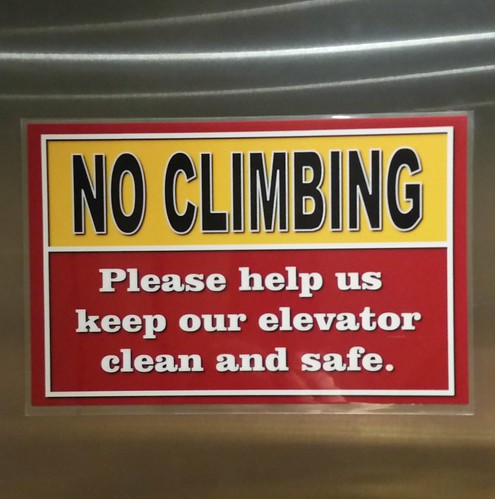
So I found directions to the The Cave. and the instructions on the website said, “Take the elevator down and follow the signs.” The elevator entrance stood alone in a parking lot and the inside had two signs. The first you couldn’t miss: “No Climbing: Please Help Us Keep Our Elevator Clean and Safe.” The other was smaller and said something urging riders to enjoy the ride down 10 stories underground.

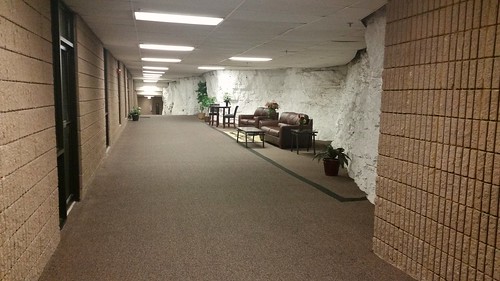
After walking through a labyrinth of hallways, I was signing my waiver. I asked the guy, a 20-something running the place solo, what these tunnels were built for. He promptly replied, “It was a mine.” I said really? “Yeah, I mean it must be. What else could it be for?”

The facility, called Dean’s Downtown Underground, was actually built by Lester Dean, Sr. in 1954 with the help of a lot of surplus government explosives. He purchased land that had an incomplete railway tunnel that was started in 1873, drained it and got to work.

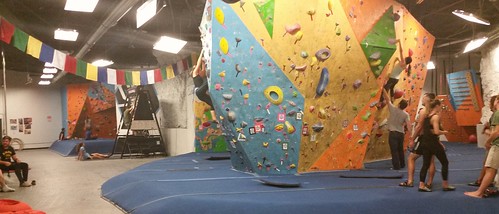
The gym had a plastic cave, 14-foot bouldering walls, a climbing treadmill, and a slackline setup. They used the standard V-scale but also had their own “VB” scale for beginners; I think it only went to VB2 before going to V0. I wasn’t too impressed by the 14-foot walls, though they managed to compress a lot of routes in a small space.

The cave was the gem. Well padded. Overhanging. And deep; it felt like the cave at it’s farthest point went about 15 feet in, which meant the wall was a ceiling.

The best part about The Cave was the other climbers. They were focused, knowledgeable, and very funny. I was about 15-years older than most of them and they even made me feel welcome and comfortable. But, then again, that was how I felt almost everywhere in Kansas City.

We Need Hobbies

Just before going to Kansas City, I took family my family apple picking near Shenandoah. Near Front Royal we passed the a warehouse that’s been there forever that has been the local Crossfit gym. It had a new banner this season: “Need a Hobby?” Maybe that was what was wrong with me.

I’ve read that climbing gyms are very popular among 20-somethings because of the appeal of the socialization. But I have recognized, that it’s a sport that encourages participation over excellence, even though excellence is a natural goal. It’s also an action sport that requires more socialization and more interaction and trust than say mountain biking or paddle sports.

The other thing is the nature of adventure. Yes, you can’t have adventure without the unknown, and the walls in a gym seem pretty obvious. But the unknown is personal performance, and trudging past your own fear. For me, it’s more adventure than I ever got playing soccer or basketball.

We need hobbies, and if that hobby offers some adventure… well, maybe that’s what gets us climbing indoors these days.

Thanks again for stopping by. If you enjoyed this post, please consider following The Suburban Mountaineer on Twitter and Facebook.

Is There a Conspiracy for Indoor Rock Climbing?

If you perceive the world largely through media, and you believe in conspiracies, you’d think the Climbing Wall Association was a master manipulator. But that’s only if you believe in conspiracies.

Since Tommy Caldwell and Kevin Jorgeson freed the Dawn Wall on El Capitan, traditional media outlets, for example The New York Times, have been putting more climbing stories into the mainstream U.S. media market than ever before. If you read this The New Yorker article, you might extrapolate that the publishers are trying to tap into the millennial generation and trying to keep their interest.

The stories since the Dawn Wall ascent haven’t, however, been about new routes on granite in Yosemite or nuttall sandstone in the New River Gorge. Rather, they have been about the social movement toward climbing that has already been underway for well over a decade. The focus of which has been on the attraction of the indoor climbing experience:

  • In the same article from The New Yorker on March 30, it alleged that indoor rock climbing is the new tennis for networking.
  • Men’s Journal said indoor rock climbing is the new CrossFit on April 2.
  • On March 12, The New York Times attributes the leap in climbing skills outside on rock in the younger climbers to the proliferation of climbing inside.
  • Smaller papers have stories too, but they’re making less provocative statements.

The rise of indoor rock climbing has been happening for years, but the popularity among younger climbers has lead to more gyms; nine percent more in 2014 alone and an unprecedented 15 percent increase in bouldering-specific indoor climbing gyms during the same period, according to the Climbing Business Journal.

I have always climbed in an indoor gym. My first was near Niagara Falls, NY in the mid-90s, but it was merely a substitute for climbing in the Adirondacks, which was a six-hour drive from home; the gym was only 30 minutes away. But recently, indoor climbing gyms have become a destination even on my business trips just to get a feel for what climbers in another town value and enjoy.

Maybe I am catching the fire, but I don’t even look down at indoor climbing any longer. But Justin Roth, who manages marketing communications, social media, and public relations for Petzl America and keeps his own blog at The Stone Mind, put everything into proper perspective in a recent blog post: “Indoor climbing is no longer just preparation for outdoor climbing; it is its own pursuit.”

So if it’s not a conspiracy, is it a movement?

Thanks again for stopping by. If you enjoyed this post, please consider following The Suburban Mountaineer on Twitter and Facebook.

What I am Reading Now

Rock Climbing Virginia, West Virginia, and Maryland (Szalay 2014)

Have you ever flown over big snow capped mountains someplace? Do you remember being glued to that foggy airplane window?

I had the rare opportunity to enjoy a beer the other night with a friend after Wunderkind and Schnickelfritz went to bed. After we talked about our kids we talked about travel and adventure. His brother flies from Alabama to Alaska for work periodically. He said the first time he went, when it was clear enough to see outside the plane’s window, he saw a mountain goat on a cliff side. That goat, except for its own abilities, it would have otherwise been stranded. Remote and unreachable.

His brother feels that this is illustrative of what Alaska’s wilderness was: A frontier with places that no man could go.

As for other frontiers — those of the mind and page — let me share with you what is on my current reading list:

John Quillen’s self-published book, Tempting the Throne Room: Surviving Pakistan’s Deadliest Climbing Season 2013, (2013). John Quillen has crossed my radar tangentially last year after the terrorist attack at Nanga Parbat Basecamp. You might have already read some of the quotes or information he provided in the aftermath; Quillen was in the region and provided media some on-the-ground information and has since written this book about the summer of 2013 in the Karakorum.

I just started reading it thanks to a direct invitation from Quillen to review his book here on TSM (which I will do later this summer.) So far, it reads like a great deal like a traditional travelogue with a little inspiration from Annapurna. The format isn’t uncommon, but he manages to draw you in bringing you on his trip rather than telling you about his trip. The result is that you feel like you’ve landed in Pakistan. More to come…

Eric J. Hörst’s regional guide, Rock Climbing Virginia, West Virginia, and Maryland, 2nd Ed. (2013). I’ve lived in the Mid-Atlantic for a dozen years now and have only gone back to my home park, the Adirondack Mountains, a few times and Alaska only once in that span. So I decided to take an active interest in my “immediate” surroundings. After reading portions of this book with its rich illustrations by Stewart Green, I suddenly want to spend some time in Fayetteville, West Virginia and hang out with Pat Goodman at the New.

Also, possibly toward the end of summer or early fall, I’ll read through all of my copy of this book:

John Long and Peter Croft’s Trad Climber’s Bible, signed by John Long. I received this copy as a thank you for some work I did this past winter in promoting the late Michael Ybarra’s book about the McCarthy Era in Washington, Washington Gone Crazy. Long knew Michael and they even climbed together once. Michael’s sister was very generous in thanking me this way. I’ve read random snippets and feel as filled as reading from a gentle religious devotional: comforted and empowered. I wonder what will happen after I take it in in full.

Thanks again for stopping by. If you enjoyed this post, please consider following The Suburban Mountaineer on Twitter and Facebook.

Climbing out of Pain

I had my back X-rayed to help identify why my intermittent back pain hasn’t gone away despite visits to a chiropractor, some physical therapy and working out once again. The pain comes like a phantom late at night. It wakes me up and the pain persists until I sit up for a little while or maybe practice some yoga moves — something that, until recently, considered unmanly. Then the tension relaxes enough and I can continue sleeping.

I visited my primary physician for a check-up and to go over the X-ray results. I’m in my thirties, so back pain is already somewhat embarrassing. While I’m not a hardcore mountain man in the alpinist sense, I do want to maintain a level of health and fitness that I can at least jump into some moderate climbing, hiking and skiing for recreation. So what the X-ray report said worried me —  something about degenerative disc changes. I didn’t understand much else on the report, but I knew that meant arthritis.

The doctor assured me that it was mild. I said okay, but as I left I didn’t feel better. I didn’t know what mild meant. For some people mild hot sauce was hot. So wouldn’t this be relative too? Plus, I’ve always understood arthritis to be a slow path to increasingly worse pain and restrictive movement. It was a weird moment: I could see the future — five or ten years from now — and it was me sitting hunched over at a chair at my daughter’s ice skating competition, unable to comfortably sit back, and not being fit or flexible enough to climb since last weekend and unable to walk — or hike — long distances.

I was given marginally qualified comfort from my doctor and a referral to see a spine specialist to be safe and determine what else needs to be done. I made an appointment for as soon as I could based on my existing family and work commitments, which was yesterday morning.

The arthritis — or the trace amount that the X-ray actually showed — wasn’t causing my pain. I felt my shoulders fall back and I probably exhaled in relief. It was something else, but it wasn’t a flaw noticeable in the report. It wasn’t arthritis or anything more severe, as far as it showed. The spine specialist thinks he can treat the issue, which seems more muscular from an old injury flaring up — which we think was related to when I was unfit just a year ago.

But the arthritis in my back could be an issue one day. The prescription was welcomed with glee: Keep moving. Ski, hike, walk, run, and climb! Movement itself lubricates the joints and actually helps fight off becoming inflexible. I was given an excuse — or maybe even a mandate — to workout, stay active, and have fun!

I was reminded of the Forbes piece (yes, the financial magazine of all publications) on the 10 healthiest sports: Two of my favorites scored highly: Cross country skiing and rock climbing. These two inspire me to workout. Hopefully between training right, well and good treatment, I will finally loosen the reoccurring knot in my back and I’ll be sitting upright — with good natural posture at my daughter’s skating competition and looking forward to our weekend in the hills.

Thanks for stopping by, as always. If you enjoyed this post, please consider following the Suburban Mountaineer on Facebook or Twitter, if you haven’t already. Happy reading and carpe climb ‘em!