Carpe Climb ‘Em: Follow Through on Your Life List

I began writing The Suburban Mountaineer in April 2010 to fill a void of climbing in my life. I’ve been a repressed mountaineer, though I did it to myself, really.

I fell in love with climbing in the Adirondacks and from reading Moments of Doubt, the short stories of David Roberts. I taught myself to rock climb through bouldering, an indoor gym in Niagara Falls and top roping short routes. I even practiced climbing a giant oak right in my backyard with prusiks. And Ed Palen and Bill Simes at Rock and River Guides in Keene, NY taught me to ice climb.

Instead of dreaming of thin Himalayan air I aspired to climb throughout North America. I wanted to train on Mount Rainier, even frequenting various routes during my infrequent paid vacations from my career in our nation’s capital. After one day reaching the summit via the Liberty Ridge, I expected to go to Alaska to take in the mountains from the snow, ice and mixed routes from Denali to little-known, remote peaks (some hopefully unclimbed) in the Wrangell Mountains and Brooks Range. I didn’t have to put up routes up the most striking lines in the most aggressive style like Steve House, one of my heroes then, to be satisfied. I just wanted mountain highs and exposure.

About half-a-decade ago, I came to a fork in the road, though I didn’t recognize it as one. At the time I was advancing in my career, I felt I had a little money to spend, and my love life was starting to take off. That’s when a buddy of mine moved to Alaska and he invited me to visit him. We went to all the usual sites, the Kenai Peninsula, Denali National Park, and I also did some modest climbing in the Chugach.

Since then, I haven’t climbed. I travel. I hike. But it’s been a while since I took my crampons and ice axe up a slope. My priorities changed. Now I was saving up for an engagement ring, a down payment on a home, and now a college fund! Plus, I couldn’t bear the thought of something occurring that would impact my family’s future because of an accident due to one of my hobbies. So here I write.

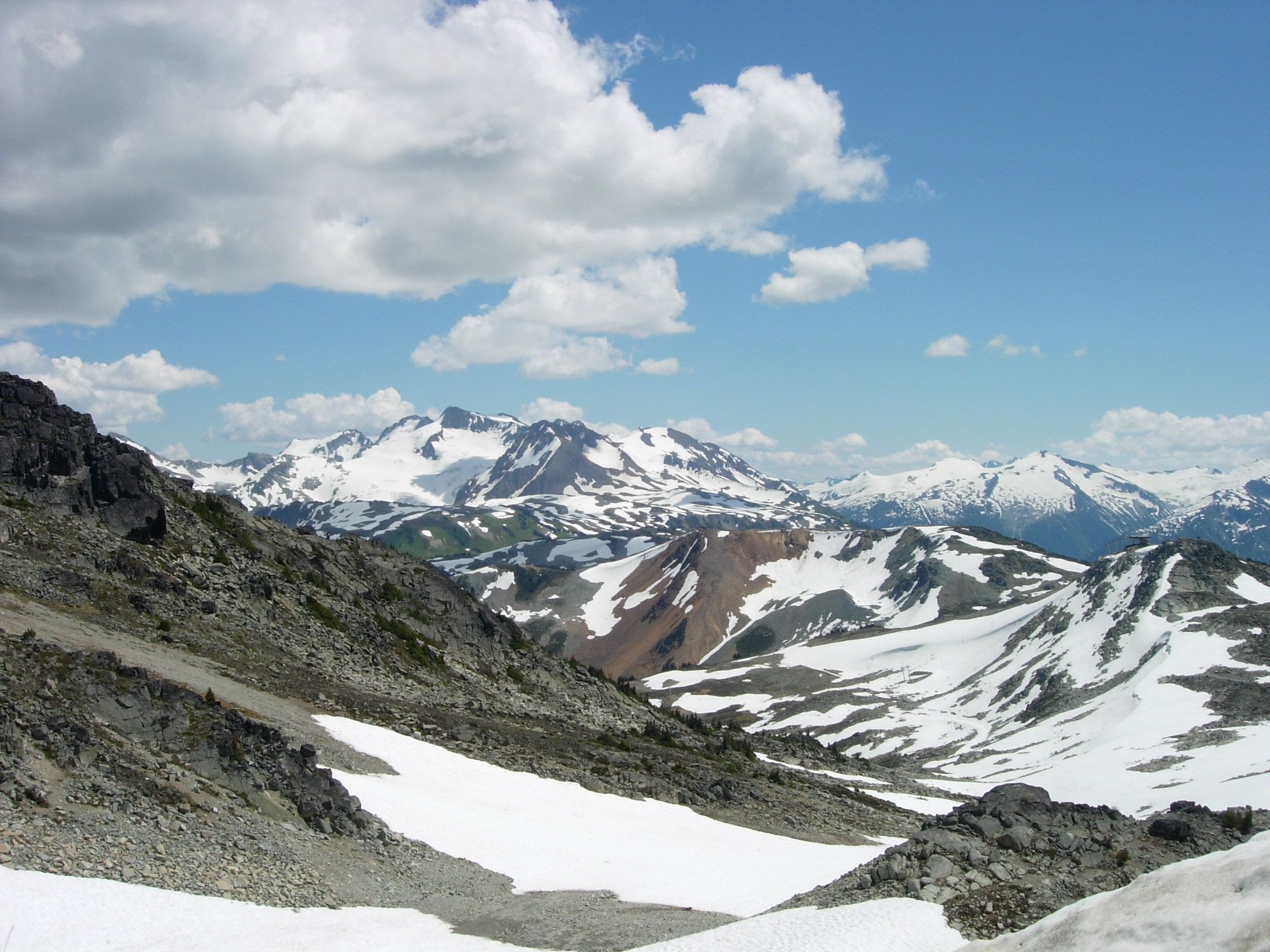
There was a time I used to think that I would refuse to settle into a life that didn’t support my climbing ambitions. Parents, friends, and loved ones haven’t always embraced or accepted my passion for mountaineering. Now, despite our disagreement on where alpinism ranks (which has been long since settled,) we’ve all come to a truce to enjoy the mountains and climbing in ways other than climbing them. And interestingly, it wasn’t hard – despite my lack of notable ascents – for life to be not just good but great. I have a wonderful family and a moving career I highly value to support them. In fact, when I vacation now, my family and I visit the mountains at ski resorts, like Stowe, Whistler – you know the type. I’m guaranteed to have great food, craft beers and a luxurious “bivy” for the night.

Though life is great, I look back when I visited my buddy in the forty-ninth state, and have made a how-can-I-be-so-stupid realization: I wished I climbed Mount Rainier instead. I had the time. I had the funds. The only person I was worried about was me. At that time, I thought I would have more of both in the future to do Mount Rainier later. Life took its turns and climbing gradually became considered too expensive, time consuming and risky. Maybe that will change, but not anytime soon.

The lesson is this: The best time to climb – or do whatever you dream about, for that matter – is now. Make a plan. Execute it. If you don’t, life may still turn out to be as great for you as it is for me, but you might wish you have ticked off that other accomplishment off your life list sooner when you had the chance.

Thanks again for dropping by. If you enjoyed this post, please consider following the Suburban Mountaineer on Facebook or Twitter, or leave me a comment about this post. Happy reading and carpe climb ‘em!

Armchair Mountaineers Unite!

The authors of the books we love need our support.

This will interest you even if you’re an active climber, and not the armchair-type…

I am announcing the start of a campaign to encourage you and anyone that appreciates mountaineering literature and guides to support the authors of those books. Where would you be if your favorite hiking or climbing book was never written? Without loyal readers that buy and refer other readers to these books, the authors would not be given the chance to share their knowledge with you. These authors need your help.

Climbing Authors on a Precipice

Here is something you probably didn’t know and should realize: The segment of the publishing industry that provides you with outdoors and mountaineering literature is very small and fragile. The publishers that print the books we enjoy often don’t print many copies – maybe a few thousand, unless they are publishing works by Jon Kraukauer or David Roberts. For example, The Mountaineers Books, the publishing arm of the Mountaineers based out of Seattle, Washington prints about 25-30 titles a year (down from 40-45 before the American Recession) – most of which are guidebooks. This is according to Publishers Weekly. Now consider this:

  • Promotions – The authors have to overcome a lot of obstacles in order to be published and promote their book – most of which they must do without their publishers’ help, contrary to common belief that the publisher-alone sells the book.
  • Sales – Authors have to sell new books in order to make a profit. That used book by your local author you bought at a discount didn’t help put money in her pocket to climb and write again.
  • Referrals – Many book buyers today are nervous to purchase books they never heard of by authors they don’t know. Those books often go unreviewed on booksellers’ websites and without any word of mouth or electronic chatter. This could hold back the publishers of our favorite genre from printing new copies and investing in other great works by authors you might enjoy.

Suburban Mountaineers for Authors

Here is where you come in: In order to keep the books you love in print you need to help publicize them! One of the best way to sell a new book in a buyer-be-ware market is through word-of-mouth referrals and quality reviews on the Internet.

As of today, I am asking readers of the Suburban Mountaineer to buy these books and review them as part of my new campaign: Suburban Mountaineers for Authors.

Together, we will read and review the latest books, talk about them on Facebook and Twitter and on our blogs. If you don’t have a blog, send me your reviews and I will post them on The Suburban Mountaineer and attribute them to you.

Click on the Suburban Mountaineer for Authors page on the right of the homepage and get clear, easy guidance on how to help. I’ll also let you know how to contribute your reviews to be posted on The Suburban Mountaineer.

If you are an author of a climbing book or guide, please contact me as well so we can help get the word out about your work.

Thanks again for visiting the Suburban Mountaineer.  If you enjoyed this post, you can follow me on Facebook or on Twitter.

Help Support the Most Significant Climbs

When it comes to books, maps and guidebooks, our genre of mountaineering and mountain life is a niche subject even among outdoors publications. But the importance to us as climbers to have a record of past climbs and their stories is just as important to us as having the current map and the latest guidebook. This is why having and supporting the American Alpine Club Library is so important.

The AAC Library contains the largest collection of mountaineering and mountain culture literature and information in the world. It archives the world’s most significant climbs through periodicals, like the American Alpine Journal, mountaineering tales, including best sellers and even out of print texts. It also holds many rare and foreign texts. Climbers about to embark on the next legendary epic, often start here.

Now the AAC Library is raising funds for its work by offering Mountain by Sandy Hill. Mountain is a book of highland photography including works by Ansel Adams, Vittorio Sella, and many others including never-before-seen photos by Bradford Washburn. The book is not yet available to the public, however the AAC Library  is currently accepting pre-orders of Mountain.

I encourage you to consider purchasing the book or contributing what you can to the Library. Climbers and armchair mountaineers will thank you by maintaining this for the climbing community we love.

Thanks for dropping by again. If you enjoyed the value of this post and many others, please consider following the Suburban Mountaineer on Facebook or Twitter.

The Great Adirondack High Peaks Linkup

Andrew Skurka’s superhikes got me thinking about making my own hike across my old territory in the Adirondacks Mountains in Upstate New York. And while I was at it, why not hit all 46 of the High Peaks in one long linkup route?

For a little background, if you hadn’t heard, I’m a repressed alpinist that would settle for a good hike now and then. I’ve been thinking about this hike for several weeks now. Part of it is probably because I just bought a new pair of trail runners. But I know the truth about them. On me, these sturdy track shoes will spend way more time beating pavement in my neighborhood here in Peaklessburg than blazing backcountry routes.

Then I learned that the great High Peaks linkup has been done. It was first done supported, then supported again and again. Finally, in the fall of 2002 it was done in proper style Jim Kobak of Peru, NY and the late Ed Bunk of Voorhesville, NY in 10 and a half days! Then in 2008, Jan Wellford of beautiful Keene Valley, NY and Cory DeLavalle of Albany, NY went in Kobak’s and Bunk’s footsteps and covered the same 196 miles of the improvised route on trail and by bushwhacking in seven and a half days.

No offense meant to those that have gone before them, particularly to Ed Palen, but the approach they took wasn’t about speed or records (though DeLavalle helped Wellford set a record in 2008) but hiking without support! In fact, when Wellford and DeLavalle hiked in 2008, they gallantly turned down a freshly-baked pie in the middle of the linkup, or so the legend goes.

So here is what you need to know in case you want to do this hike:

  • First, it’s been done. Unless you want to break Wellford’s speed record of three days 17 hours and 14 minutes, I suggest you set a more reasonable pace.
  • Practice your backcountry navigation skills with map and compass, GPS and perhaps at altimeter.
  • Do some shorter practice runs in the region. Also note that some of the peaks in the linkup quest are trailless, so be ready for some bushwhacking.
  • Pack appropriately (preferably light), but pack and carry a bear canister. Those bear proof containers are required in the High Peaks Wilderness.
  • Consider taking one lighter daypack to share to take up the peaks while leaving the heavier peaks stashed at the base.

Here is the general idea of the route if you are familiar with the High Peaks Region. This way you can linkup all 46 of the High Peaks in one weaving loop:

“The Wellford Way”

  1. Seward Range
  2. Santononis
  3. Heart of the Eastern High Peaks
  4. Great Range
  5. Dixes
  6. Giant, Porter and Cascade
  7. White Face and Esther

Well, thanks again for visiting.  If you enjoyed this post, you can following the Suburban Mountaineer on Facebook or on Twitter.

The Common Core of the Outdoor Experience

What we're seeking is out there. Can we be satisfied?

We often get asked — and sometimes we ask ourselves — why do we hike? Why do we climb? “Because it is there” is not deep enough any more.

The essence of it is the same for John Muir, Reinhold Messner and Andrew Skurka. I believe the common thread between them was what they were seeking. In fact, they all talked about it. The great thing is, it can be experienced in different levels. But you cannot know about it until you’ve been there and felt it. Figuring it out for myself took me years.

Mountaineer and author David Roberts worked for years trying to determine what drove him to the mountains. In his book, On the Ridge Between Life and Death, he references how notable climbers all talk about challenging themselves and learning things about themselves they would never have learned without their pursuit. However, as Roberts points out, the climbers have never said what it was they learned. I now know, and Roberts probably does too, that it was not something they could teach.

When I go into the backcountry, I go to get away from society’s structure and its related pressures, temporarily deprive myself of comforts, and emphasize my simplest needs, such as food, water, shelter and sleep. I also enjoy the self challenge of going to the outdoors, particularly when I set a trivial challenge like hike and climb to that peak. Nobody really cares if I’m successful but me, so long as I return unhurt and alive. High stakes are part of the sport, though.

I also go because it is on my terms — or at least the allusion of my terms. It’s an allusion because even when we go into the wild today it’s wilderness only because it is designated so by regulation. Of course, it’s also on my terms in regards to my tolerance for risk. What is tame and acceptable for me might be overwhelmingly frightening for someone else. I can choose my own fate that way.

In addition, according to alpinist Steve House in his book Beyond the Mountain, sharing our deprivation, basic needs and goals with a partner or a team can make the experience be nothing short of, well, magical. That is because it creates the rare opportunity for someone else to know exactly what you’re going through. However, chemistry between you and your partners is a necessary factor.

These can only be done and felt in the wilderness. Muir made a religion out of its value. Messner promotes the idea of connecting with our wild side. Skurka discovered it for himself on his long hikes, particularly on his 2010 Alaska-Yukon Expedition. Wilderness is an experience. It’s why we go and what we seek. But you have to go to know.

Thanks again for visiting.  If you enjoyed this post, you can following the Suburban Mountaineer on Facebook or on Twitter.

How to Hike and Climb More

With the weather starting to warm up, hockey playoffs and the regular baseball season underway, it means it’s almost time to get out more and hike and climb. For some people getting out more is easy, they just drop everything and go on a whim. But for you and me, with strong work and family commitments, it takes a little bit more contemplation and a plan. Here’s one that works:

  1. Mark it on your calendar. If you’re leaving early for work or coming in late mark it, make it well known and be unapologetic. Work is important, but hiking or climbing is probably also important for you to be happy and continue doing a good job.
  2. Enlist your buddy or significant other in your plans.
  3. Set money aside regularly from each pay check to cover trip expenses (gas, airfare, lodging if necessary, etc.) so this way when the time is right, you’re don’t have any financial excuses.
  4. Don’t discourage day hikes. Even a short trail is better than no trails at all.
  5. Join an outdoors group and commit to one of their trips, even if it’s just to the local state forest.
  6. If you travel for work, find hikes or crags at those destinations and go!
  7. Hike with family and friends and call it “quality time.”
  8. Invite a business contact for a hike and call it “networking” or “bonding.” It probably will be better than the round of golf you normally play with him or her.
  9. Be an trail opportunist! When there is free time, work, chores and family are tended to, just go!
  10. Follow the Suburban Mountaineer for inspiration… duh.

Well, thanks again for coming to the Suburban Mountaineer. If you enjoyed this post, please consider following it on Facebook or Twitter.