Walk and Relieve the Stress

If you’re living in Colorado or Washington you might disagree, but from my position here in Peaklessburg, I think the Mountaineering Council of Scotland in Big Issues Scotland has it right: “[T]he hills are alive with the sound of over-stressed, under-funded, debt-burdened solace-seekers, tramping towards tranquility amid the peaks and valleys.” 

The council believes that more people in Scotland and the U.K. need to get out more and walk to relieve the pressures of daily life.  The organization is also promoting an election agenda for the candidates to support more maintained trails in the north country. 

While I am uncertain whether more trails are a solution to stress (and the limited wilderness there) I wholeheartedly agree that walking and hiking does a world of good in for workers and professionals today.  We are inundated with information and asked to make decisions quickly and frequently.  These things build tension even when you don’t notice. 

Simplifying things on the trail so that your priorities are realigned is refreshing.  Thinking more about packing enough food and water and bringing a good rain jacket or wind breaker will be like a change of scenery on a much longer vacation.  Then add the walk itself and you’re set! 

Thanks for visiting again.  If you enjoyed this post, please consider following the Suburban Mountaineer on Facebook or Twitter (@SuburbanMtnr).

Beers for the Cold Weather

Happy New Year! 

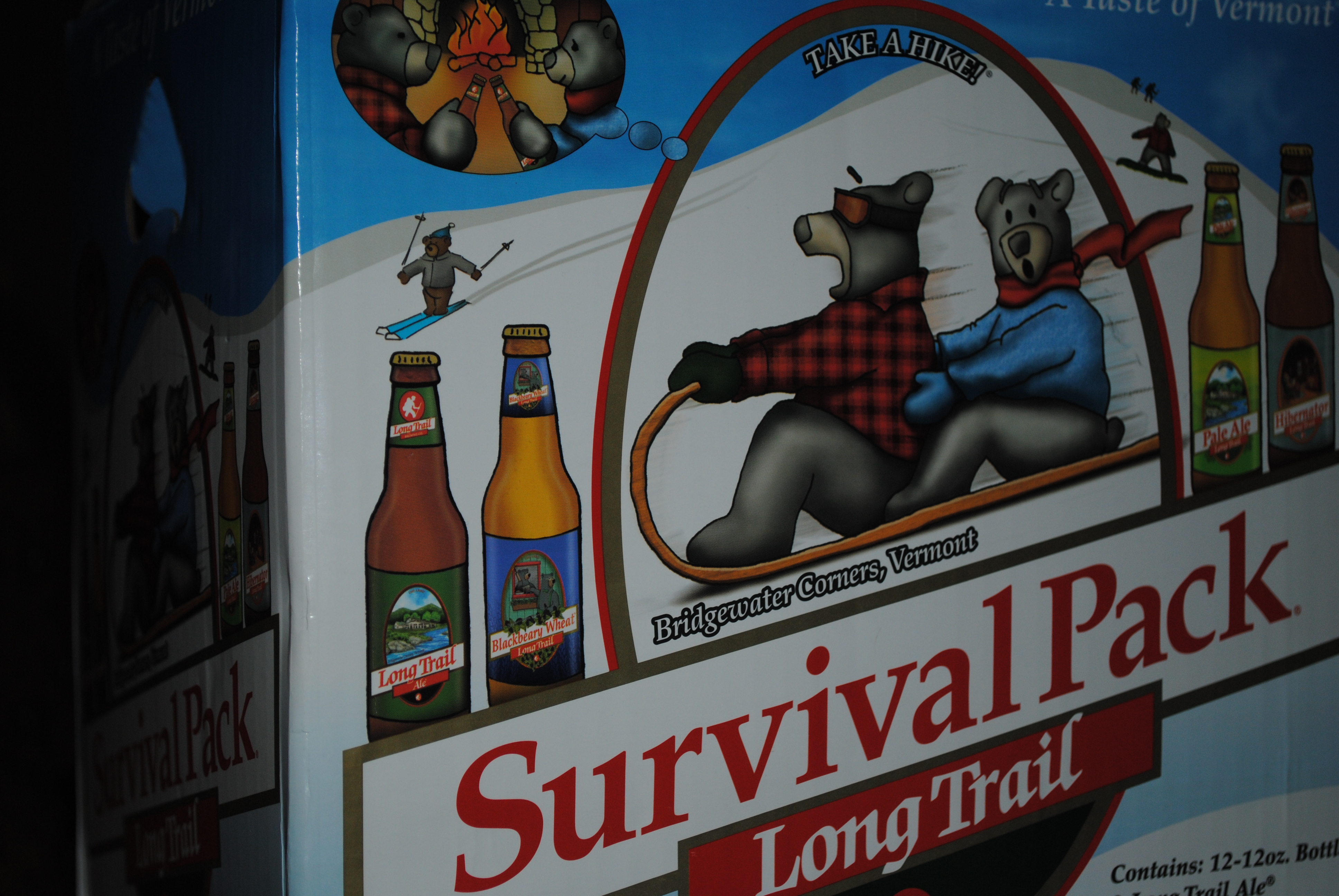
One of my favorite things to do in the mountains in the winter, is to return from a day of slogging (skiing, climbing, hiking, whatever!) and sit by a fire and enjoy a beer.  Here are six brews worth sampling one or celebrating with a couple: 

  • Dogfish Head’s “Raison D’Etre” — a dark amber, pleasant yet bitter finish with a hint of cocoa. 
  • The Shed Brewery’s “The Bull Does Love” — A hoppy beer, like any I.P.A., has a medium body and was very drinkable. 
  • Long Trail Brewery’s “Hibernator” — A stout-like brew, with a medium body easy to drink. 
  • Trapp Family Lodge’s “Dunkel” — Like the name implies, it is a dark beer with a medium body and has a light finish.  Because all of the Trapp Lagers are not filtered, they are complex and taste differently throughout the enjoyment of sipping. 
  • Trapp Family Lodge’s “Wintergeist” — Served in a wine glass, this dark beer is a seasonal beer that is unfiltered and has wonderfully malty flavors including a not-unpleasant taste of rasberry.  It also has a higher than average alcohol content, hence the wine glass! 

These beers are available in limited quantities in various parts of New England and parts of the Mid-Atlantic.

Well, thanks again for visiting.  If you enjoyed this post, please consider becoming a fan of the Suburban Mountaineer on Facebook or following me through Twitter (@SuburbanMtnr).

In Stowe, the Ice Axe is Optional

It is not always easy trying to satisfy my family’s desire for luxury and my personal needs for a wintry mountain experience during the holidays.  I can’t seem to talk the family into visiting Talkeetna, El Chalten or even Keene Valley any time of year.  They expect a warm bed, decent shopping, fine restaraunts and the option of room service.

However, even though I’d like an all-out alpine climb, I still look forward to fine dining these days now that I have been living an easy, professional life in Peaklessburg (probably for too long).  Thankfully, there are places to get the feel of both — at least we can with a little compromise of our expectations.

There are two types of mountain towns as I see it: wilderness towns, usually centered around parkland, and mountain resort towns.  Mountain resort towns usually offer skiing in winter and golfing, fly fishing and so forth during the rest of the year.  While wilderness towns, like Talkeetna, are preferable, some resort towns are on the edge of some great wilderness.  Whistler, British Colombia and Girdwood, Alaska are great mountain resort towns on the edge of major parkland.  But for the eastern part of North America, Stowe, Vermont, a mountain resort town, can serve the bill probably better than the rest, even the famous Whiteface Mountain near Lake Placid.  Lake Placid has been overrun by conventions and sporting events and makes the town often too crowded to enjoy in peace.

Stowe has a high degree of sophistication and resides in a valley of pine, maple and birch.  Once a quiet farming town at the base of Vermont’s highest peak, Mount Mansfield (4,393 ft./1,339m.), it has grown into a mature ski resort with a pleasant New England town.  You can ski, golf, fly fish and best of all, hike and get a taste of alpine in during the winter.  It’s great day up on Mansfield or Mount Hunger and then enjoy the town’s coffeehouse, Black Cap (formerly the Stowe Coffee House), which now roasts its own beans or then visit the Lounge at Trapp Family Lodge for some hearty cuisine and a Trapp Lager.

There are other destinations as well, such as the Ben & Jerry’s ice cream factory, which also offers 20-minute introductions to snowshoeing and conservation efforts, taught by a guide from the Umiak snowshoe and kayak outfitter, on Ben & Jerry’s private land.  It is especially good for people who have never been on snow before; come for the ice cream but learn to appreciate nature.

Last year the town has been enhanced with a true backcountry outfitter to compliment the numerous ski shops: CC Outdoor Store just South of town on famous Route 100.  While the staff of the ski shops did not know what gaitors were, CC Outdoor’s staff know as well as what gear you need to tackle Camels Hump (4,083 ft./1,245 m.) and its bald summit on a blustery day in January.

Again, with a little compromise, a decent, winter mountain experience can be had here while your family enjoys the town.

Thank you again for visiting.  If you enjoyed this post please consider following the Suburban Mountaineer on Facebook or on Twitter (@SuburbanMtnr).
The Risks We Take and the Joys of Home on Christmas

I just finished re-reading the New York Times best seller by Jon Kraukauer, Into Thin Air.  Each time I’ve read it, it’s left me with a horrible aftertaste about climbing.  It’s a shame because I really love the mountains. 

No matter how I sugar coat it by talking about character building or the experience among nature’s wonders, mountaineering is still a frivilous activity.  As Kraukauer pointed out, mountaineering is best enjoyed by those ignorant of the knowledge of climbing.  Some great pioneers have made historic FAs without knowing their right crampon from their left.  But it was usually their determintation that got them to the top first, rather than their experience or skill.  In any case, they clearly assumed the risk. 

We assume the risk of frost bite, falling, altitude sickness, exhaustion, attacks from wildlife and who knows what else each time we go out.  Of course, that is, as Krakauer put it, what makes mountaineering unique among all activities.  The risk of death stands out.  People have died playing basketball or football, but it does not hang around the activity like in our sport. 

Getting home from our adventure in the mountains is always sweet, regardless of whether the goal was attained or not.  After sleeping in tents, hanging on cliffs, waiting out bad weather or having to relieve oneself in odd places (and positions) the joy of being home is even sweeter than for people that rarely leave suburbia.  We treasure the carpet under our bare feet and the ability to poor a glass of water from a faucet. 

With the holidays upon us, the risks can be put into perspective again.  Now we get to enjoy the best of it.  Relish the accomplishments of the year’s hikes and climbs and enjoy some egg nog with your favorite accompanying fluid (Bailey’s anyone?) and family and friends. 

Now, that I am done with Into Thin Air I think I will turn my reading attention to lighter book, like Jeff Alt’s A Walk for Sunshine.  Then I’ll move on to Felice Benuzzi’s No Picnic on Mount Kenya, I think. 

Well, Merry Christmas.  I hope you all get the stuff from EMS or REI that you’re dreaming of!  I’ll write again next week…

Thanks again for visiting.  If you enjoyed this post, please consider becoming a fan of the Suburban Mountaineer on Facebook or following me through Twitter (@SuburbanMtnr).

Christmas Gifts for the Non-Hiker and Climber

When you are obsessed with the mountains as I am, it can be difficult to remember that not everyone else is.  This gets particularly tricky during gift giving time.

For instance, did you know there are activities other than hiking and climbing that your friends and loved ones are interested in?  I did some research and found the REI, Eastern Mountain Sports, Hudson Trail Outfitters, Erehwon and other outdoor supply companies are prepared for this revelation by providing equipment for kayaking, cycling and even car camping.  Who knew?

What we have to do to show that we care through our gift giving is to think of how all those products in the outfitter can benefit the receiver in his or her non-outdoors lifestyle.  (Keep in mind that this is not the appropriate time to hold a grudge because they refuse to go on another “death march” – their words, certainly not mine – with you.)  For instance take the backpacker’s cook set.  The pots are collapsible or at least they fit neatly together – suitable for your friend that lives in a tiny apartment.

When you show up at the Christmas party or on Christmas Eve, you can also be sure to have the perfect gifts for everyone.  Remember that lady-friend that insisted Teva’s were “unsightly tire rubber” – again, their words?  Well, now they can be fashionable when they come to camp with you in the new super-impractical high-heeled version of the useful sandals.

Lastly, we should also think about the holidays as a door way to enriching everyone’s year with our love for the mountains.  Most outfitters provide regular classes and even outings to regional trails and peaks.  Go ahead and sign everyone up!  Be sure not to overlook the cycling and the kayaking activities, because there is more than hiking and mountaineering… apparently.

Well, thanks again for visiting.  If you enjoyed this post, please consider joining the growing community and becoming a fan of the Suburban Mountaineer on Facebook.  I’ll see you there!

Confidence of All-Wheel Drive All the Time: 2010-11 Subaru Outback

Subaru Outback

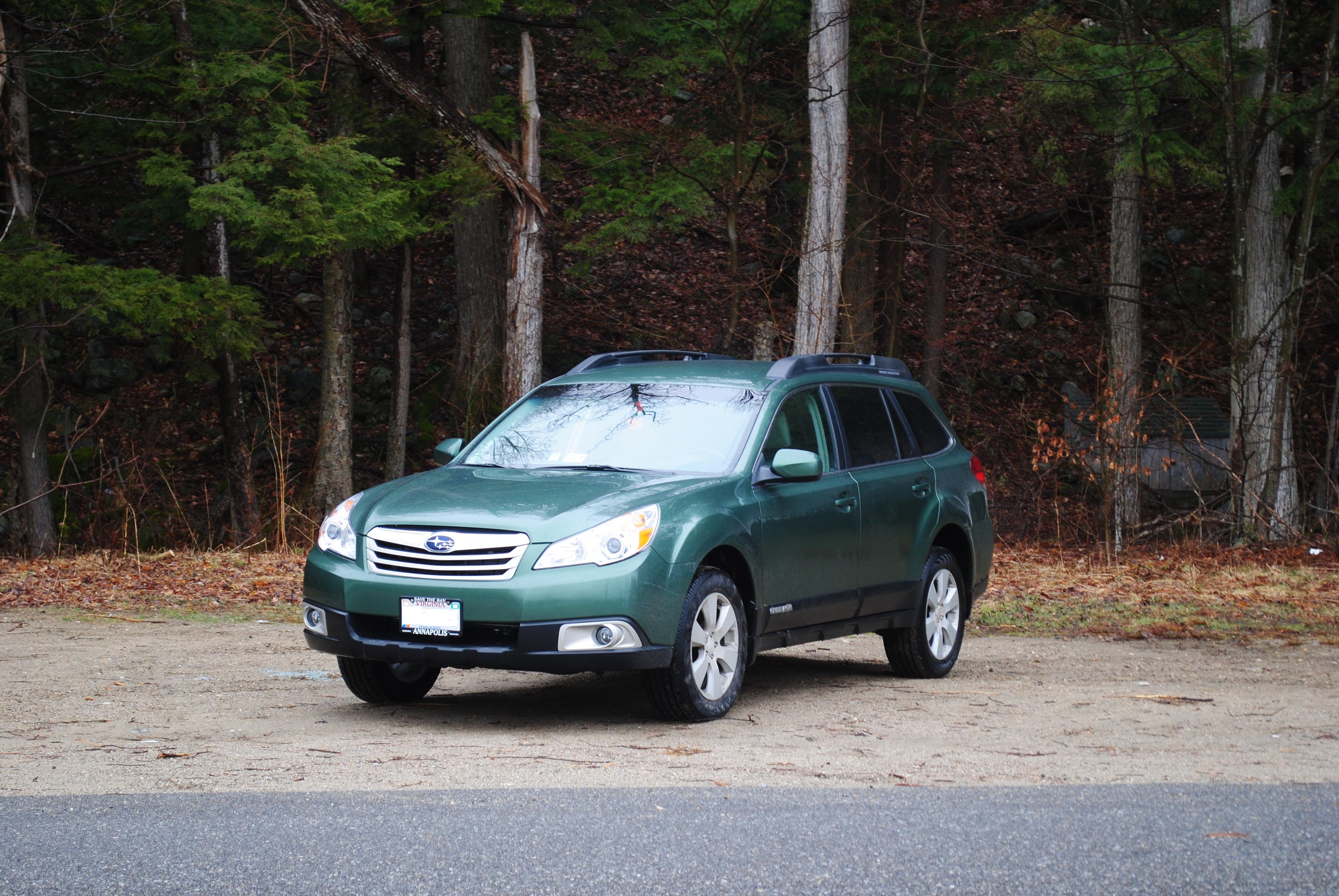
The 2010 Subaru Outback 2.5i Premium (Szalay 2010)

Subaru remodeled the Outback for the fourth time in 2010, making it a little bit more like a small SUV rather than a station wagon, though it is still listed as a sport utility wagon at registration.  Subaru loyalists have been debating about whether the change was good or bad for the brand; Subaru executives have made it no secret that they want to expand beyond their 1.8 percent market share and that by moving beyond the snowy regions where its practical design has reigned supreme. 

While I would have been happy with a third generation (or even a second) Outback, I have been satisfied and proud of the 2010 Outback my wife and I bought as our sole car.  We bought the Premium trim (middle of the road), with CVT (their version of automatic transmission, but with optional on-off paddles for shifting), and the 2.5i 4-cylinder engine – so it qualifies as a green “Partial Zero Emissions Vehicle.”  I look down on the late-model Outbacks that have a 3.5i 6-cylinder engine without a trailer hitch (just wrong).  I have had two 4-cylinder engine cars, a Mazda MX-6 and a Toyota Celica, and the Outback’s engine has much more roar in it. 

In the process of choosing the Outback, my wife and I tested a lot of cars, including the Toyota Venza and Highlander and the Honda CR-V.  A prime feature we looked for was how it handled in snow.  The Highlander performed well, though it was still a truck and has the suspension of pickup – which is tiring on long highway road trips with vibration and road noise.  The Venza is quieter and had the luxury we were looking for, but it is a car for mild climates… Don’t put skis and drive it to Aspen.  It cannot handle the snow. 

The CR-V could get out of a snow bank (I drove straight into one during the test drive to test the so-called all-wheel drive (AWD)) and it got out, but it had to slip before the four-wheel drive kicked in.  The CR-V does not have true all-wheel drive, and instead conserves power to the front wheels except for when the computer determines it is needed. 

Subarus have continuous all-wheel drive and is reasonably close to sharing power with the front and rear wheels equally because of their symmetrical all-wheel drive.  However, a perfect 50-50 split of power is nearly impossible to achieve.  This feature, common on all Subaru models, is dependable, according to scores of proud owners in the snowiest climates.

 The real result was shown during the test drive; my wife this time drove it straight into a snow bank neighboring an elementary school.  It barely even struggled and the wheels with traction helped the wheels that did not and we were out in moments!  Of course, all-wheel drive is no excuse not to still carry a shovel and some salt or sand.  If the snow had been slushy, even a Toyota Tacoma with chains may have been stuck. 

As you know, we bought the 2010 Outback and are proud Subaru owners now.  The 2011 Outback has changed very little, however our singular disappointment with the 2010 has been fixed (and even this is minor) : The side-view mirrors do not fold in on the 2010 models, but they do now for the 2011. 

To have four wheels on the floor and a comfortable drive, the 2010 and 2011 Subaru Outbacks offer that in spades! 

Well, thanks again for visiting.  If you enjoyed this post, please consider following the Suburban Mountaineer on Facebook or on Twitter (@SuburbanMtnr) or leave me a comment below.