The Climbers and the Dreamers

Wherever I go, things related to the mountains always catch my eye, even in mundane places. My doctor’s office has a small, exotic poster of Lohtse and Everest from the north hidden by the door to the lab to honor a doctor who recently passed away — it once hung in his office and I admire it every time I go for an appointment. At garage sales and used book sales I enjoy finding used climbing books (stories, guides and coffee table books). I recently stumbled upon this…

At Wolter’s Bakery (Szalay 2012)

During my brief visit to Buffalo, New York for my 10-year college reunion, I dropped into Wolter’s Bakery for a frosted sugar cookie. I found two slightlyfaded magazine clippings of Mount McKinley / Denali on a clear day. They were taped to the glass by the dining area they way a high schooler would tape up photos of his favorite celebrity.

The owner of the bakery and I spoke for a moment. She wanted to visit the mountain and Alaska but hadn’t done it yet. “It’s a life dream,” she said.

I spend a small amount of time mentally flogging myself for missing the opportunity to climb Mount Rainier a few years ago; I thought there would always be time and resources. Instead I visited Denali National Park. At least the time wasn’t completely lost.

The baker hadn’t made the pilgrimage to see the mountain for herself yet. I told her to “just go.” I should have emphasized the urgency: You never know what life might bring from new responsibilities to financial commitments that can preclude your dream from coming to fruition.

Some of us pursue the dream, some of us just dream. I hope the baker and all of you get to do a little of both.

As an aside, I spoke briefly with Joanna Croston from the Banff Centre yesterday about the Book Competition portion of the Banff Mountain Film and Book Festival. The review process of the nominated books is well underway. The more-than-35 pre-readers are reading over six books each and submitting their evaluations. When the finalists are announced, I look forward letting you know.

Thanks for dropping by again. If you enjoyed this post, please consider following the Suburban Mountaineer on Facebook or Twitter. Happy reading and carpe climb ’em!
Weekend Alpinism and a New Patron Saint

This Memorial Day weekend tested my New Year’s resolution to not complain so much about the heat and humidity in Peaklessburg. This was tough since it was consistently about 90(F)/32(C) and very humid. If you were in the cooler mountain air — even if the conditions were cloudy or rainy — remember, I think you had it made!

If you are a weekend warrior, you know these three-day weekends are great. You can get out there in between work and have an extra day to go farther or perhaps add a recovery day before returning to the 9:00-to-5:00 grind. Still, escaping responsibilities of family and friends, let alone work, can be difficult. I keep thinking of what alpinist David Burdick said in the Smash and Grab video: “Our life windows are shorter than our weather windows.”

This particularly rings true for a weekend alpinist, where high, steep, snow and ice routes mixed with blue skies are sought but often do not coincide with the free times when we don’t have to be there for plumbing repairs, graduations, and family quality time — the things that often can’t be rearranged on the schedule. This also makes me admire John Frieh all the more. Let me explain…

Burdick, Frieh and partner Zac West made a weekend dash from Seattle to southeast Alaska on the Stikine Ice Cap to attempt of Burkett Needle near Devil’s Thumb. It was a first ascent to boot that they named Repeat Offender (IV 5.9 AI3 M5).

You’d expect that on an ascent like this, two days before they topped out, that they would be climbing, waiting out weather in a camp somewhere or at least hanging around a tarmac for the weather to clear so their plane could taxi them to base camp. Nope, they were home, in Seattle able to sleep in their own beds, and in the case of Frieh, with his family. They went from home to summit and back in three days!

Compare Frieh to Ed Viesturs. While a lot of aspiring climbers with family have admired Viesturs for his balance (better word might be arrangement, really, since balance doesn’t always necessitate a 50/50 split) with his family over the place climbing plays in his life, I think John Frieh could be the new contemporary role model here. Frieh has a family and works a full-time job in the Pacific Northwest. He’s consistently a part of establishing challenging first ascents in some great locations in Alaska and he works a “real” full-time job as an engineer and he is a husband and father.

While Viesturs worked as a veterinarian and then a carpenter when he wasn’t climbing, he was essentially a full-time professional climber by the time his children arrived, where work was guiding, giving slide shows and planning the logistics for the next ascent. I don’t know what kind of support or agreement Frieh has from his family, but he’s fortunate to have his family and be able to explore some of the most amazing mountaineering challenges today.

On a related note, one of my good friends Chris McGurn — a solid guy all around — got out this weekend with panache. On Saturday, he took a plane as a passenger to several thousand feet above the Virginia countryside, looked out the window and took the express way down with some friends. I’m really glad he got to jump and for the support he got from his wonderful wife! (And by the way, there is no jealousy here; I would have preferred the long way down and a wait on the tarmac before getting to the terminal, like usual.)

I’m also really glad the chute opened and that he didn’t bust an ankle on contact with earth. He’s my climbing partner for a rare day at the gym next month!

Well, thanks for dropping by again. If you enjoyed this post, please consider following the Suburban Mountaineer on Facebook or Twitter. Happy reading and carpe climb ’em!

The DC Climbing Connection

This morning, I’m returning home from a four-day business trip to New York City. The meetings in New York were productive and it was good for the change in scenery — well, it’s not bad staying in Mid-Town either.

It’s hard to believe that the American Alpine Club was once headquartered here in the Borough of Manhattan for most of its history. It moved to Golden, Colorado rather recently — in 1993, along with the library and all.

It makes much more sense for the AAC to be located near the mountains where we “practice our religion,” rather surrounded by skyscrapers of a major city. Yet, interestingly, the AAC Benefit Dinner is held in a major city annually, rather than a ski resort or someplace similar, among the mountains. This past March it was held in Boston, Massachusetts.

Boston I get, however. The Harvard Mountaineering Club out of Cambridge has made first ascents in Alaska, Canada and throughout the world. The Boston Museum of Science was lead by HMC member and alpinist Bradford Washburn. But, I just don’t know the connection between climbing and some of these other cities — or if there is any connection at all!

Coming from a prejudiced view of what climbing is and what it ought to be, I’ve judged Washington, DC — my Peaklessburg — pretty hard. It’s taken 10 years to soften and broaden my view. I no longer mean to deride it. Overall, I have begun to recognize and respect the climbing culture here.

I remember that Marcel Schatz, a member of the 1950 Annapurna first ascent expedition, lived and worked in Paris but visited Chamonix every weekend to climb. Despite working in his own Peaklessburg, he was fortunate to be in striking distance to those 4,000-meter mountains. There are lots of stories of city-dweller climbers that escape routinely to feed their restless need. That used to be me too until I made room for other life priorities.

Like Boston, Washington, DC is a starting point for some mountain exploration. The US Geological Survey, headquartered here, supported some mountain exploration. In 1890, the USGS partnered with the relatively new National Geographic Society in sending Israel Russel to Alaska. The NGS was established by Washingtonian businessmen, lawyers and scientists “interested in the world and all that is in it.” Part of that was mountain ranges. The Russel expedition explored the Yakutat Bay area and Mount Saint Elias (18,008 ft./5,489 m.) After mapping the area, Russel returned to his home in New York City. National Geographic also played a significant role in sponsoring the first American ascent of Mount Everest (29,035 ft./8,848 m.) in 1963.

Today, National Geographic hosts events at its headquarters with the subjects of its films and publications. I’ve mentioned presentations by Andrew Skurka, Ed Viesturs, David Roberts, Gerlinde Kaltenbrunner and others before.

Climbing in the area is limited but not entirely nonexistent. From Washington, the closest crags are reputable top roping sites on the banks of the Potomac River west of the city at Great Falls, Virginia and Carderock, Maryland. There are even a couple of boulder problems if you only have your shoes and you’re climbing alone. Seneca Rocks — that awesome narrow, multi-pitch rock fin in West Virginia, is about four hours away. For things greater, keep going to Red River Gorge in Kentucky or head north to the Gunks in New Paltz, New York. But there isn’t any water ice within a reasonable days drive… Make a weekend trip to the Adirondacks or New England for that.

Washington also has an active indoor climbing culture with Earth Treks north of the city and SportRock in Northern Virginia south of the city. Sasha DiGuilian is the local climbing phenom. DiGuilian is currently climbing harder routes than any other American woman climber, though only the sport climbing community seems to be really excited about that, she’s a national name in that space.

So I’ve come to realize it is possible to be in the city and be a climber. It’s not ideal. The AAC learned that. But it’s a starting point. It’s where we go from here that matters.

Thanks for dropping by again. If you enjoyed this post, please consider following the Suburban Mountaineer on Facebook or Twitter, if you haven’t already. Happy reading and carpe climb ‘em!

Hero Climbers

The other morning I went to the American Alpine Club website, as I often do, to search for entries about a particular topic — in this case the Revelation Mountains in Alaska — through the American Alpine Journal. Before I got to that I clicked on the new Guide to Membership page about the booklets that are on their way to members’ mailboxes now. I was surprised and flattered to see myself on page five alongside Jim Davidson, Emily Harrington and several other reputable AAC members — all climbers I admire.

A couple days later, I received notes from a few fellow AAC members that saw me in the other mailing that arrived this week, which is soliciting contributions to the AAC and its Henry S. Hall, Jr. American Alpine Club Library. I appreciated the messages!

I have to admit, I think it is really neat to be part of these publications to promote the AAC. The neatest part isn’t even being labeled a member — there are far, far more accomplished and interesting climbers than me. Rather, it’s a thrill to be among theses other AAC members, like Bayard Russel, Mike Libecki, Abbey Smith, Jason McDonald, Conor Smyth, Chris Serenari, and Chris Kendzierski in addition to Jim and Emily. I probably sound like a groupie.

I write this blog because I am a fan of other climbers. The mountains are made more interesting because of what you accomplish there and the stories you come back to tell. So to be alongside these climbers and associated with the other members of the AAC, well, the honor is all mine!

On another subject, I just started reading Freedom Climbers by Bernadette McDonald for myself, at long last. I’ll also be catching up on Alpinist 38 and I just got the latest issue of Climbing  in the mail. A new mountaineering book collectors group that I recently joined just started meeting this past week too. Lot’s going on and I’m sure there will be more to share about climbing, mountain literature and finding escapes from the mundane parts of Peaklessburg.

If you enjoyed this brief update, please consider following the Suburban Mountaineer on Facebook or Twitter. I’ll cover a lot more about human accomplishment in the mountains later and share other information on the social networking sites. Happy reading and carpe climb ’em!

Mortal Men Among Alpinists

26549700766_84d191c7b2

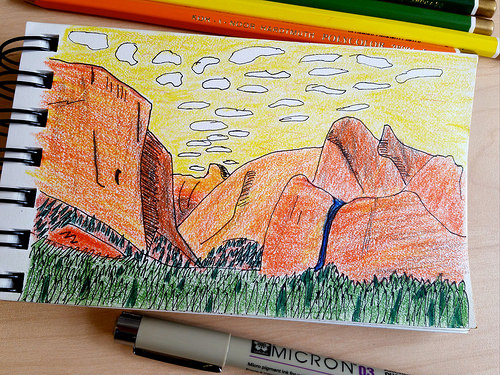
The Valley of Light. (All rights reserved)

Fast and light alpine ascents among jagged mountains are the pinnacle of climbing style in my book. Sending the biggest steep, cold walls by carrying all of your gear with you to reach to summit in one push is both an amazing feat and an ambitious undertaking. Hard alpine climbs are made up of boldness, courage, confidence, risk of frost bite, luck and hubris; close to heaven, but on the brink of certain death. While these climbs can be done in a variety of locations from Alaska to the Himalayas, the routes up Yosemite Valley’s walls rarely entered my daydreams.

While a daring alpinist and I are equally mortal, I’ve spent most of my life closer to earth doing less daring escapades. Sometimes I hated myself for that. My restless qualities wanted a cockiness that could say I can do it and I can still do it. But I’ve been coming to a new, toned-down place in life and I’ve been slowly accepting that. I’ve slowed down, climb less and put most of my energy toward my family and career. Along this path the strangest thing happened: The appeal of other kinds of climbing that I previously dismissed I grew to accept. So when I got the invitation to the International Climbers Meet, as all American Alpine Club members did, I thought a week in Yosemite with other climbers sounded like a great vacation!

Working in an flat, urban Peaklessburg is professionally satisfying but lacking in the fun of the outdoors, from hiking to skiing and everything in between. Getting away to Yosemite for a week for the price of airfare plus $450 for registration to cover your campsite in the Valley, three catered meals a day, and plenty of climbing by day and socializing by a campfire at night sounds like Sandals Resort or the Four Seasons for a repressed mountaineer.

I’d pack light, because less is more anytime, but especially when you need to get away. I’d grab my Jansport framepack and fit in the essentials: My Evolv rock shoes, BD harness, chalk bag, my favorite fleece pullover, that old Cat’s Meow bag (the one my wife used as a quilt when she was pregnant during one winter trip) and my favorite Major League Baseball cap. Then again, maybe I’d skip the chalk.

Suffering was an integral part of mountaineering to me for a while, though I never meant it to be. It’s still inseparable by necessity for the most progressive climbs, I suspect. But I think the other things I am seeking now, at the place in life I’m at today, could do well with a big day climb in Yosemite, followed by some story telling about the day’s saga where I reached higher than mortal earth. It would beat cramming into a tiny tent and suffering from altitude sickness.

Besides, even John Long talked of Yosemite’s healing powers in the 2012 issue of Ascent: “I have seen the beaten and forgotten, the vain and raging, the rich and arrogant and the hopelessly heartbroken, all made whole in the Valley of Light.”

Yes, I’ve gotten a little soft. And clearly, I need a vacation.

Thanks for dropping by again. If you enjoyed this post, please consider following the Suburban Mountaineer on Facebook or Twitter. Happy reading and carpe climb ’em!

Two Understated American Giants

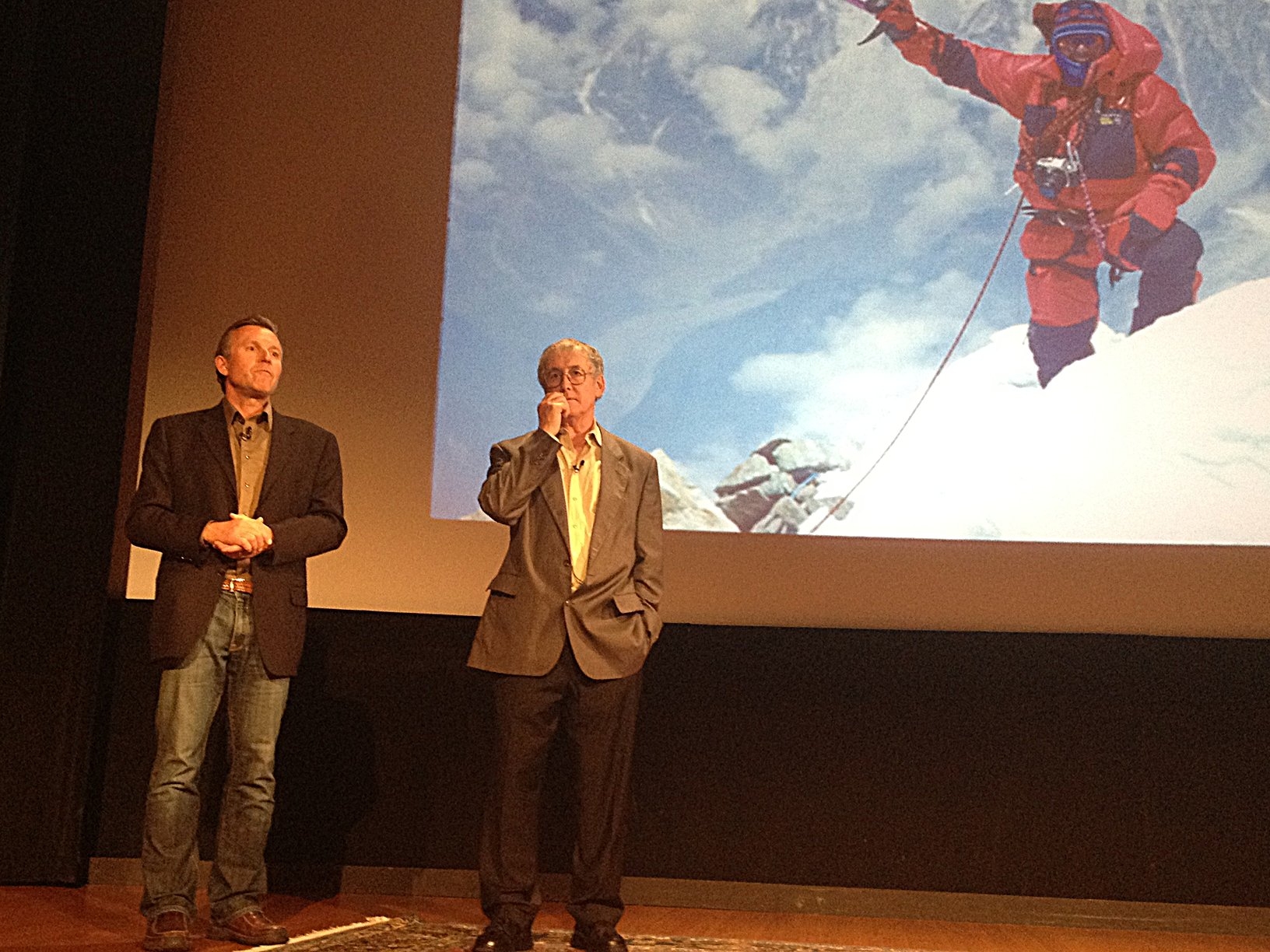
Ed Viesturs and David Roberts (taken and shared with permission by Jana Kunicova)

Yes, I am crazy. I must be. I voluntarily sold my ticket — my only ticket — to see Ed Viesturs and David Roberts at National Geographic Live last night. The next two weeks ahead were getting busy at work in the evenings and that was taking away from my family time. So I went to my Peaklessburg support group — DC Mountain Madness — and offered it up.

Viesturs was a hero of mine when I started climbing in the mid-1990s. I bought my red Mountain Hardwear fleece jacket for the reasons baseball fans buy jerseys with their favorite players’ numbers on them. He doesn’t play the same role for me now he did when he was pursuing all 14 eight-thousanders, but he is still a role an hero for his approach to a wild pursuit that he balanced with a commitment to his life at home. His reputation for turning around many times when his gut said “this is bad,” and still being very successful at his goals is inspiring. That makes him appealing to many climbers, particularly amateurs. He is an example of stick-to-it-ive-ness.

Roberts is my favorite climbing writer. He also lead or was part of some legendary expeditions in Alaska, including the Harvard Route up the Denali’s north face and the Angel in the Revelation Mountains, a subrange of the Alaska Range, just to name two. I enjoy his books because they include rich history, great research and he tells all of it in such an insightful way. He makes his readers feel compelled to go on.

Viesturs and Roberts are two very different people and climbers. They came to Washington to speak on their latest book The Will to Climb, however they also talked about their other work together on No Shortcuts to the Top (2006) and K2 (2010), I was told. But while they are both articulate, well-educated men, they are very different climbers.

Since following Viesturs Endeavor 8,000 quest, I have learned more about climbing and learned that the kinds of climbs that make it into history books or the American Alpine Journal are special climbs. They are first ascents and original routes. Those were not the kind of climbs Viesturs pursued. At one time that was disappointing to me, but then I realized that I probably would not seek out the steepest, longest routes necessary to make a climb that is deemed significant today. Roberts, on the other hand, had pursued new steep routes in Alaska in the 1960s. As nerdy as Roberts is — and he is — he’s got street cred.

Viesturs sought out a whole other field of climbing. Rather than seeking challenging new routes, he pursued a tick list of the world’s biggest mountains. The route wasn’t critical. Reaching the top — legitimately reaching the top — was essential for quality of the accomplishment.  While American climbers celebrate him for being the first of their own to stand atop all 14 eight-thousanders without supplemental oxygen, it was ultimately a pursuit all his own.

Viesturs and Roberts are two American giants. I don’t feel the need to qualify that statement by adding “…in climbing.” They are accomplished climbers, accomplished writers, and I am glad they came to Washington to share their adventures and their experiences.

Oddly, though I have been a fan of these two men for about 20 years and I have never seen or met them in person, I don’t feel overly regretful that I wasn’t able to attend. I know much about them from their books and their articles elsewhere. Perhaps I also feel that I will get another opportunity. Perhaps its also because I have met so many interesting climbers over the past several years — thanks largely to social media and this blog. I suppose that even as they have moved on from climbing to other ventures, so have I.

Thanks for dropping by again. If you enjoyed this post, please consider following the Suburban Mountaineer on Facebook or Twitter. Happy reading and carpe climb ’em!