Some Quick Notes and What I’m Reading Now

This rock climbing shoe fit in the palm of my hand (Szalay 2014)

I promised Natalie that I wouldn’t push the kids to get into climbing, though she understands that I won’t discourage it if they show interest. But get this: Wunderkind and Schnickelfritz both like to get into our piles of books. And lately, Schnickelfritz, who is a year-and-a-half old, has chosen the small picture book about Mount Everest off my bookcase. There are a lot of books within his reach and that one keeps surfacing and left somewhere on the floor. So when I stumbled upon this tiny rock climbing shoe, it was hard for me not to get somewhat excited. Still, I didn’t buy it; I know what I promised.

I’m very excited to have finished my first piece for Alpinist magazine. Alpinist is the leading English-language literary climbing magazine that delivera in-depth and beautiful feature articles quarterly. My submission is notably smaller than the well-known features, but that’s not the point; I got to share a little-known piece of climbing history that I think you’d like to know. Be sure to check it out in issue 49, which comes out around January.

And here are some quick notes on what is in my physical and virtual reading stack:

I am extremely late in publishing my review of John Quillen’s book, Tempting the Throne Room: Surviving Pakistan’s Deadliest Climbing Season 2013 (2014), which was available in paperback earlier this year. I accepted an ebook version, but, as I have discovered, I read ebooks at a much slower pace. I might go with the hard copy book next time.

Barry Blanchard’s book, The Calling: A Life Rocked by Mountains (2014) came out at long last. I think I looked more forward to Blanchard to publishing his first book than I did Steve House’s. I only just began reading it, as I need to finish Quillen’s work first. It’s also an ebook, so I have to stay disciplined and keep my phone fully charged before my commute and time on planes traveling. (Please wish me luck with that.) Here is an excerpt in case you’d like a preview.

I continue to read and re-read parts of Alpinist 48. Katie Ives column, The Sharp End, is about the art of the approach and is available to read online for free. My friend Suzanne Ybarra writes about her late brother and his friend’s unyielding pursuit of El Capitan-south. It also has a short piece involving Don Jensen, which if you are as interested in Alaskan exploration anywhere near the way I am, well, it’s a must read.

Lastly, while I don’t possess a copy yet, I am excited about reading John Porter’s One Day as a Tiger (2014) about Alex MacIntyre. A biography of MacIntyre is enough to interest me but it also took the grand prize at the 2014 Banff Mountain Book Competition.

Thanks again for stopping by. If you enjoyed this post, please consider following The Suburban Mountaineer on Twitter and Facebook

Should You Pack Marijuana for the Alaska Range?

Every morning I wake up and I read the newspapers to stay informed for work — mostly stories on political issues and government policies. After that I turn to the climbing news and blogs. The morning after election day in the U.S. (which was Tuesday), was a little different. I follow America’s 50 state governments too, not just the federal elections, so there was a lot more political and government news to take in.

Voters across America considered 147 referendums. Some were on raising the minimum wage, some were on veteran’s benefits, and one hotly covered topic in a few states — including Alaska, Oregon, Washington, and the District of Columbia — was the “legalization” of marijuana.

State climbing mecca Colorado previously allowed marijuana to be sold relatively freely. I haven’t heard of any outright depravity in climbing and marijuana use since it became legal. I’ve actually heard really pathetic stories about one climbing partner eating some questionable mushrooms and then getting stranded, naked, high up on one of the Flatirons. But that wasn’t marijuana.

When it comes to alpine Alaska, marijuana has made it’s way to basecamps and higher on Denali (think 17 camp) even before legalization. I recall reading that even Jon Krakauer “lit up” after climbing Devil’s Thumb and returning to his basecamp on the Stikine Ice Camp. (Some of you probably we’re surprised by this, and that makes me chuckle.) Well, Jon admitted that it wasn’t a good victory lap.

I’ve read posts in chat groups where climbers have speculated whether marijuana might help them climb with more focus. Has anyone asked the same question of beer or whiskey?

Marijuana might be legal in some of the best alpine climbing playgrounds in the U.S. now, but a good meal and a good nights rest might do more for your ascent than anything else. Be safe out there!

One last thing that I wanted to mention… The picture I posted above I discovered on Flickr. It reminds me of the feeling, if not the precise view, I shared with some friends camping at the Snake River camp site in Denali NPP. I’ve been saving it to share it at the right time. I hope you enjoy it and have a good rest of your week.

Thanks again for stopping by. If you enjoyed this post, please consider following The Suburban Mountaineer on Twitter and Facebook

9 Things I Want My Daughter to Learn from Climbing

Daddy and daughter rock climbing shoes. (Szalay 2014)

My Wunderkind starts preschool today. She’s going to learn to write, spell her name, cut with scissors and gain more confidence.

Natalie and I have been asking her to not grow up too quickly. Her baby qualities passed too fast and her toddler period was truly beautiful and ephemeral. Soon she will be too big to ride on my shoulders and too heavy for me to pick up and carry in my arms.

In a few more years from now she will probably go with me to the climbing gym — the same one where Sasha DiGiulian got started. I might even take her to Great Falls on a weekend or a New England crag during one of our vacations. I’m sure that she will climb better than me right from the start. I have no idea whether she’ll latch onto the sport the way I have, but there are a few things I hope that she will take with her, even if she only climbs a little. They’re things I want her to learn in general, but I think climbing will help:

9. Fear is only as tangible as we let it be. Being afraid of something can dissuade us from doing things and being unnecessarily fearful can close doors and opportunities, whether it’s reaching the top or going for an audition. Identify why you’re fearful and consider whether it’s worth being scared about.

8. Know the value of communication. Too many climbers have been dropped or stopped being belayed because of poor communication with their belayer. We have to be clear with the people in our lives about our needs — whether it’s about slack or just about what we expect from our friends or colleagues. So being forthright and outspoken can help, but you also have to listen. You need to know where your friends and colleagues stand too; hopefully you’ll surround yourself with other honest and outspoken people too.

7. Who you tie your rope to matters. Before you’re in college, this phrase will become cliched to you: Your life is in your climbing partner’s hands. The thing is, cliches ring true. Choose wisely who you spend time with, particularly important events, whether it’s your tennis partner or the friend you want to take your first road trip with. The friend will be a significant factor in your experience and a critical link in your success and safety.

6. Comfort zones are about your current limit, not your potential. Climbing at the same grade can get stale and the difficulty of climbing at the next level isn’t about it being too hard or impossible, but rather a matter of horizons. Sometimes you won’t find out how much better you can perform — at anything — until you keep trying. You might even look clumsy for a bit, but that’s because you haven’t reached that view beyond your vision.

5. If you think it’s too risky, then it is.  Only you can determine what your comfort zone is when it comes to dangers. Dangers are real and shouldn’t be ignored. Know your limits. But limits are relative based on what you deem as risky. I certainly do not want you to free climb like Alex Honnold, but as an example, he doesn’t think his free climb of Half Dome was too risky for him. But it is for me.

4. The joy of finding your way without a map or guide. While the map shows you where you are, it’s a unique experience to chart a new path without a map or regardless of the map. Please start your climbs from the ground up. Some of those routes may be dead ends, but you won’t know what’s up there until to you go.

3. You get out what you put in to it. I must confess that I have put more time into being an armchair mountaineer than a real climber since becoming your dad (you probably know that from my footwork.) But I have learned from other examples that the rewards of dedication to an activity or cause are equal to the effort. Dive in and enjoy!

2. Looking at the world from the ground is only part of the picture. I think your perspective is already somewhat unique and creative compared to your peers. Still, most people see the world from the flat plain of everyday Earth. But there are a few of us that go to those anomalies on the plant where rock juts up from the surface. The perspective might provide insight on the world and ourselves, but you can’t understand until you travel there for yourself.

1. You’re capable of a great deal. You have so much potential right now. I can’t wait to see where you choose to take it.

I don’t think I need to say comparing Wunderkind to the boys; we’re fortunate live in a community where its assumed that the girls can do as much as the boys if not more. Still, I think that even now she is learning to be confident in who she is as a girl and a person. I hope that for every little girl growing up into a woman.

Regardless, if any little girl can learn these nine things, they’ll be okay.

Thanks again for stopping by. If you enjoyed this post, please consider following The Suburban Mountaineer on Twitter and Facebook.

Do We Need A National Dirtbag Day?

image

Our pioneers’ ways are indeed dead.

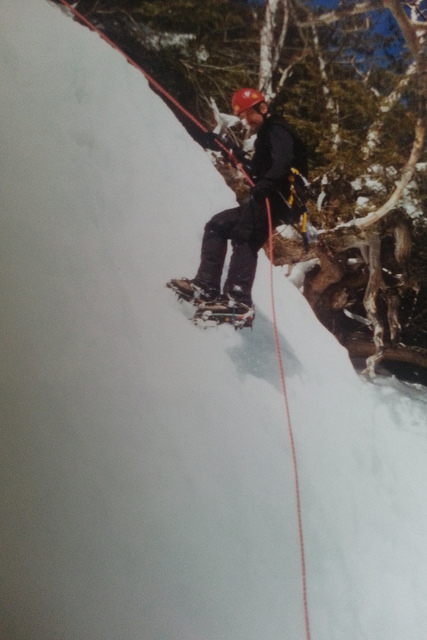
Cedar Wright recently made a documentary on the the end of the dirtbag climber. Dirtbags are either the most obsessed or dedicated climbers; I believe they are in the latter category where they’re dedicated to climbing and depriving themselves of all societal comforts to devote themselves to climbing. They’re often misunderstood by most people as unkempt and dangerously obsessed.

Our pioneering climbers were dirtbags and they sacrificed a great deal. Several legendary climbers from the 1960s through 1980s like Chuck Pratt, Tom Frost, and John Long left everything to perfect their climbing skills and accomplish amazing human feats. They climbed walls that people said would never be climbed and often did it faster that ever imagined. Their sacrifice was more akin to depravity than the risk of death; they left all comforts of society, from steady income to personal relationships.

However, as Wright explained, the cheap living at campsites near popular climbing destinations that supported dirtbag ways in the US have raised rates and shortened stay lengths; the result is that dirtbags have a tougher time living “homeless” on prime real estate. There are numerous other factors, but that’s just one example.

I think Wright is correct when he said that it’s harder to be a dirtbag today. After all, it’s harder now to be a pioneer in climbing. Climbing’s most significant climbs today are not usually about first ascents but how he route was climbed (though there are still virgin summits and unclimbed walls). Climbing has always been about pushing the envelope with what the conventional thinking said was possible whether it was about speed or making the most direct line passed overhanging ice.

Dirtbags made a path for other climbers to follow. And climbers today are less likely to go on a dirtbag pilgrimage. That’s not all bad news for climbing culture: First, the modern climber, it seems to me, is more likely to travel to multiple climbing destinations during their own personal pioneering days. Second, climbing gyms have taken our sport in a new age, which has produced stronger climbers than ever before.

However, we need a way to tell more people about pioneering climbers from the 1960s, 70s and 80s and their dirtbag devotion. We need a national day in their honor where we tell stories and inspire a few new dirtbags. The American Alpine Club, Access Fund, Sierra Club, local organizations like the Mountaineering Section of the
Potomac Appalachian Trail Club, and retailers like REI, Erehon, and Hudson Trail could promote to members and customers.

Here is how you can help: If you like this idea, please share this post with your friends on Facebook, Twitter and anywhere else you visit. With your help, maybe soon, dirtbags won’t be so misunderstood and they’re passion will be better appreciated.

Thanks again for stopping by. If you enjoyed this post, please consider following The Suburban Mountaineer on Twitter and Facebook.

5 Reasons Why PaceMaker Trekking Poles Might Be Right for You

Atop Mt. Colden in the Adirondacks, June 2004.

I had finished a 30-mile hike which included a scramble up one of those beautiful, bald summits of the Adirondacks. I came downhill much faster than I had gone up and was carrying a 35-pound overnight pack. My hamstrings and calves were holding up and my trekking poles kept me balanced as I descended — which was more like a controlled stumble — seemingly bouncing from foothold to foothold.

I arrived back at the trailhead, exhausted but in a euphoric state. I leaned my poles against my old coupe, put my pack in the trunk, hydrated with a warm sports drink, started the engine and turned on some punk rock music and drove away down the long narrow dirt road with a triumphant feeling.

Unfortunately, I didn’t realize until three days later that I left my poles in the parking lot. That was 10 years ago this month. I haven’t had my own pair since.

Just last month  I was approached by PaceMaker Stix about reviewing their trekking poles. I hadn’t heard of them before and decided to check them out and see where they stood. After a quick Internet search I counted 18 different brands of trekking and walking poles. It seems only three or four brands are the most recognizable and widely accessible, however, PaceMaker consistently received the highest customer reviews online. I accepted the invitation from PaceMaker Stix to review a set of their sticks and I received a pair of their Expedition Poles.

I worked out a time with Natalie for us to take kids on a hike so I could test them out. The big hike in Shenandoah NP or the Monongahela NF I wanted became unrealistic with our commitments, but a semi-urban hike in the Dyke Marsh Wildlife Habitat along the Potomac was feasible.

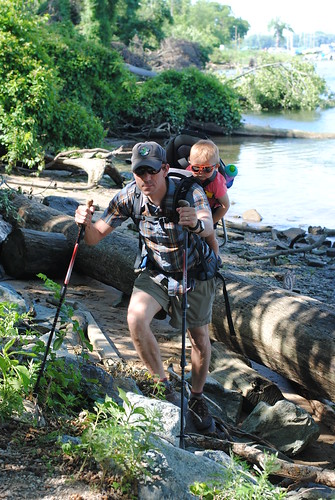
Trying ascending with the PaceMaker Stix (Natalie Stern 2014)

This was also Schnickelfritz’s first time riding in the child carrier backpack. Wunderkind, who rode on my back down Mount Mansfield in Vermont in 2012, was now helping me test the poles.

After some long strides, a couple of leaps from one beached driftwood log to another, and finding some unlevel and occasionally unstable terrain to test ascending and descending, I have five reasons why PaceMaker Expedition trekking poles might be right for you:

1. Sturdy and Durable — They held up to my walking and leaning with all my weight with Schnickelfritz on my back. They are also light weight and appropriately rigid; the tips at the far end of the poles went right where I wanted them — there was no unwanted flexing.

2. Easy Extending and Holding — The flick locks are easy to open, close and adjust them. Even when Schnicklefritz and I bounced from log to log and leaned hard on them, there wasn’t any give. The same was true regardless of what length you choose to set them at.

PaceMaker Stix adjustable flick locks. (Szalay 2014)

3. Cork Grips and Comfortable Leashes –– The grips on my original poles several years ago were rubber with deep grooves for ventilation. They are great in the winter at keeping moisture out, but clammy. Cork is indeed better and I’m doubtful that they would perform poorly if I were using the poles snowshoeing in Vermont this winter. For most trekking pole aficionados, cork is the only way to go.

4. Affordable Prices — For their quality, these poles are truly affordable. They might even be “cheap” in price but not in performance. My old poles cost $110 for the pair. The PaceMaker Stix Expedition Trekking Poles cost $59.99 and I am just as happy with them. As a parent on a parent’s budget, I’d go with the PaceMakers everytime.

Schnickelfritz on the move, with Dad (Natalie Stern 2014)

5. Consistently Excellent Reviews –– Go online and look on Amazon or Google. PaceMaker fans are vocal. These poles are consistently given higher customer reviews.

By the way, since starting this blog in 2010 I have gotten several requests to review climbing and hiking books and various outdoor products. I haven’t turned down a request to review a book yet, but have turned down all the requests for product reviews. That was until I was approached by PaceMaker Stix. I felt it was something that you might enjoy too. My whole family did…

Sharing my PaceMaker Stix with Wunderkind (Natalie Stern 2014)

Thanks again for stopping by. If you enjoyed this post, please consider following The Suburban Mountaineer on Twitter and Facebook.

This post is a sponsored post, but my words express my own opinion, as always.

Via Ferrata and Zip Lines on Everest and Moving Day

image

I had to pick something up at the rock climbing gym, so I asked Wunderkind, who is almost in preschool, if she wanted to go see it with me and she gave me an enthusiastic yes. Then I asked her what she thought people at the climbing gym do? She indicated that you play… and then go down the slide.

A slide made me chuckle. The pleasure of a slide struck me; that’s what Everest really needs. Well, maybe not a slide, but the placement of a ladder at the Hillary bottleneck suddenly felt like the wrong path to draw money from high altitude climbers through the new fees structure (aside from improving the flow of traffic). What the mountain really needs is something more exciting: Via ferrata or zip lining — the world’s highest, of course.

The via ferrata would take inexperienced climbers to the top of thr mountain, or least to the south summit (the rest of the way would only be done through more technical work,) and then you could fly down to the Khumbu Glacier in time for tea with your porters. Throw in some fixed-place cameras and you can sell the photos of you climbing the iron way and riding the cable.

Why hasn’t Nepal thought of this before?

On a wholly other topic, I’m continuing to find my place in this urban-suburban Peaklessburg.

My family — all four of us — are moving back to our old neighborhood inside the Washington, DC Beltway and into our old condo. We previously thought that it was too small for our growing family. Now we think it’s perfect for us (at least for a little while.)

To make it work, we’ve embraced minimalism (or at least much more than we ever have in the past,) and adopted the belief than home is merely home base from which to go out and live rather than your monument of your life. We just need a place that facilitates our life.

This move is part of a landmark decision for us. I have been saying for years that Washington was Peaklessburg (and it still is), and it never gets enough snow for long enough to be able to cross-country ski or snowshoe right outside my front door (something I grew up with and always considered a baseline for judging what’s normal.) But since having Wunderkind and Schnickelfritz, we look at the city in a different light and feel it’s the best place to raise them. So we’ll be here a while.

One minor factor that made the choice palatable was finding fun and some satisfaction in climbing at the local rock climbing gym. I have always climbed indoors but usually thought of it as a poor alternative to the real thing.

The rock climbing gym is actually conveniently located, has like-minded people, and it motivates me to stay active. I might even meet up to climb with a one of the climbers I use as a source occasionally. It’s also kind of amusing to be ” the old guy” at the gym; most of the climbers are 10-15 years younger and usually have no worries in the world and no idea about climbing history.

Still, pulling plastic beats hooking iron on a big mountain.

Thanks again for stopping by. If you enjoyed this post, please consider following The Suburban Mountaineer on Twitter and Facebook.